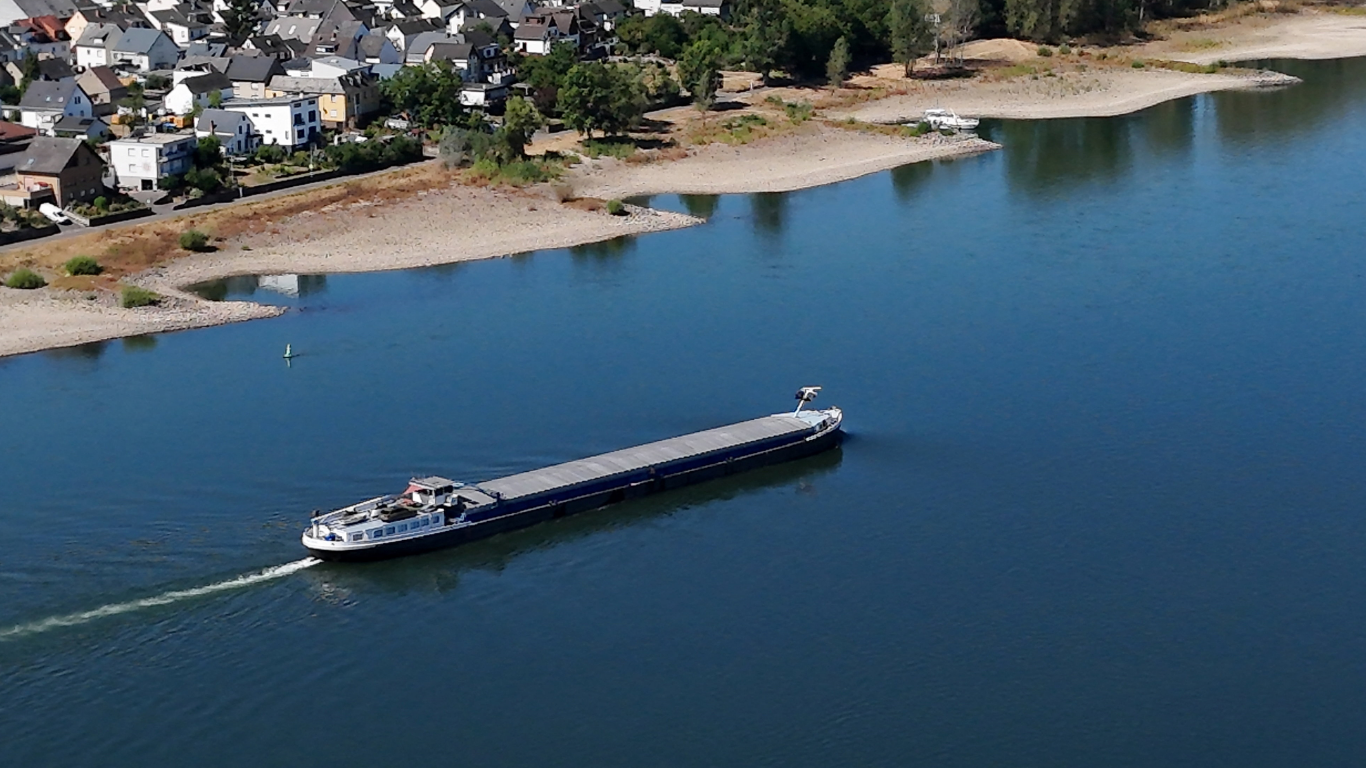
Germany’s Rhine River is facing another sharp fall in water levels, putting renewed pressure on cargo shipping and increasing transportation costs for businesses that rely on the waterway to move commodities across Europe. The latest decline comes after an exceptionally hot and dry summer that has repeatedly disrupted river traffic.
Lower water levels make it difficult for barges to navigate safely, forcing operators to reduce the amount of cargo they carry to avoid running aground. That means more vessels are needed to move the same volume of goods, while shipping companies have introduced low-water surcharges to cover the additional costs.
The Rhine is particularly important to Germany and the wider European economy because it connects major industrial areas with North Sea ports in the Netherlands and Belgium. Fuel, chemicals, agricultural products and other industrial goods are among the commodities transported along the river. Germany’s government has already been working on measures to shift some freight to road and rail as low water conditions threaten supply chains.
The latest problems follow record-low levels earlier in the summer. In August, water at the Kaub gauge, one of the Rhine’s most important navigation points, fell to extremely low levels, severely restricting shipping. Some operators were forced to carry only a fraction of normal cargo loads, while others diverted shipments to land transport.
Shipping companies have responded with additional charges. Maersk, Hapag-Lloyd and CMA CGM have all issued warnings or introduced low-water surcharges tied to conditions at key Rhine measuring points, demonstrating how directly the drought is affecting logistics costs.
The disruption is also raising wider economic concerns. Germany’s Bundesbank has warned that depleted rivers are hampering transportation, increasing shipping costs and putting additional pressure on industrial activity. Earlier Rhine disruptions have also affected fuel supplies and production because industries depend heavily on the waterway for raw materials and energy products.
The current crisis is part of a broader pattern of water stress across Europe. Scientists and infrastructure experts say climate change is increasing the pressure from heat and drought, making low-water periods a growing challenge for rivers that were built into Europe’s transport and industrial systems.


 play_arrow
  play_arrow
  play_arrow