

Listeners:
Top listeners:
 play_arrow
 Cosoro Afrobeats UK's #1 Afrobeats Radio Station
 play_arrow
 Cosoro Pidgin Na we bi di #1 UK Pidgin Radio
 play_arrow
 Cosoro Evergreen UK's #1 Radio for Timeless African Sounds


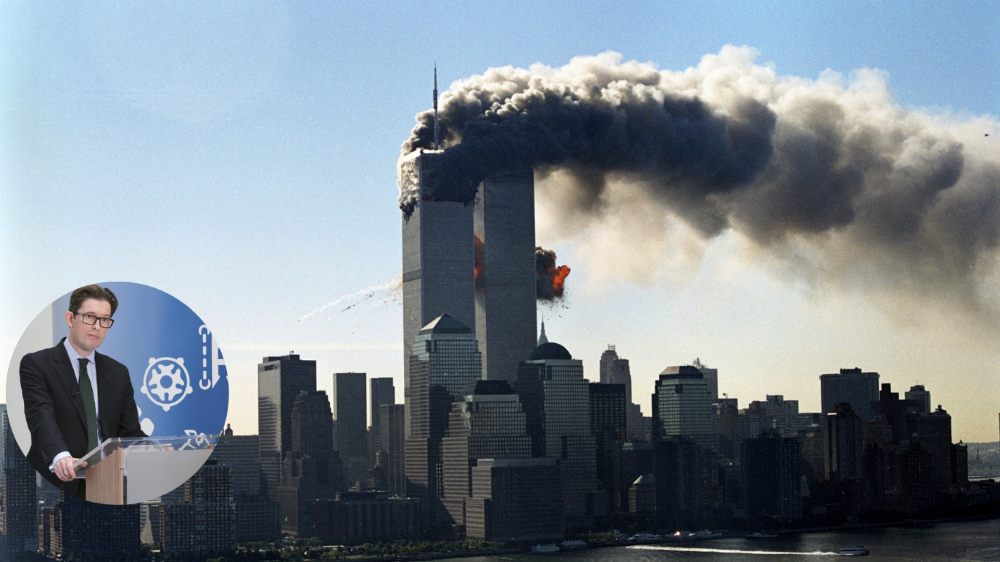
Image Credit: REUTERS
Britain’s intelligence chief has warned that the next major security shock could already be developing in areas authorities are not yet watching closely enough, as he urged governments and businesses to prepare for a rapidly changing threat landscape.
MI5 Director General Ken McCallum issued the warning on Friday, the 25th anniversary of the September 11 attacks, arguing that intelligence agencies must avoid becoming too focused on threats from the past. He said the lesson of 9/11 was the need to anticipate unexpected dangers rather than simply prepare for another version of a previous attack.
McCallum said al-Qaeda has been weakened since 2001 but continues to aspire to carry out mass-casualty attacks. He pointed to a recently foiled Islamist plot targeting Manchester’s Jewish community as evidence that the ambition for large-scale attacks has not disappeared.
The warning comes after two men were jailed in February for their role in an Islamic State-inspired plot to carry out a mass shooting against Manchester’s Jewish community. Prosecutors said the planned attack could have been among the deadliest terrorist attacks ever attempted in Britain.
However, McCallum stressed that terrorism is no longer the only major challenge facing British security services. He highlighted growing state-backed aggression, including sabotage conducted through criminal networks and cyberattacks targeting critical infrastructure such as power stations.
The UK has also faced an increasing security challenge linked to Iran. British authorities have disrupted Iran-linked activity in the country in recent years, including alleged surveillance and targeting of Jewish communities. The government has responded with tougher measures against Tehran, including new sanctions aimed at restricting Iran’s nuclear programme and access to British financial and commercial systems.
McCallum argued that preparing for future crises will require cooperation beyond traditional intelligence and security agencies. Many essential services and infrastructure systems are privately owned, meaning governments, businesses and academic institutions will need to work together to identify vulnerabilities and respond quickly when threats emerge.
His warning comes as the world marks 25 years since the September 11 attacks, when al-Qaeda hijackers seized four commercial aircraft and killed nearly 3,000 people in attacks on New York, Washington and Pennsylvania. The attacks transformed global counterterrorism and reshaped national security policies for decades.
For McCallum, the anniversary is therefore not only about remembering the victims of 9/11 but also recognising that future threats may look very different from those of 2001. His central message is that Britain cannot afford to wait for the next major shock before discovering where its vulnerabilities lie.