
Listeners:
Top listeners:
 play_arrow
 Cosoro Afrobeats UK's #1 Afrobeats Radio Station
 play_arrow
 Cosoro Pidgin Na we bi di #1 UK Pidgin Radio
 play_arrow
 Cosoro Evergreen UK's #1 Radio for Timeless African Sounds


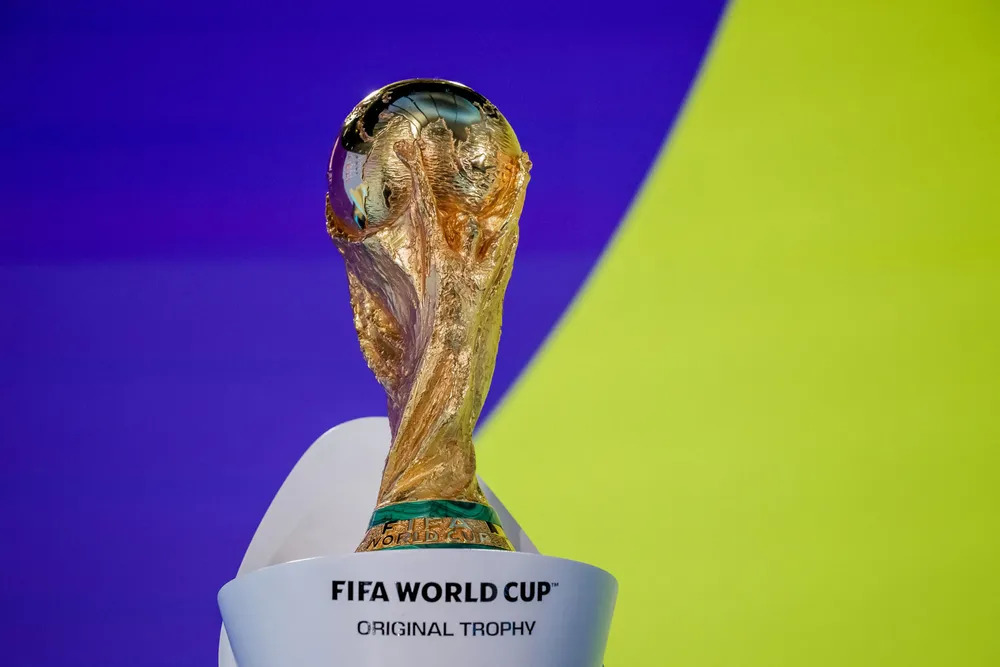
The 2026 FIFA World Cup has reached the stage where reputation has counted for very little. The tournament’s knockout rounds have produced a dramatic shift in momentum, with several of football’s biggest names crashing out while nations once considered outsiders continue to rewrite the script. It has become a World Cup where discipline, belief and teamwork have often proved more valuable than history, and where every passing round has reminded fans that no nation is too big to fail.
The first major shock came when Germany, one of football’s most decorated nations, were knocked out in the Round of 32 by Paraguay. Having comfortably progressed through the group stage, Germany looked capable of mounting a serious title challenge under Julian Nagelsmann. Instead, their campaign ended in dramatic fashion after a penalty shootout defeat that immediately became one of the biggest upsets of the tournament. The fallout was swift, with Nagelsmann later leaving his role by mutual agreement with the German Football Association, ending a project that had promised so much but ultimately delivered another painful World Cup disappointment.
Brazil soon followed, producing arguably the tournament’s most painful exit for a pre-tournament favourite. Entering the competition under Carlo Ancelotti with hopes of ending a 24-year wait for a sixth World Cup title, the Selecao looked impressive during much of the group stage. However, they were stunned by an inspired Norway side led by Erling Haaland in the Round of 16. The defeat once again extended Brazil’s wait for World Cup glory and immediately sparked debate over the direction of the national team, although Ancelotti later confirmed he intends to remain in charge and oversee Brazil’s rebuilding process.
Belgium also failed to justify expectations. Despite arriving with another technically gifted squad, the Red Devils once again struggled to deliver when it mattered most. Their inability to consistently convert possession into victories raised familiar questions about a nation that has repeatedly produced elite talent but has continued to fall short on football’s biggest stage.
Croatia, finalists in 2018 and semi-finalists four years later, were another heavyweight unable to recreate previous successes. Their experienced core, which had inspired memorable World Cup runs over the last decade, found it increasingly difficult to cope with younger, faster opposition. Their exit has fuelled expectations that Croatian football is preparing for a significant generational transition.
Türkiye were widely tipped to become one of Europe’s dark horses after impressive performances leading into the tournament. Instead, inconsistency proved costly. Despite moments of promise, they were unable to build momentum when it mattered most, joining the growing list of fancied teams heading home earlier than expected.
While football’s traditional powers have struggled, several nations have embraced the opportunity to make history.
Paraguay have undoubtedly emerged as one of the tournament’s greatest success stories. Their victory over Germany transformed them from outsiders into genuine contenders, with disciplined defending, tactical organisation and remarkable composure becoming the hallmarks of their campaign. Every knockout performance has strengthened belief that they are capable of going even further.
Norway have also exceeded expectations. Although Erling Haaland’s goals were expected to make headlines, few believed the Norwegians possessed enough quality across the squad to compete with football’s elite. Their victory over Brazil changed that perception completely, establishing them as one of the tournament’s most dangerous teams.
Africa has continued to make a strong statement through Senegal and Morocco. Senegal have once again demonstrated the consistency that has made them one of Africa’s leading football nations over the past several years, while Morocco have shown that their historic run to the 2022 semi-finals was no one-off achievement. Both nations remain capable of challenging the world’s traditional heavyweights.
Elsewhere, Uzbekistan and Jordan have continued to surprise observers with fearless performances that reflect the rapid development of Asian football. Their progress has justified FIFA’s expansion of the tournament, proving that emerging football nations can compete with far more established opponents when given the opportunity.
Not every traditional powerhouse has stumbled, but even those still standing have shown vulnerabilities. France, England, Spain, Argentina and Portugal remain among the favourites, yet none has completely dominated the competition. Each has experienced moments where they were pushed far harder than expected, suggesting that the race for the trophy remains remarkably open.
Perhaps that is the defining story of this World Cup. Rather than being controlled by football’s established elite, the tournament has become a celebration of competitive balance. The gap between the sport’s giants and emerging nations continues to shrink, creating one of the most unpredictable World Cups in recent memory.