
Listeners:
Top listeners:
 play_arrow
 Cosoro Afrobeats UK's No.1 Afrobeats Radio Station
 play_arrow
 Cosoro Pidgin Na we bi di No.1 UK Pidgin Radio
 play_arrow
 Cosoro Evergreen UK's No.1 Radio for Timeless African Sounds



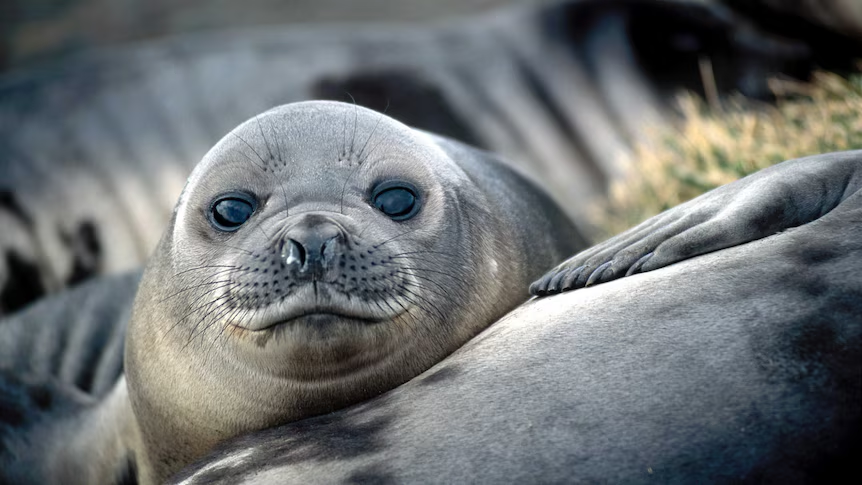
A devastating outbreak of H5N1 bird flu has killed more than 13,000 southern elephant seal pups on Australia’s remote Heard and McDonald Islands, according to new research. Scientists estimate the deaths account for more than 75% of a monitored seal pup population on Heard Island, making it one of the worst wildlife losses linked to the virus in the region.
The findings, published in BioRxiv, were based on drone surveys and field studies conducted between October 2025 and January 2026. Researchers confirmed the presence of H5N1 in several species, including southern elephant seals, king penguins, gentoo penguins, Antarctic fur seals, and South Georgia diving petrels.
The outbreak was first detected after researchers discovered hundreds of dead seal pups across breeding beaches. Further investigations revealed mortality rates as high as 97% in some colonies. Scientists also reported higher-than-normal deaths among king and gentoo penguins, although the impact on penguin populations appears less severe.
According to experts, the virus was likely introduced by migratory birds travelling from other sub-Antarctic islands. The outbreak mirrors similar H5N1 events recorded in South Georgia and other wildlife-rich regions, where seals and seabirds have suffered significant losses.
The World Organisation for Animal Health (WOAH) and the UN Food and Agriculture Organization (FAO) have warned that the current H5N1 outbreak is one of the largest wildlife disease events ever recorded. In recent years, the virus has spread beyond birds to infect seals, sea lions, foxes, bears and other mammals across several continents.
The findings are particularly significant because Australia remains the only continent without a confirmed H5N1 outbreak on its mainland. However, officials say the latest developments show the need for continued monitoring and stronger biosecurity measures.
Scientists fear the outbreak could have long-term consequences for vulnerable wildlife populations already facing challenges from climate change and changing ocean conditions, underscoring the growing global threat posed by the virus.