Listeners:
Top listeners:
 play_arrow
 Cosoro Afrobeats UK's No.1 Afrobeats Radio Station
 play_arrow
 Cosoro Pidgin Na we bi di No.1 UK Pidgin Radio
 play_arrow
 Cosoro Evergreen UK's No.1 Radio for Timeless African Sounds


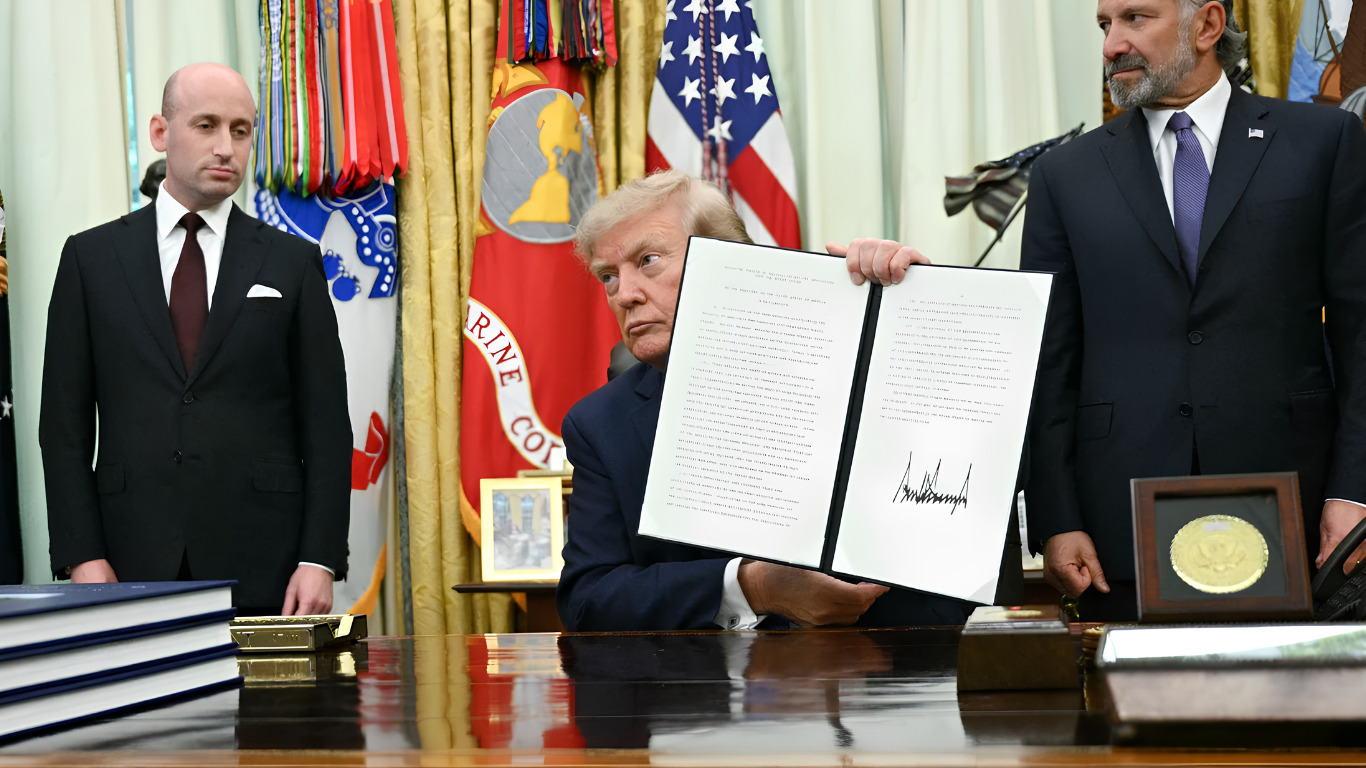
U.S. President Donald Trump has renewed his efforts to limit birthright citizenship by signing two new executive orders aimed at tightening who automatically qualifies for U.S. citizenship at birth. The move comes just a few months after the U.S. Supreme Court rejected his previous attempt to end the long-standing constitutional protection, setting the stage for another legal showdown over one of America’s most debated immigration policies.
One of the new executive orders broadens the categories of non-citizens whose children would not automatically qualify for U.S. citizenship. Under the directive, children born in the United States to certain non-citizen parents—including individuals linked to foreign terrorist organisations, foreign government employees, people accused of immigration fraud, or those living in U.S. territories where citizenship is not automatically granted—could be denied birthright citizenship.
The second order targets “birth tourism,” a practice in which pregnant foreign nationals travel to the United States specifically to give birth so their children obtain American citizenship. The Trump administration argues that the practice is being exploited by individuals seeking long-term immigration advantages or access to U.S. benefits.
Speaking from the White House, Trump said the measures were designed to protect America’s immigration system and prevent what he described as abuse of existing citizenship laws. Senior White House adviser Stephen Miller also defended the policy, arguing that birth tourism undermines the integrity of the country’s immigration framework.
The renewed effort follows a major legal defeat earlier this year. Shortly after returning to office in 2025, Trump signed an executive order attempting to end automatic birthright citizenship for many children born to non-citizen parents. That order was challenged in court, and in June 2026 the U.S. Supreme Court ruled that the administration could not enforce the policy because birthright citizenship remains protected under the 14th Amendment to the U.S. Constitution.
Ratified in 1868 after the American Civil War, the 14th Amendment states that “all persons born or naturalized in the United States, and subject to the jurisdiction thereof, are citizens of the United States.” The amendment was originally adopted to guarantee citizenship to formerly enslaved people, but for more than a century it has also been interpreted as granting citizenship to nearly everyone born on U.S. soil, regardless of their parents’ immigration status.
The Supreme Court has reinforced that interpretation several times, most notably in the landmark United States v. Wong Kim Ark decision in 1898, which established that children born in the U.S. to foreign parents are generally entitled to citizenship under the Constitution.
Legal scholars say Trump’s latest executive orders face significant constitutional hurdles. While immigration experts acknowledge that the president has authority to tighten visa rules and restrict entry for people suspected of travelling to the U.S. solely for childbirth, many argue that denying citizenship to children born on American soil would require either a constitutional amendment or a reversal of longstanding Supreme Court precedent.
The administration has repeatedly cited birth tourism as a growing concern, although independent researchers suggest the practice represents only a small fraction of births in the United States. Estimates from the non-partisan Migration Policy Institute indicate that approximately 22,000 to 26,000 babies are born annually through birth tourism—far below the hundreds of thousands referenced by Trump.
Immigration advocates and civil rights groups have already signalled that they are preparing fresh legal challenges against the new executive orders, arguing they violate constitutional protections. Supporters of the measures, however, insist they are necessary to strengthen border security and prevent abuse of U.S. immigration laws.