

Listeners:
Top listeners:
 play_arrow
 Cosoro Afrobeats UK's #1 Afrobeats Radio Station
 play_arrow
 Cosoro Pidgin Na we bi di #1 UK Pidgin Radio
 play_arrow
 Cosoro Evergreen UK's #1 Radio for Timeless African Sounds



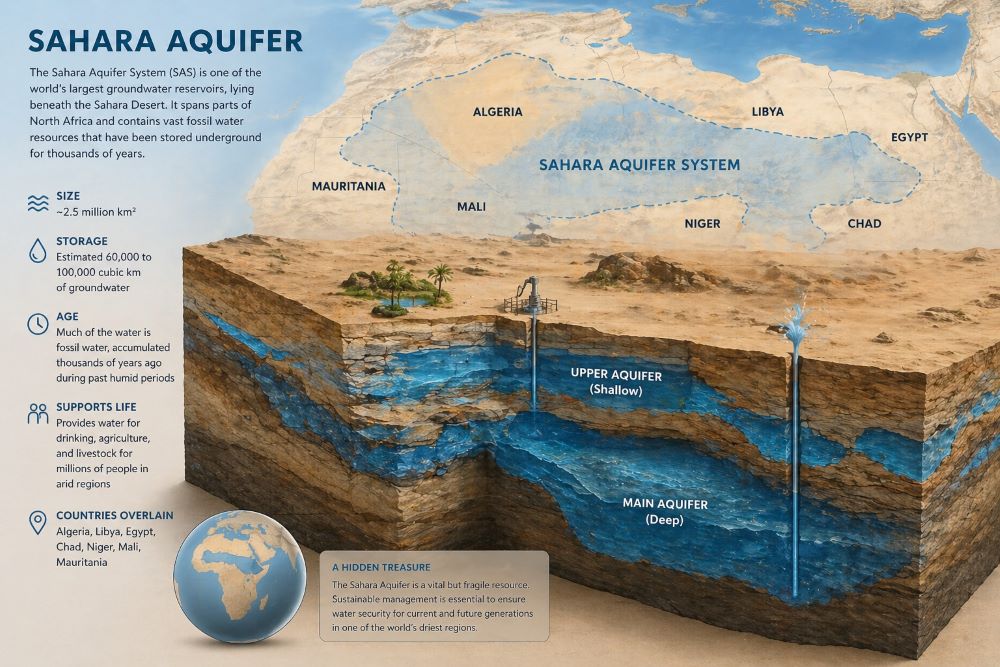
Libya, Algeria, and Tunisia have signed a trilateral agreement to jointly manage and protect one of the world’s largest underground freshwater reserves, marking a significant step toward addressing water scarcity across North Africa.
The deal, concluded on April 30 in Tripoli, focuses on the sustainable use of the North-Western Sahara Aquifer System, a vast transboundary water source that spans the three countries and supports millions of people in arid regions. Officials described the agreement as a strategic effort to ensure fair distribution and long-term preservation of the resource.
Under the terms of the pact, the three nations will establish a coordinated management framework aimed at improving data sharing, monitoring water extraction, and strengthening scientific research on the aquifer. The agreement also outlines institutional mechanisms to oversee cooperation and ensure compliance with sustainability goals.
Authorities from the three countries emphasized the urgency of collective action, citing increasing pressure on groundwater reserves due to climate change, population growth, and agricultural demand. Much of the aquifer is considered non-renewable, making careful management essential to avoid depletion.
The new accord builds on earlier cooperation efforts but introduces a more structured and formalized system of governance. It is expected to enhance transparency and coordination among the countries while reducing the risk of overuse or conflict over shared resources.
Water scarcity remains a critical challenge across North Africa, one of the driest regions in the world. Libya, in particular, relies heavily on groundwater for its water supply, while Algeria and Tunisia also depend significantly on underground reserves for agriculture and domestic use.
Analysts say the agreement reflects a broader recognition that transboundary resources require joint solutions. By working together, the three nations aim to strengthen water security, support economic stability, and mitigate the environmental risks associated with unsustainable water use.
The deal is being viewed as a model for regional cooperation, highlighting how shared natural resources can serve as a basis for collaboration rather than conflict in water-stressed regions.