

Listeners:
Top listeners:
 play_arrow
 Cosoro Afrobeats UK's No.1 Afrobeats Radio Station
 play_arrow
 Cosoro Pidgin Na we bi di No.1 UK Pidgin Radio
 play_arrow
 Cosoro Evergreen UK's No.1 Radio for Timeless African Sounds


Pic: Africa News
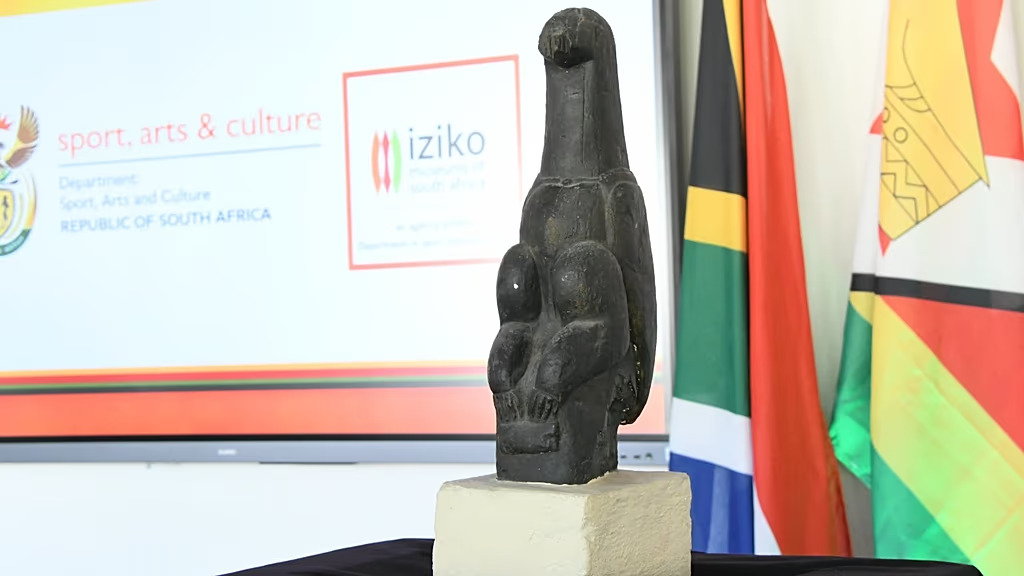
South Africa has returned looted human remains and a sacred national artefact to Zimbabwe, marking a powerful moment of cultural restoration more than a century after they were taken during the colonial era. The handover, described as both symbolic and emotional, reflects a growing movement across Africa to reclaim heritage lost through historical exploitation.
The repatriation included ancestral human remains and a centuries-old stone carving known as the Zimbabwe Bird, an important national emblem tied to the country’s identity and history. The items were officially handed over during a ceremony at the Iziko South African Museum, attended by government officials from both nations.
The Zimbabwe Bird, believed to have originated from the ancient Great Zimbabwe civilisation, holds deep cultural and spiritual significance. It symbolizes unity, resilience, and national pride, and is prominently featured on Zimbabwe’s flag and coat of arms. Its removal in the late 19th century, when colonial powers looted cultural artefacts across Africa represented not just the loss of an object, but a disruption of historical identity.
Equally significant is the return of the human remains, which were reportedly taken unethically for research purposes during the colonial period. Little is known about the individuals, but officials emphasized that their return is essential for dignity and closure. Once back in Zimbabwe, the remains are expected to undergo further study before being laid to rest in accordance with cultural traditions.
Speaking on the development, South Africa’s Culture Minister described the act as one of justice and healing, noting that the removal of sacred objects and human remains stripped communities of their history and identity. The return, he said, is about restoring dignity and reconnecting people with their heritage.
This move is part of a broader global push to repatriate African artefacts taken during colonial rule. For decades, museums and institutions around the world have faced increasing pressure to return looted items, with many African nations arguing that these objects are not just historical pieces, but living symbols of culture and ancestry.
Zimbabwe has previously recovered some of its looted artefacts following independence in 1980, but this latest return coming nearly 140 years after the original removal of the Zimbabwe Bird, represents a significant milestone. It also highlights growing cooperation between African nations in addressing historical injustices.
Beyond the ceremony, the repatriation carries deep emotional and spiritual meaning. For many communities, ancestral remains are sacred, and their return is essential for proper burial rites and cultural continuity. The act of bringing them home is seen not just as a political gesture, but as a restoration of balance between the past and the present.
As more countries and institutions begin to confront the legacy of colonialism, this moment stands as a reminder that history is not just something to be remembered, it is something that, when possible, can be repaired.