
Listeners:
Top listeners:
 play_arrow
 Cosoro Afrobeats UK's #1 Afrobeats Radio Station
 play_arrow
 Cosoro Pidgin Na we bi di #1 UK Pidgin Radio
 play_arrow
 Cosoro Evergreen UK's #1 Radio for Timeless African Sounds


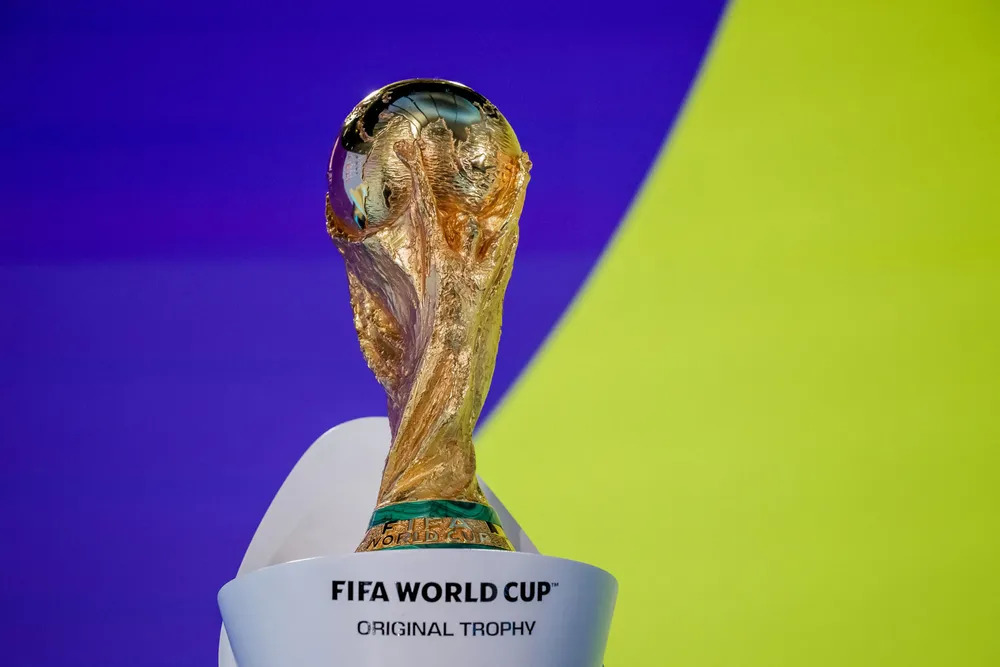
For nearly a century, Africa’s relationship with the FIFA World Cup has been one of promise, progress and painful near-misses. The continent has produced some of football’s most gifted players, inspired unforgettable moments and consistently challenged the sport’s traditional powers. Yet despite those achievements, one milestone remains elusive: no African nation has ever won the FIFA World Cup.
Now, as the 2026 tournament gathers momentum across the United States, Canada and Mexico, there is a growing sense that something different may be unfolding. Africa’s representatives are not merely participating; they are competing, frustrating favourites and proving they belong among the world’s elite.
The strongest statement so far has arguably come from Morocco. Four years after becoming the first African and Arab nation to reach a World Cup semi-final in Qatar 2022, the Atlas Lions have shown that achievement was no fluke. Their impressive 1-1 draw against five-time champions Brazil demonstrated tactical maturity, defensive discipline and confidence against one of football’s most decorated nations. Moroccan players matched Brazil for long stretches of the game and left many observers believing they could once again be capable of a deep tournament run.
Elsewhere, DR Congo have emerged as one of the tournament’s early surprise packages. Few gave them much chance against a star-studded Portugal side led by Cristiano Ronaldo. Yet the Congolese refused to be intimidated. After falling behind early, they responded with intensity and determination to secure a deserved 1-1 draw. Reports after the match noted that DR Congo created more chances and often looked the more dangerous side, a remarkable achievement against one of Europe’s traditional football powers.
Ivory Coast have also continued the momentum generated by their Africa Cup of Nations triumph. The Elephants secured a hard-fought victory over Ecuador, showing the resilience and defensive organisation that made them African champions. Rather than relying solely on individual brilliance, the Ivorians have looked like a balanced and disciplined unit capable of competing with higher-ranked opponents.
South Africa may not have collected as many headlines, but Bafana Bafana have demonstrated resilience throughout their campaign. After opening against hosts Mexico, they battled for a valuable draw against Czechia and remain firmly in contention. Their performances have reflected the growing competitiveness of African football rather than the underdog narrative often attached to teams from the continent.
Egypt, Ghana, Senegal, Algeria and debutants Cape Verde have also entered the tournament carrying significant expectations. Egypt continue to rely on a blend of experienced leadership and tactical organisation, while Ghana’s return to the World Cup has reignited memories of one of the greatest “what if” moments in African football history—their heartbreaking quarter-final defeat to Uruguay in 2010. Senegal, meanwhile, remain one of Africa’s most respected sides after their recent successes on the continental stage.
The question now is whether 2026 could finally be the year Africa breaks through.
Historically, the continent has come painfully close. Cameroon became the first African nation to reach the quarter-finals in 1990. Senegal matched the feat in 2002. Ghana were seconds away from becoming Africa’s first semi-finalist in 2010 before their dramatic penalty-shootout loss to Uruguay. Morocco then rewrote history in 2022 by reaching the semi-finals and defeating football giants Spain and Portugal along the way.
Yet no African nation has ever reached a World Cup final, let alone lifted the trophy.
This year’s tournament feels different because African teams are arriving with greater confidence, stronger domestic structures, more players competing at Europe’s biggest clubs and a proven belief that they can defeat traditional powers. Morocco have already shown what is possible. Ivory Coast are African champions. Senegal remain battle-tested. DR Congo have announced themselves on the global stage. Cape Verde’s qualification alone demonstrates the growing depth of football across the continent.
Of course, winning the World Cup remains football’s most difficult challenge. Nations such as Argentina, France, Brazil, Germany, Spain and England still possess immense depth and tournament experience. History also favours those traditional giants; every World Cup winner to date has come from either Europe or South America.
But if the opening stages of the 2026 tournament have taught fans anything, it is that African football is no longer content with simply participating. The continent’s representatives are playing with ambition, tactical intelligence and growing belief.
Whether Africa finally produces its first World Cup winner remains to be seen. What is already clear, however, is that the continent’s teams are no longer outsiders looking in. They are increasingly becoming genuine contenders capable of shaping the destiny of football’s greatest prize.