

Listeners:
Top listeners:
 play_arrow
 Cosoro Afrobeats UK's No.1 Afrobeats Radio Station
 play_arrow
 Cosoro Pidgin Na we bi di No.1 UK Pidgin Radio
 play_arrow
 Cosoro Evergreen UK's No.1 Radio for Timeless African Sounds


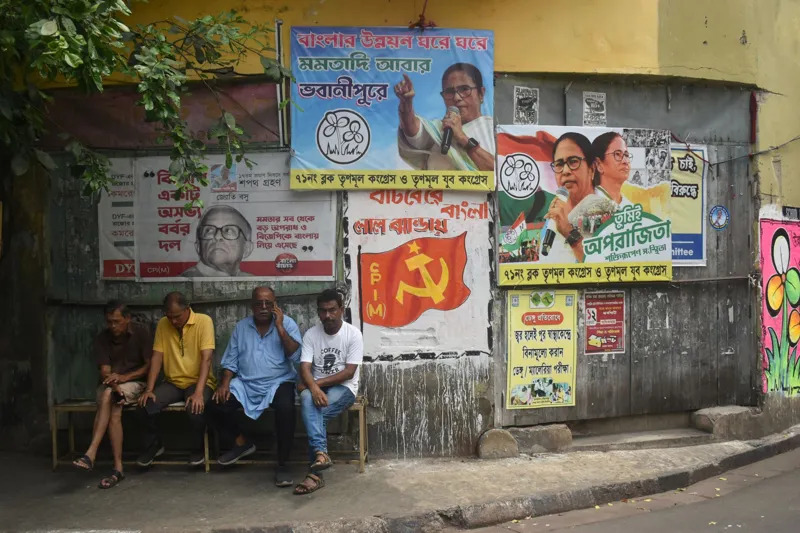
Sudipta Das / NurPhoto via Getty Images
A sweeping revision of electoral rolls in India’s eastern state of West Bengal has triggered widespread controversy after nearly nine million voters were removed ahead of a state election, raising concerns over disenfranchisement, political bias, and the integrity of the democratic process.
Approximately 12% of the state’s 76 million voters have been removed under the Special Intensive Revision (SIR) exercise conducted by the Election Commission of India. Officials say the process is designed to eliminate duplicate, outdated, or ineligible entries while ensuring a “pure electoral roll.”
Among those affected is Muhammad Daud Ali, a 65-year-old former army technician who recently discovered that his name, and those of his three children had been deleted from the voter list despite possessing valid identification, including a passport and military service records. Only his wife remains eligible to vote.
Of the nine million deletions, more than six million were categorised as absentee or deceased voters. However, the status of another 2.7 million people—including Ali and his family—remains unresolved. Their eligibility will now be decided by special tribunals, leaving many in limbo just weeks before voting begins.
The revision process has proven especially contentious in West Bengal, the only state where an additional adjudication layer was introduced after the initial review. The move has drawn criticism from the ruling All India Trinamool Congress, led by Chief Minister Mamata Banerjee, which accuses authorities of targeting specific communities for political gain.
The state is a major electoral battleground, with Prime Minister Narendra Modi and his Bharatiya Janata Party seeking to unseat Banerjee’s government. West Bengal holds one of the highest numbers of parliamentary seats in India, making it a key prize in national politics.
The dispute has reached the Supreme Court of India, which has allowed elections to proceed without resolving all challenges related to the deletions. As a result, millions of affected voters may be unable to cast their ballots in the upcoming polls scheduled for later this month.
Central to the controversy is the use of a new AI-driven system by election authorities to identify “logical discrepancies” in voter records. Critics argue that the technology has led to arbitrary exclusions, even for individuals who submitted documentation linking them to earlier electoral rolls considered reliable.
As West Bengal heads into a high-stakes election, the controversy over voter deletions has cast a shadow over the process, raising broader questions about electoral fairness, the use of technology in governance, and the protection of democratic rights in the world’s largest democracy.