
Listeners:
Top listeners:
 play_arrow
Cosoro Afrobeats UK's #1 Afrobeats Radio Station
 play_arrow
Cosoro Pidgin Na we bi di #1 UK Pidgin Radio
 play_arrow
Cosoro Evergreen UK's #1 Radio for Timeless African Sounds


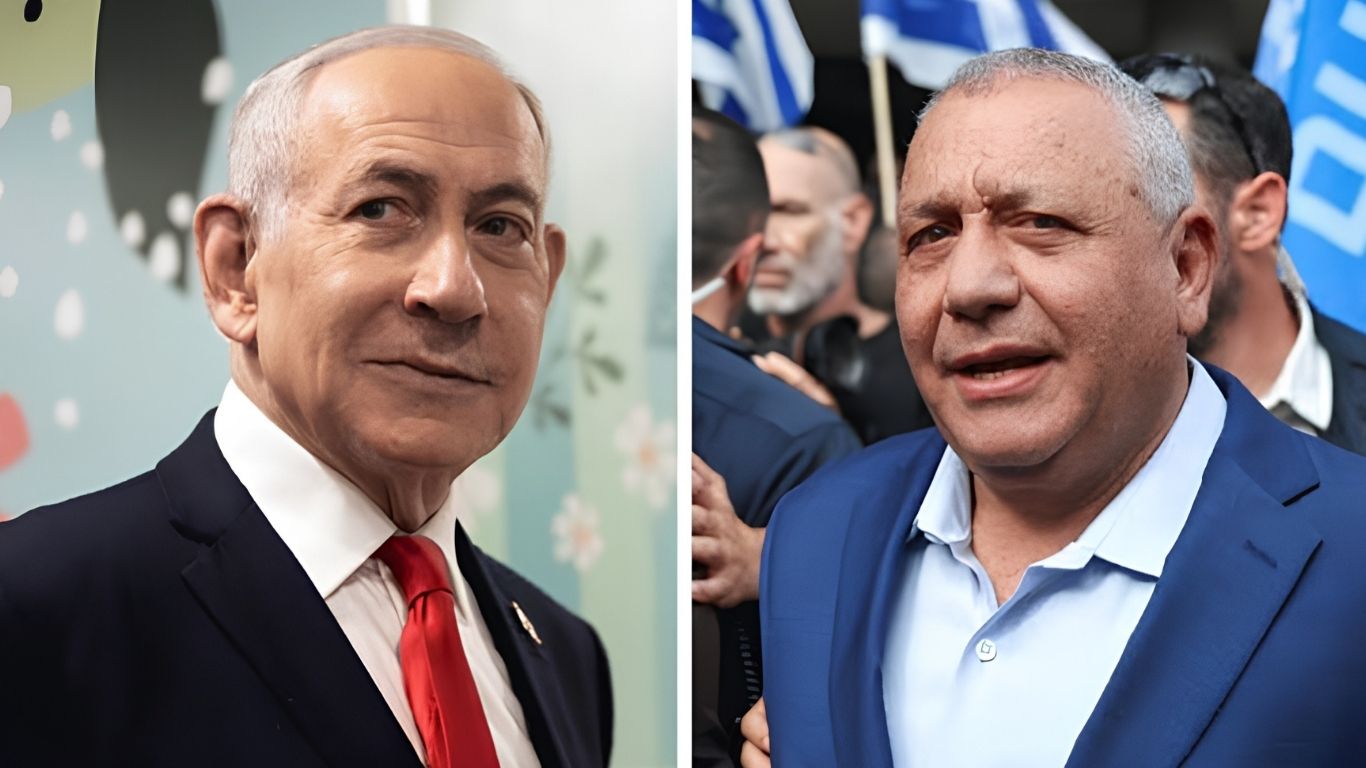
Israel’s general election has ended without a clear winner, as exit polls indicate that Prime Minister Benjamin Netanyahu and his main challenger, Gadi Eisenkot, have both fallen short of the parliamentary majority needed to form a government. The election, held on Tuesday, October 27, has set the stage for potentially weeks of negotiations as political parties attempt to build a governing coalition in the 120 seat Knesset. At least 61 seats are required to secure a majority.
Exit polls released by Israel’s major television networks initially showed Eisenkot’s opposition bloc with a slight advantage before revised projections placed the two camps almost level. Some estimates gave Netanyahu’s Likud led bloc around 52 seats, compared with 49 for Eisenkot’s alliance, while other projections placed both sides at approximately 51 seats each. The figures remain unofficial as votes continue to be counted.
Netanyahu, Israel’s longest-serving prime minister, addressed supporters in Jerusalem and called for the formation of a strong right-wing government. He highlighted his government’s military actions against regional adversaries, including Iran, and argued that Israel had an opportunity to address what he described as the Iranian threat. He also rejected the prospect of forming a government dependent on Arab led parties.
Eisenkot, a former Israeli military chief who leads the Yashar party, told supporters in Tel Aviv that the public had voted for change. He pledged to work towards forming a government and described the result as the beginning of a new political era. Opposition figures have also called on Netanyahu to step aside following the inconclusive result.
One of the most significant developments was the strong performance projected for Arab led parties, which could collectively win around 18 to 19 seats. Their increased representation could make them influential in coalition negotiations if neither major bloc can secure enough support independently. However, Netanyahu has ruled out relying on Arab parties to form a government, while positions within the opposition camp could also complicate negotiations.
The election took place against the backdrop of years of conflict, including the war in Gaza following the Hamas led attacks of October 7, 2023, and subsequent regional confrontations involving Iran and other neighbouring areas. Netanyahu’s leadership and handling of national security were central issues during the campaign.
Voter turnout reached approximately 77.7 per cent, the highest level since 1999, according to reported figures from Israel’s Central Elections Committee. Participation among Palestinian citizens of Israel also rose sharply, strengthening the potential parliamentary influence of Arab led political parties.
With official results still being tallied, neither Netanyahu nor Eisenkot has secured a clear path to power. The coming days will determine whether either camp can assemble a majority coalition or whether Israel faces a prolonged period of political uncertainty.