
Listeners:
Top listeners:
 play_arrow
 Cosoro Afrobeats UK's #1 Afrobeats Radio Station
 play_arrow
 Cosoro Pidgin Na we bi di #1 UK Pidgin Radio
 play_arrow
 Cosoro Evergreen UK's #1 Radio for Timeless African Sounds



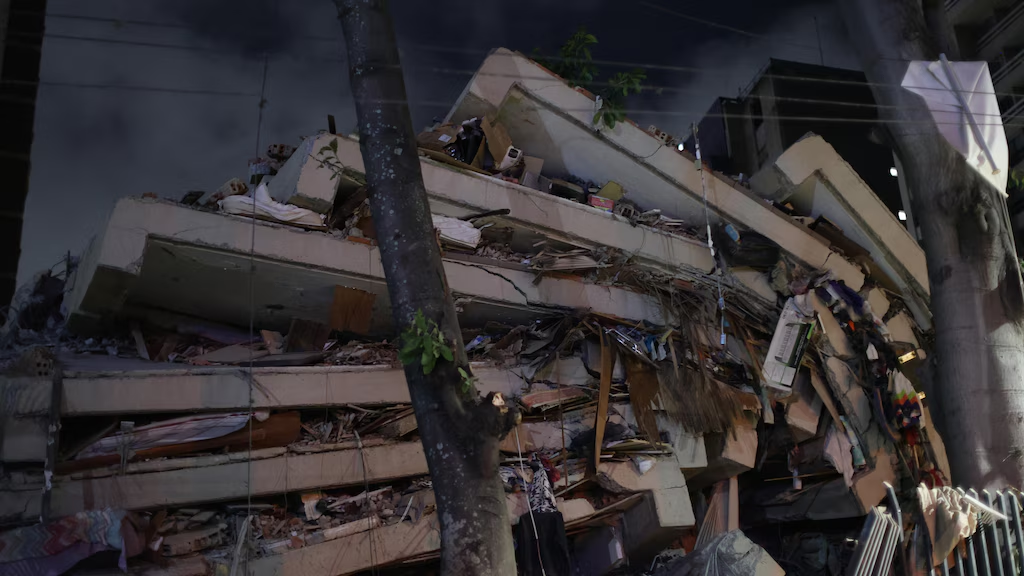
Image Credit: Getty Images
More than a week after Venezuela’s devastating twin earthquakes, the challenge has shifted from rescuing survivors to helping hundreds of thousands of people rebuild their lives. While search teams continue to comb through the rubble, many families are now facing a different battle finding food, clean water, shelter and medical care. The disaster has evolved from a rescue operation into a full-scale humanitarian crisis.
The powerful earthquakes left entire neighbourhoods in ruins, particularly in the coastal state of La Guaira and parts of Caracas. As the death toll continues to climb into the thousands and tens of thousands remain displaced or missing, survivors have been forced to sleep in temporary camps or out in the open, uncertain when or if they will be able to return home. Rescue workers from dozens of countries remain on the ground, but the scale of destruction has overwhelmed available resources.
For many residents, the greatest concern is no longer escaping collapsed buildings but surviving the days that follow. Food supplies are running low, access to drinking water is limited, and hospitals are struggling to cope with the growing number of injured. Families queue for humanitarian aid while volunteers work tirelessly to distribute essentials, highlighting how quickly a natural disaster can turn into a crisis of basic survival.
The earthquake has also exposed long-standing vulnerabilities in Venezuela’s infrastructure and public services. Years of economic hardship had already placed immense pressure on healthcare, housing and emergency response systems. When disaster struck, those weaknesses became impossible to ignore, leaving many communities feeling that they were largely left to depend on neighbours, volunteers and international assistance during the critical first days.
Despite the hardship, stories of resilience continue to emerge. Volunteers, rescue workers and ordinary citizens have risked their lives searching for survivors, while occasional rescues from beneath the rubble have offered moments of hope amid widespread grief. Yet for many Venezuelans, recovery will not end when the rescue efforts stop. Rebuilding homes, restoring livelihoods and healing emotional wounds will take months, if not years. The tragedy is a reminder that the true cost of a disaster is measured not only by the lives lost but also by the long road survivors must travel to rebuild their future.