
Listeners:
Top listeners:
 play_arrow
 Cosoro Afrobeats UK's No.1 Afrobeats Radio Station
 play_arrow
 Cosoro Pidgin Na we bi di No.1 UK Pidgin Radio
 play_arrow
 Cosoro Evergreen UK's No.1 Radio for Timeless African Sounds


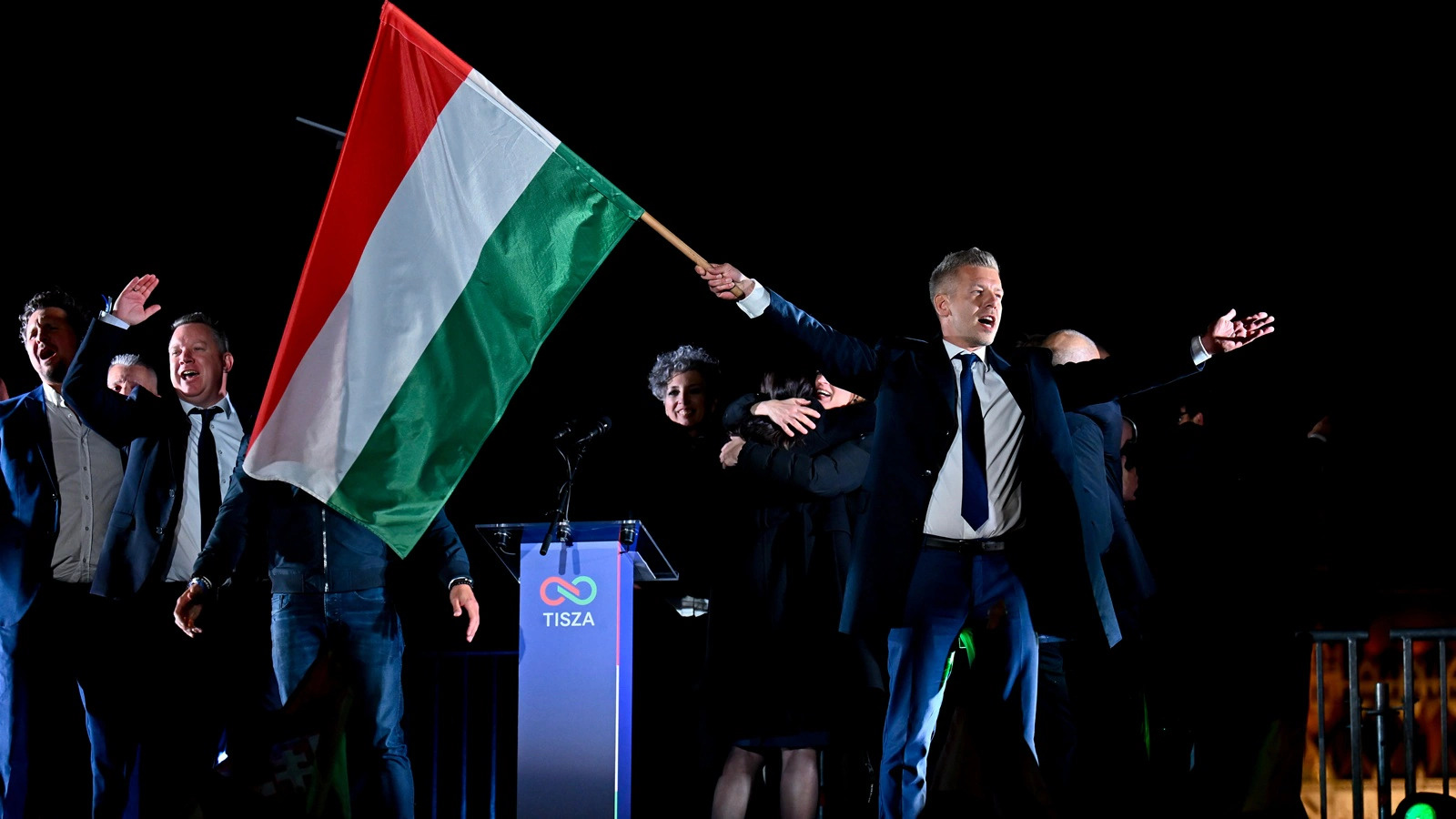
Peter Magyar, leader of the opposition Tisza party, waves the Hungarian flag following the announcement of the partial results of the parliamentary election, in Budapest, Hungary. (AP Photo)
Hungary has entered a new political era after voters decisively removed Prime Minister Viktor Orbán from power, ending his 16-year rule in a landmark election that could reshape the country’s future at home and within Europe.
Preliminary results show that opposition leader Péter Magyar and his Tisza Party secured a sweeping victory, winning around 138 out of 199 parliamentary seats, enough for a two-thirds majority. This supermajority gives the new leadership the power to pass major reforms, including constitutional changes.
Orbán’s ruling Fidesz party suffered a heavy defeat, dropping to about 55 seats, less than half of its previous strength in parliament. Conceding defeat, Orbán acknowledged the outcome of the vote, bringing an end to one of the longest-serving governments in modern European politics.
The election, held on 12 April 2026, saw record voter turnout, reflecting strong public interest in what many viewed as a decisive moment for the country’s direction. Analysts say the result represents a clear rejection of Orbán’s leadership style, often described as “illiberal democracy,” which critics argued weakened democratic institutions and strained relations with the European Union.
During his time in power, Orbán built a reputation as a nationalist leader with strict immigration policies and close ties to countries such as Russia and China. His government was also accused by critics of limiting media freedom, weakening judicial independence, and concentrating power within the state.
In contrast, Magyar campaigned on promises to restore democratic standards, tackle corruption, and rebuild Hungary’s relationship with the European Union. His message resonated with a broad coalition of voters, including those frustrated by economic challenges, rising inflation, and concerns over governance.
Scenes of celebration were reported in the capital, Budapest, as supporters welcomed the result as a “new beginning” and a chance to realign Hungary more closely with Europe. International leaders also reacted positively, viewing the outcome as a potential reset in Hungary’s often tense relationship with the EU.
Despite the scale of the victory, challenges remain for the incoming government. Orbán’s influence over key institutions, including the judiciary, media, and parts of the economy could complicate efforts to implement reforms quickly.
Still, the election marks a historic turning point. After more than a decade and a half of Orbán’s leadership, Hungarian voters have chosen change—opening the door to a new political direction that could redefine the country’s role in Europe and beyond.