
Listeners:
Top listeners:
 play_arrow
 Cosoro Afrobeats UK's #1 Afrobeats Radio Station
 play_arrow
 Cosoro Pidgin Na we bi di #1 UK Pidgin Radio
 play_arrow
 Cosoro Evergreen UK's #1 Radio for Timeless African Sounds


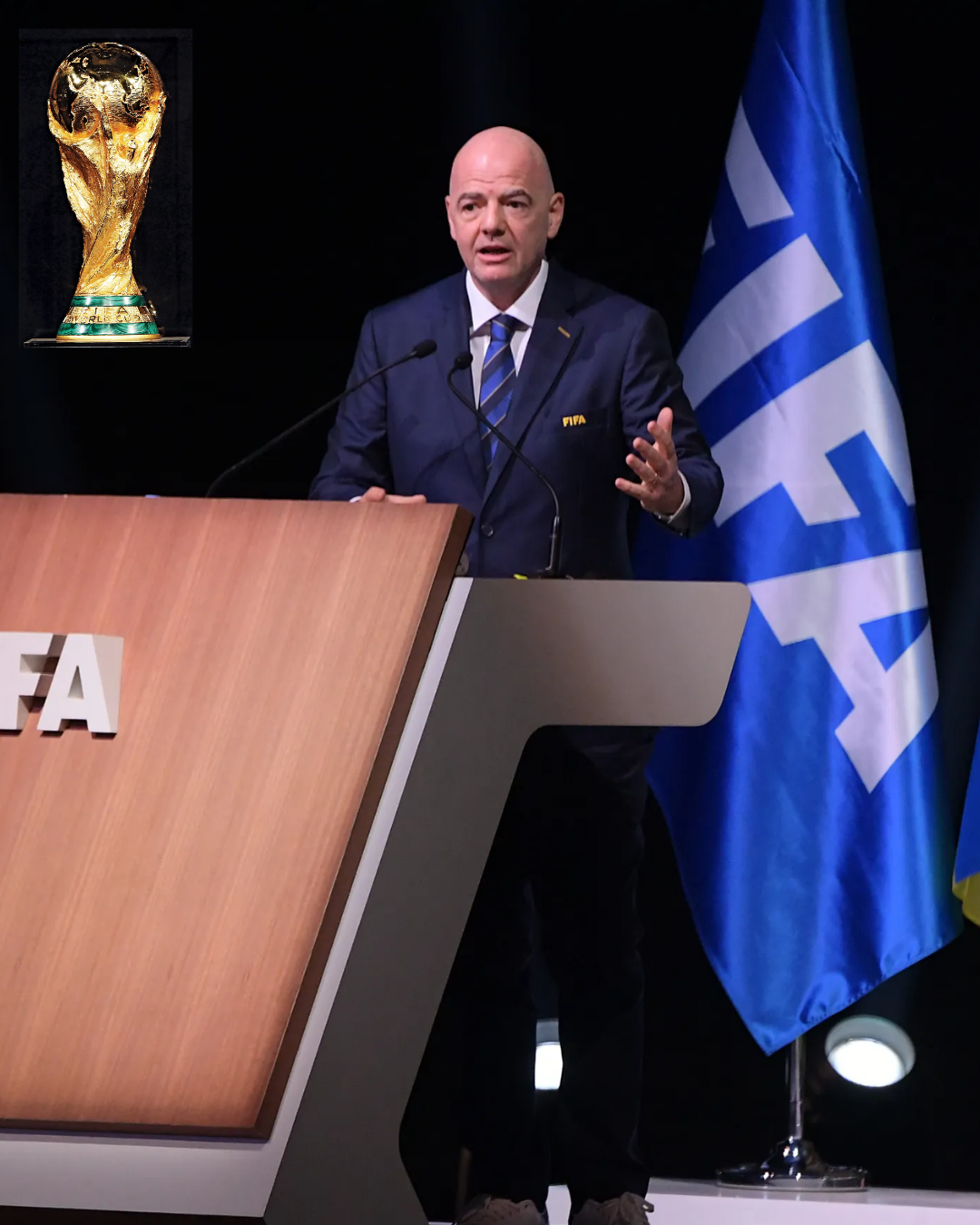
The road to the 2026 FIFA World Cup has taken an unexpected geopolitical turn, as FIFA president Gianni Infantino confirmed that Iran will “for sure” participate in the tournament, despite the ongoing conflict involving the country, raising serious questions about the intersection of sport, politics, and global security.
Iran’s place at the World Cup had been thrown into doubt following escalating tensions and military conflict involving the United States and its allies in the Middle East. The situation, which has already disrupted global energy markets and triggered international diplomatic strain, has also cast uncertainty over travel, safety, and logistics for the tournament set to be hosted across the United States, Canada, and Mexico.
Yet, speaking at a global forum, Infantino made FIFA’s stance clear: qualification remains the ultimate criterion. Iran, having earned its place on merit, will be part of the competition. He emphasised that football should act as a unifying force, insisting that sport must remain separate from political conflict, even in times of crisis.
“Iran is coming for sure,” Infantino stated, reinforcing that the players deserve the opportunity to compete and represent their country on the global stage. His comments highlight FIFA’s long-standing position that football can serve as a bridge during turbulent times, even as the realities of war present undeniable complications.
The seriousness of the situation, however, cannot be overlooked. The ongoing conflict has raised legitimate concerns about security, particularly with Iran scheduled to play matches on U.S. soil, one of the central parties involved in the tensions. There have been debates around whether fixtures could be moved or adjusted, but FIFA has so far maintained its commitment to the original tournament structure.
This moment reflects a broader tension within global sport: the challenge of maintaining neutrality in an increasingly politicised world. Historically, football has often found itself caught between diplomacy and competition, from boycotts to wartime disruptions. The 2026 World Cup now risks becoming another chapter in that complex history.
At the same time, Iran’s participation carries deep symbolic weight. For players and fans alike, it represents more than just football; it is about identity, representation, and the power of sport to provide moments of unity, even amid division. Infantino himself acknowledged this, expressing hope that by the time the tournament begins, the situation would have stabilised.