
Listeners:
Top listeners:
 play_arrow
 Cosoro Afrobeats UK's #1 Afrobeats Radio Station
 play_arrow
 Cosoro Pidgin Na we bi di #1 UK Pidgin Radio
 play_arrow
 Cosoro Evergreen UK's #1 Radio for Timeless African Sounds


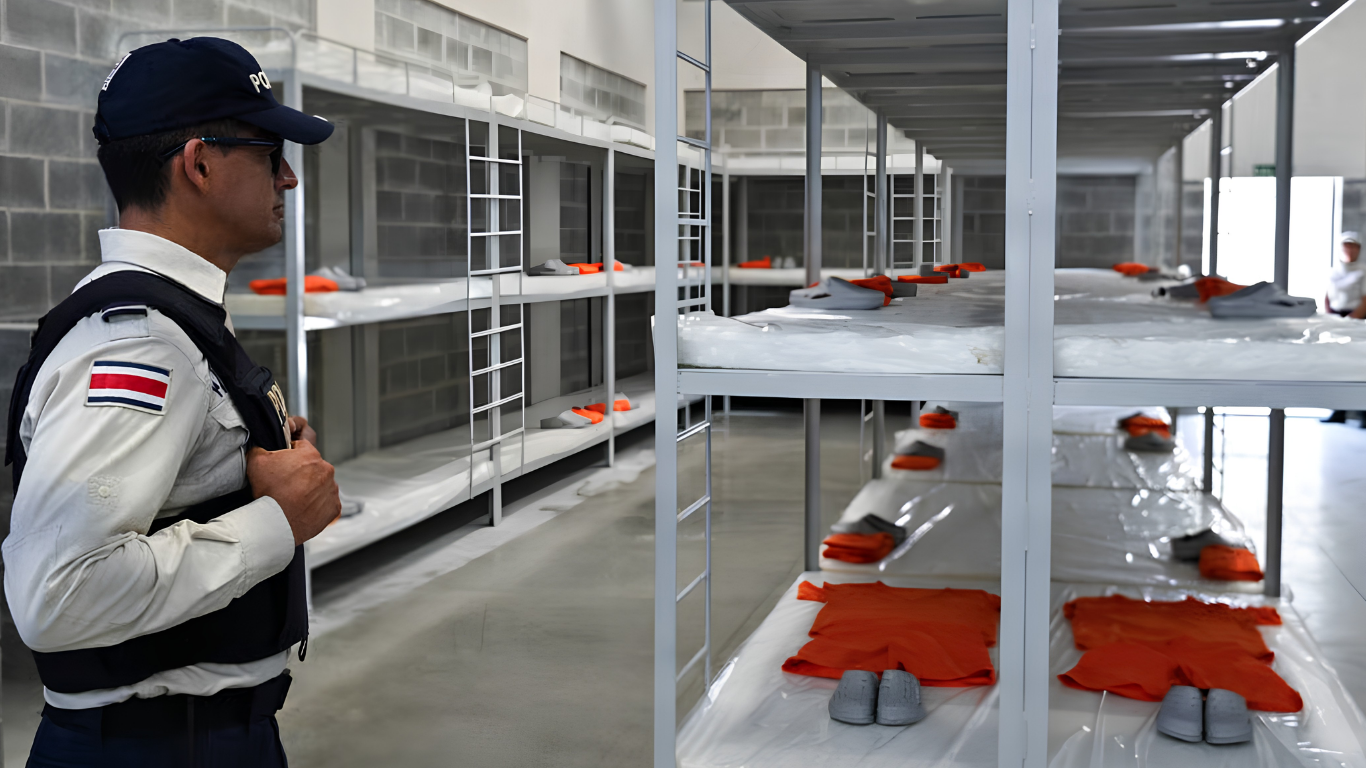
Image Credit: AFP
Costa Rica has inaugurated a new maximum-security mega-prison modelled on El Salvador’s controversial approach to fighting organised crime, marking a major shift in the country’s response to rising drug-related violence. The facility, designed to hold 5,100 inmates, is intended to isolate dangerous criminals and disrupt criminal networks operating both inside and outside the prison system.
President Laura Fernández officially opened the High-Containment Centre Against Organised Crime, known as CACCO, on October 14, 2026. Located near the capital, San José, the prison cost approximately US$35 million and can accommodate around one-fifth of Costa Rica’s existing prison population. The first transfers of inmates are scheduled for later in October, with authorities describing the facility as a central part of efforts to restore control over prisons increasingly threatened by organised crime.
The project draws inspiration from El Salvador’s Terrorism Confinement Centre, or CECOT, which has become the centrepiece of President Nayib Bukele’s aggressive anti-gang strategy. Since introducing a state of emergency in 2022, Bukele’s government has detained more than 91,000 people, while official figures show a dramatic decline in homicides. However, human rights organisations have raised concerns about arbitrary arrests, alleged mistreatment of detainees and restrictions on due process. Costa Rica’s adoption of elements of this model has therefore renewed debate about how governments can combat organised crime without weakening legal protections.
Costa Rica’s decision follows a sharp deterioration in its security situation. The country recorded 905 homicides in 2023, followed by 876 in 2024 and 873 in 2025, according to figures cited by Reuters. Authorities have linked much of the violence to rival criminal groups competing for control of drug-trafficking routes and local markets. Once regarded as one of Central America’s more peaceful countries, Costa Rica has increasingly become an important transit point for cocaine moving from South America towards Europe and other international markets.
The government says CACCO will help separate high-risk offenders from the wider prison population and prevent criminal organisations from directing illegal activities from behind bars. Fernández has pledged to make Costa Rica a global benchmark for prison security and plans to visit El Salvador to study Bukele’s methods. Nevertheless, the facility’s opening does not by itself address the wider challenges facing the country, including criminal recruitment, drug trafficking and the need for effective investigations and successful prosecutions.
Costa Rica is also part of a broader regional shift towards tougher criminal justice policies. Ecuador has opened a prison modelled on El Salvador’s approach, while political leaders in other Latin American countries have proposed similar high-security facilities. Supporters argue that isolating dangerous offenders can weaken criminal networks and improve public safety. Critics, however, warn that mass incarceration and weakened safeguards can lead to wrongful detention, overcrowding and abuses if independent oversight is inadequate.
As Costa Rica prepares to transfer prisoners into its largest new facility, the central test will be whether the prison can reduce violence and disrupt organised crime while respecting the rule of law. Its long-term success will depend not only on security infrastructure but also on the quality of investigations, judicial independence, prison oversight and broader efforts to prevent criminal networks from recruiting new members.