
Listeners:
Top listeners:
 play_arrow
Cosoro Afrobeats UK's #1 Afrobeats Radio Station
 play_arrow
Cosoro Pidgin Na we bi di #1 UK Pidgin Radio
 play_arrow
Cosoro Evergreen UK's #1 Radio for Timeless African Sounds


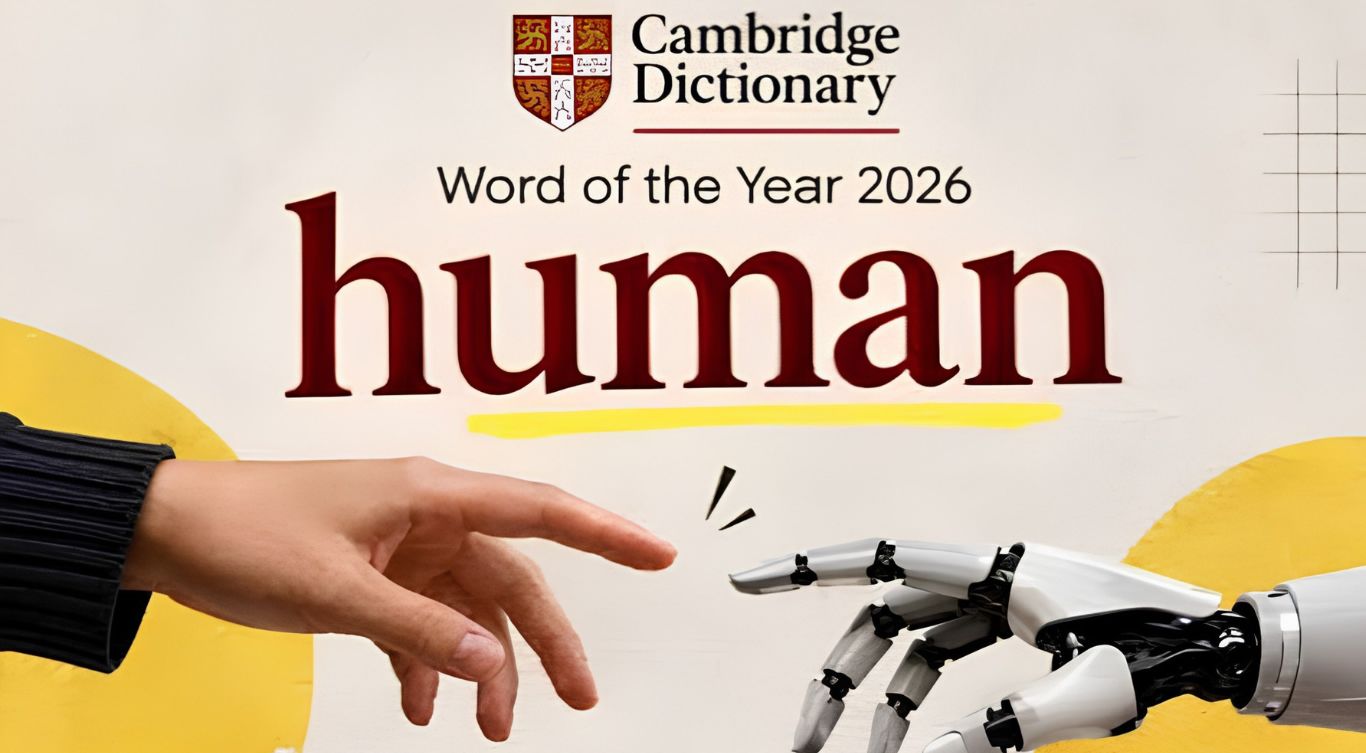
The Cambridge Dictionary has named “human” its Word of the Year for 2026, highlighting growing global conversations about human identity, creativity and the future of society as artificial intelligence continues to reshape everyday life.
Announced on November 18, the selection reflects increasing concerns about how AI is changing the way people work, communicate, learn and express themselves. According to Cambridge, the growing influence of artificial intelligence has encouraged people to reconsider what makes humans different from machines.
The dictionary defines “human” as having the qualities, faults and feelings that people possess, as opposed to gods, animals or machines. Its lexicographers said the renewed interest in the word reflects a desire to protect and appreciate qualities such as creativity, emotional connection, compassion and independent thinking.
Colin McIntosh, a lexicographer at Cambridge Dictionary, explained that AI is changing how people discuss what it means to be human. He noted that concerns about losing important human abilities by relying too heavily on technology have become more prominent, from education to professional work.
The choice also reflects wider debates involving technology leaders, academics, artists and public figures. Microsoft co-founder Bill Gates has argued that certain roles, including caregiving, should remain centred on people, while AI expert Geoffrey Hinton has raised concerns about the consequences of developing increasingly advanced artificial intelligence.
The entertainment and creative industries have also been part of the debate, with personalities including Scarlett Johansson and Cate Blanchett supporting campaigns against the unauthorised use of human-created artistic work to train AI systems. Concerns about AI-generated imitations of people’s voices and appearances have further intensified discussions about identity and ownership.
Cambridge also highlighted several other words that attracted attention during the year. These included “agent”, referring to an artificial intelligence system capable of operating with limited human control; “analogue”, describing activities or objects that do not involve digital technology; and “wholesome”, meaning something beneficial to a person’s physical, emotional or moral well being.
Other words added to the dictionary in 2026 included “aura farming”, which describes deliberately presenting an attractive or admirable personality, particularly on social media, and “looksmaxxing”, a trend centred on efforts to improve physical appearance.
The selection of “human” comes at a time when artificial intelligence is becoming increasingly capable of performing tasks traditionally associated with people. Cambridge’s decision therefore goes beyond recognising a popular word; it reflects a wider question about how society can embrace technological progress while preserving the qualities that make human life meaningful.