

Listeners:
Top listeners:
 play_arrow
Cosoro Afrobeats UK's #1 Afrobeats Radio Station
 play_arrow
Cosoro Pidgin Na we bi di #1 UK Pidgin Radio
 play_arrow
Cosoro Evergreen UK's #1 Radio for Timeless African Sounds


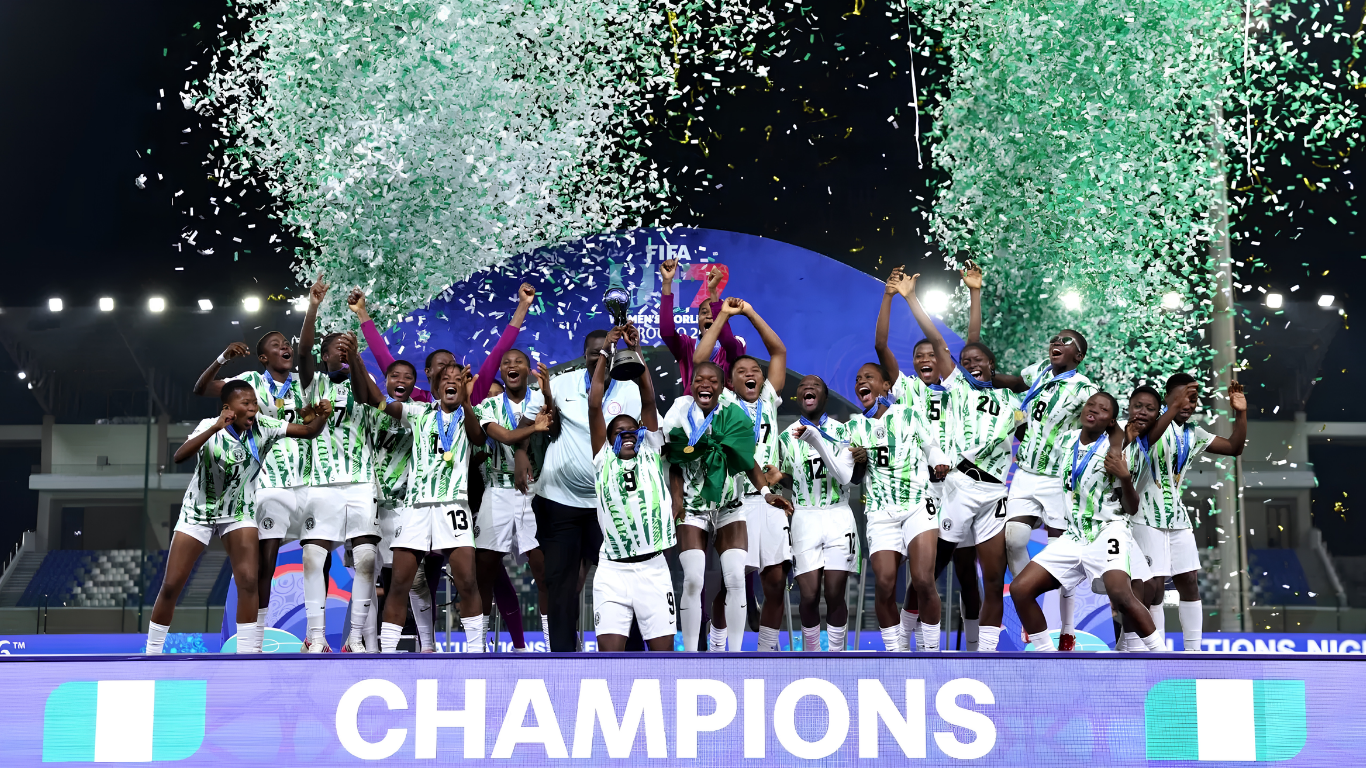
Nigeria’s Flamingos have written a new chapter in African football after winning the 2026 FIFA U-17 Women’s World Cup, becoming the first African nation to lift the trophy. Their 2-1 victory over Japan in the final in Rabat, Morocco, on November 7 was more than a historic title win. It demonstrated the quality, resilience and potential of Nigeria’s young female footballers, while sending a strong message about the growing strength of African women’s football.
One of the biggest lessons from the campaign was the importance of responding to setbacks. The Flamingos began the tournament with a 2-1 defeat to Poland, a result that threatened their hopes of progressing far. However, they recovered with victories over Puerto Rico, defending champions North Korea, Mexico and Venezuela before defeating Brazil 3-1 in the semi-finals. Their journey showed that a disappointing start does not have to determine the outcome of an entire competition.
The tournament also demonstrated that African teams can compete with and defeat the established powers of women’s youth football. Nigeria’s 3-1 victory over North Korea was particularly significant, ending the defending champions’ hopes of securing another title. The Flamingos then produced an impressive semi-final performance against Brazil, recording 35 attempts on goal before securing their place in the final. Their victories challenged the perception that European and Asian nations should automatically be considered favourites in women’s youth competitions.
Another important takeaway was the value of teamwork. Although players such as Oluebube Umejiaku and Awawu Bashiru delivered crucial performances, Nigeria’s success was built on contributions across the squad. Bashiru opened the scoring against Japan in the final before Umejiaku doubled the advantage shortly after the break. Japan pulled one back through Fuki Ito in the 80th minute, but the Flamingos held on to secure the trophy. Umejiaku was named Player of the Match, while her performances also earned her the tournament’s Golden Ball recognition.
The achievement also highlights the importance of developing young female footballers. Nigeria had previously finished third at the competition in 2022, but the 2026 victory shows the progress possible when emerging talent receives opportunities to compete at the highest level. Under head coach Akeem Busari, the team demonstrated discipline, attacking confidence and the ability to adapt to different opponents.
Beyond Nigeria, the triumph represents a major milestone for Africa. The Flamingos have become the first African team to win the FIFA U-17 Women’s World Cup and the first African nation to claim both the men’s and women’s U-17 World Cup titles. The Golden Eaglets had previously won the boys’ competition five times. Nigeria’s latest success therefore goes beyond another trophy: it gives African women’s football a new landmark and raises expectations for the next generation.