

Listeners:
Top listeners:
 play_arrow
 Cosoro Afrobeats UK's #1 Afrobeats Radio Station
 play_arrow
 Cosoro Pidgin Na we bi di #1 UK Pidgin Radio
 play_arrow
 Cosoro Evergreen UK's #1 Radio for Timeless African Sounds


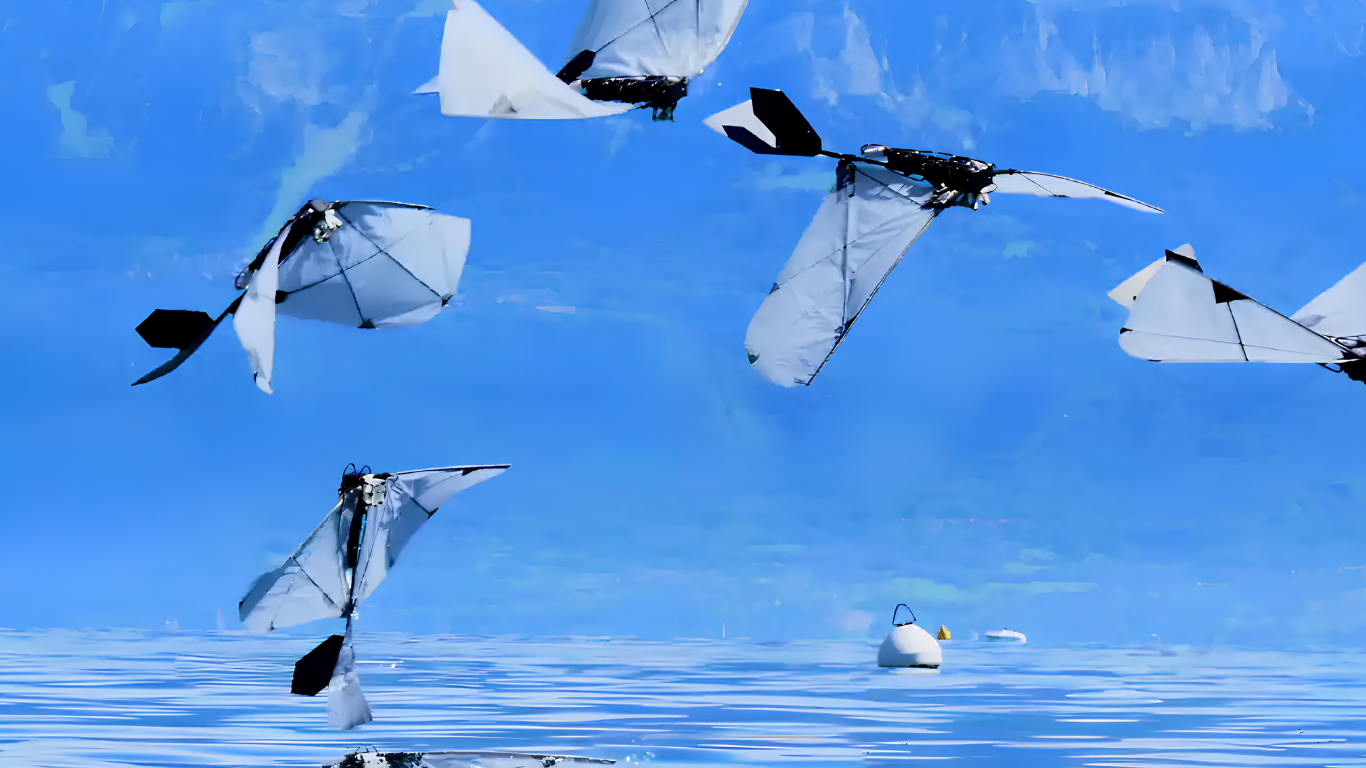
Engineers at the Massachusetts Institute of Technology (MIT) have developed a groundbreaking robot capable of seamlessly transitioning between flying in the air and swimming underwater, marking a significant step forward in robotics and autonomous exploration. The new machine, known as the Flying Aquatic Ambulatory Vehicle (FAAV), could transform how scientists, emergency responders, and military teams carry out missions in environments where both aerial and underwater mobility are essential.
The innovation addresses one of the biggest engineering challenges in robotics: moving efficiently between two completely different environments. Traditional drones are designed for flight, while underwater vehicles rely on entirely different propulsion systems. Creating a machine that can perform effectively in both settings without stopping or requiring manual adjustments has remained a major obstacle for researchers.
MIT’s team overcame this challenge by designing a lightweight robot equipped with a unique propulsion system that functions in both air and water. During demonstrations, the vehicle was able to fly above the surface, dive directly into the water, continue swimming beneath it, and then emerge again to resume flight. This uninterrupted transition eliminates the need for separate aerial and underwater vehicles, making operations faster and more efficient.
Researchers say the project was inspired by nature, particularly animals such as puffins, cormorants, and diving birds that can move effortlessly between flying and swimming. By studying how these animals adapt to different environments, the engineers developed a design capable of handling the drastic changes in resistance, buoyancy, and propulsion encountered during the transition between air and water.
The potential applications for the technology are wide-ranging. Scientists could use the robot to monitor marine ecosystems, inspect coral reefs, or study coastal environments without deploying multiple machines. Search-and-rescue agencies may eventually rely on similar technology to locate victims during floods, shipwrecks, or coastal disasters by scanning from the air before diving underwater for closer inspection.
The technology could also prove valuable for infrastructure inspections. Bridges, offshore wind farms, underwater pipelines, and ships often require both aerial surveys and underwater examinations. A dual-environment robot would allow engineers to complete these tasks more quickly while reducing operational costs.
Defence experts have also noted the potential military applications of amphibious robotic systems. Vehicles capable of switching between air and underwater environments could assist with reconnaissance, surveillance, mine detection, and maritime security missions. However, the MIT researchers emphasise that their current focus remains on advancing the underlying technology and exploring scientific and civilian uses.
Although the prototype has demonstrated impressive capabilities, researchers acknowledge that more work is needed before the robot becomes commercially available. Future improvements will focus on increasing flight endurance, extending underwater operating time, enhancing autonomous navigation, and enabling the robot to carry sensors or specialised equipment for different missions.
The development comes as robotics continues to evolve rapidly, with researchers around the world pushing the boundaries of what autonomous machines can achieve. Recent advances in artificial intelligence, lightweight materials, and battery technology have accelerated innovation across industries ranging from healthcare to environmental monitoring.