

Listeners:
Top listeners:
 play_arrow
 Cosoro Afrobeats UK's No.1 Afrobeats Radio Station
 play_arrow
 Cosoro Pidgin Na we bi di No.1 UK Pidgin Radio
 play_arrow
 Cosoro Evergreen UK's No.1 Radio for Timeless African Sounds


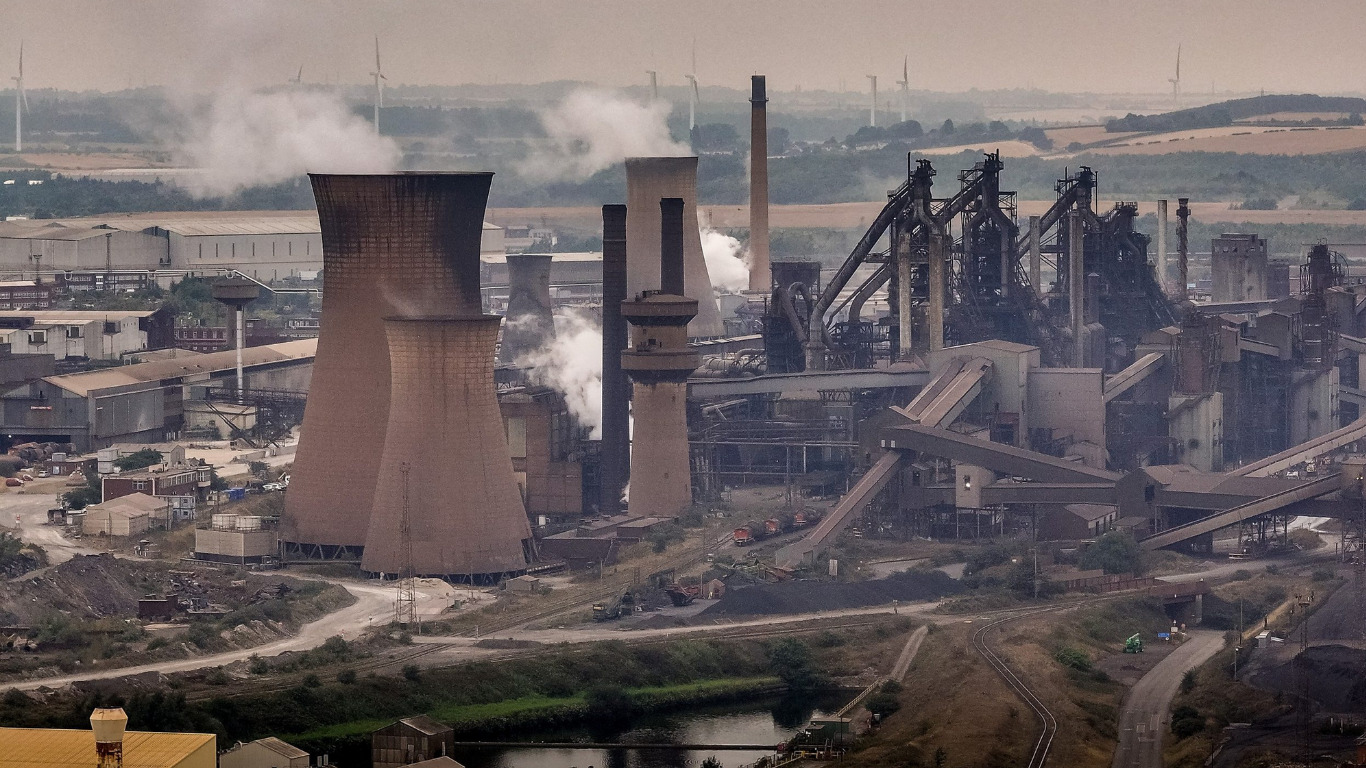
China has criticised the United Kingdom’s decision to nationalise British Steel, describing the move as an infringement on the rights of its Chinese owner, Jingye Group, and warning that it could weaken investor confidence among Chinese companies operating in Britain.
The dispute marks a significant moment in UK-China economic relations, as national security concerns continue to play an increasingly important role in government decisions involving foreign-owned strategic industries.
The British government announced that it would bring British Steel into public ownership, arguing that the move was necessary to protect thousands of jobs and preserve the country’s steelmaking capability. British Steel’s Scunthorpe plant is the UK’s last remaining producer of virgin steel, which is made directly from raw materials such as iron ore rather than recycled scrap metal. This type of steel is essential for major infrastructure projects, including railways, construction, and other sectors considered critical to the country’s economy.
Government officials believe that allowing the plant to close would leave the United Kingdom as the only G7 nation without the ability to produce virgin steel domestically, making the country more dependent on imported steel for vital industries.
China’s Ministry of Commerce responded by expressing strong dissatisfaction with the decision. In a statement, the ministry said Britain had disregarded Jingye Group’s contribution to the UK economy and had taken control of the company under the justification of national security. Beijing argued that the move infringes upon Jingye’s legitimate rights and interests and could undermine the confidence of Chinese companies looking to invest in the UK.
China also urged Britain to honour its commitments under the China–UK Bilateral Investment Treaty, an agreement signed in 1986 to encourage and protect investments between both countries. Although Beijing said it would support Chinese companies in safeguarding their legal rights, it did not specify what actions it might take.
The decision follows years of financial difficulties at British Steel. Jingye Group, which acquired the company in 2020, had previously revealed that the business was losing approximately £700,000 every day. At the same time, reports from the UK’s National Audit Office estimated that keeping the Scunthorpe plant operational could cost the British government around £1.3 million daily.
Despite these financial challenges, British ministers maintain that preserving domestic steel production is in the country’s strategic interest. Beyond protecting thousands of direct and indirect jobs, they argue that maintaining the ability to manufacture virgin steel is essential for national resilience and future infrastructure development.
The government has indicated that taking the company into public ownership is intended to stabilise operations while a longer-term solution is considered. Officials are expected to explore future options for British Steel rather than retain permanent ownership.
The disagreement has also highlighted a broader global trend in which governments are placing greater emphasis on protecting industries regarded as strategically important. In recent years, several countries have tightened scrutiny of foreign investments in sectors linked to national security, including energy, telecommunications, technology, and manufacturing.
For China, however, the British Steel decision raises wider concerns about the treatment of Chinese investments overseas. Beijing has argued that actions such as these could discourage businesses from investing in Britain if they believe political considerations may override commercial agreements.
Jingye Group is expected to seek compensation for its investment, and the case could become an important test of the protections provided under the China–UK Bilateral Investment Treaty. The outcome will likely be closely watched by investors, policymakers, and businesses in both countries, as it may shape future economic cooperation between the United Kingdom and China.