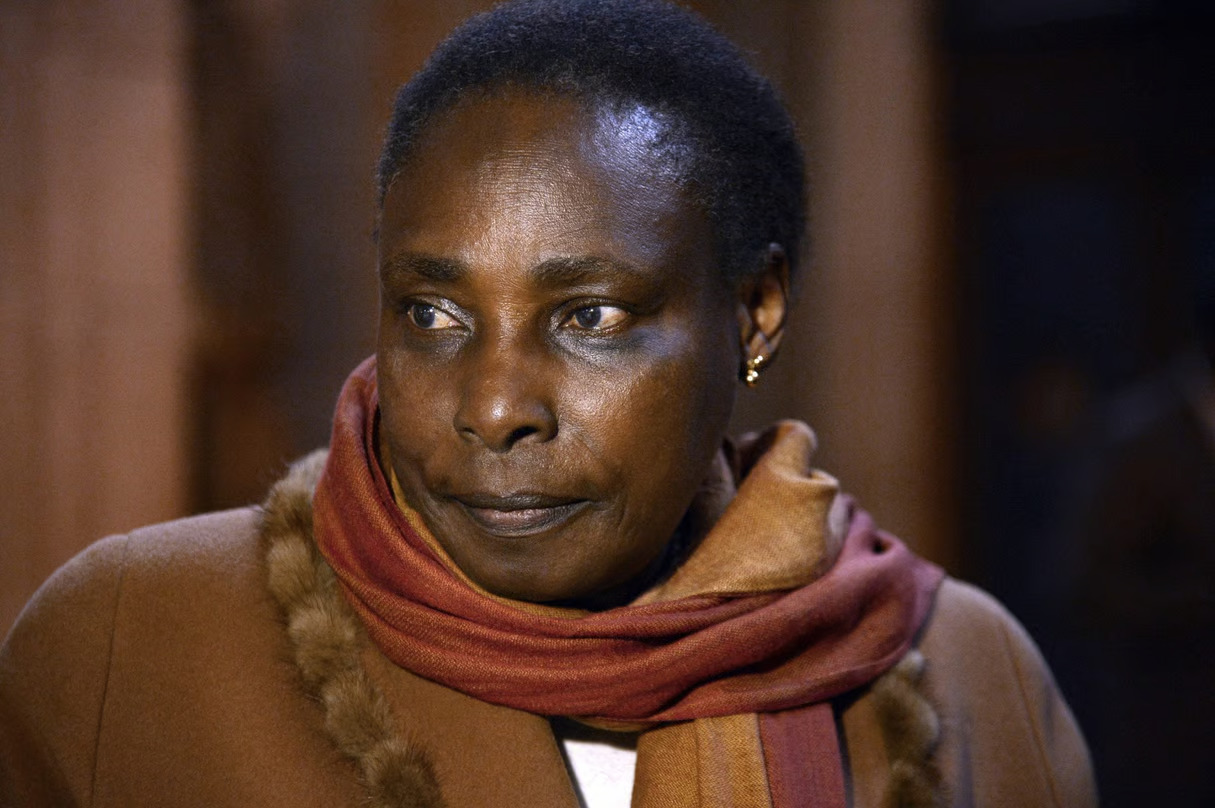
Rwanda’s former First Lady, Agathe Habyarimana, is preparing a fresh legal battle after a French court ordered the reopening of a long-running investigation into her alleged role in the 1994 Rwandan genocide.
The 83-year-old widow of former President Juvénal Habyarimana will appeal the ruling handed down by the Paris Court of Appeal, which overturned an earlier 2025 decision dismissing the case due to insufficient evidence.
The investigation centers on accusations that Agathe Habyarimana played a role in organizing and supporting the genocide that killed more than 800,000 Tutsis and moderate Hutus over a 100-day period in 1994. The mass killings erupted after the assassination of President Habyarimana when his plane was shot down near Kigali, an event that triggered one of the darkest chapters in modern African history.
French prosecutors have alleged for years that the former first lady was closely linked to the “Akazu,” an influential inner circle of Hutu power figures accused of planning and coordinating massacres during the genocide. Investigators claim members of the group helped prepare execution lists and mobilize extremist militias responsible for widespread killings across Rwanda.
Agathe Habyarimana has consistently denied the accusations. She has never been formally charged and currently holds the status of an “assisted witness” under French law — a legal position between a witness and a formal suspect. Her lawyers insist there is no credible evidence tying her directly to the atrocities and have described the decision to reopen the investigation as “incomprehensible.”
According to her legal team, she plans to challenge the ruling before France’s Supreme Court and may ultimately take the matter to the European Court of Human Rights if necessary.
The case has remained highly sensitive for both Rwanda and France, whose historical relationship has long been strained by accusations surrounding France’s role during the genocide. Critics have repeatedly accused French authorities of delaying accountability for key suspects who fled to France after the killings ended. French officials have denied complicity but, in recent years, Paris has acknowledged serious political and institutional failures linked to the period.
Agathe Habyarimana has lived in France since being evacuated by French troops during the early days of the genocide. Rwanda previously sought her extradition, but French courts rejected those requests, leading instead to years of judicial investigations within France itself.
Human rights organizations and survivors’ groups have welcomed the reopening of the inquiry, arguing that the passage of time should not prevent accountability for genocide-related crimes. The renewed investigation comes as international efforts continue to pursue suspects linked to the 1994 killings, even decades after the violence ended.
The latest court decision ensures that one of the genocide’s most politically charged cases remains active, reigniting debate over justice, historical responsibility, and France’s complex ties with Rwanda more than thirty years after the tragedy.


 play_arrow
  play_arrow
  play_arrow