
Listeners:
Top listeners:
 play_arrow
 Cosoro Afrobeats UK's No.1 Afrobeats Radio Station
 play_arrow
 Cosoro Pidgin Na we bi di No.1 UK Pidgin Radio
 play_arrow
 Cosoro Evergreen UK's No.1 Radio for Timeless African Sounds


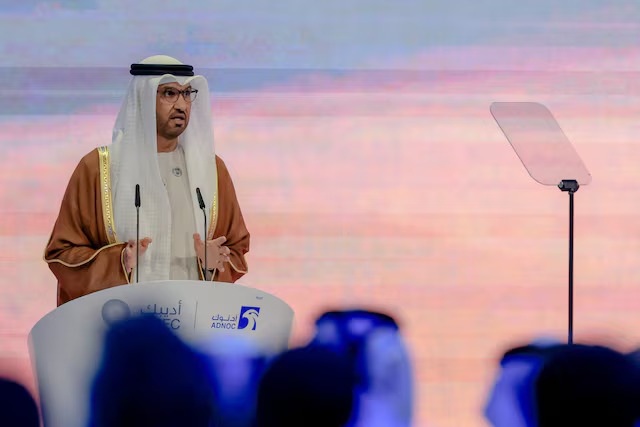
Pic Credit: Reuters
The United Arab Emirates has defended its decision to leave the OPEC, with the head of its national oil company insisting the move is not aimed at any country but reflects long-term economic priorities.
Sultan Al Jaber, chief executive of the Abu Dhabi National Oil Company (ADNOC), said the country’s exit from both OPEC and the wider OPEC+ alliance is intended to serve national interests and support future growth, rather than signal a geopolitical dispute.
Speaking on Monday, Al Jaber emphasized that the decision allows the UAE greater flexibility to expand production capacity, attract investment, and strengthen its position in global energy markets. He added that the country remains committed to being a “reliable and responsible partner” despite stepping away from the producer group.
The UAE formally exited OPEC on 1 May 2026, ending decades of membership in the influential oil alliance. The move marks a significant shift in global energy dynamics, as the country is one of the group’s major producers and had previously operated under production quotas designed to stabilize oil prices.
Analysts say the decision reflects growing frustration within the UAE over those limits, which constrained its ability to increase output despite having the capacity to do so. By leaving the group, Abu Dhabi gains the freedom to boost production independently and pursue its strategy of expanding capacity to around five million barrels per day in the coming years.
The announcement has also drawn attention due to its timing, coming amid geopolitical tensions in the Middle East and disruptions to global oil supply routes. Some observers have suggested the move could weaken OPEC’s influence over oil markets and potentially lead to increased competition among producers.
Despite these concerns, UAE officials have been keen to downplay any notion of conflict, particularly with regional heavyweight Saudi Arabia, which has traditionally led OPEC. Al Jaber’s remarks reinforce the message that the exit is part of a broader economic and industrial strategy, rather than a political statement.
As global energy markets continue to evolve, the UAE’s departure signals a shift toward greater national control over oil policy, even as it maintains ties with other producers and positions itself for a more flexible role in the future of energy.