
Listeners:
Top listeners:
 play_arrow
 Cosoro Afrobeats UK's No.1 Afrobeats Radio Station
 play_arrow
 Cosoro Pidgin Na we bi di No.1 UK Pidgin Radio
 play_arrow
 Cosoro Evergreen UK's No.1 Radio for Timeless African Sounds


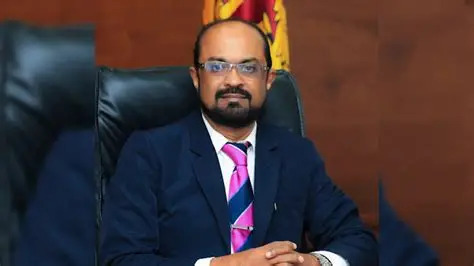
Sri Lanka’s Energy Minister Kumara Jayakody has resigned from his post, along with the ministry’s secretary, amid mounting controversy over alleged irregularities in coal imports used for power generation, the government has confirmed.
The resignations were submitted to President Anura Kumara Dissanayake on Friday and are intended to allow a full and independent investigation into claims involving the import of low-quality coal for the country’s only coal-fired power plant, the Lakvijaya facility.
According to official statements, the minister stepped down to ensure transparency in the inquiry process, while government officials stressed that there were no direct findings of fraud or corruption involving the minister himself. Instead, authorities say the focus of the investigation will be on procurement procedures and decision-making within the broader energy supply chain.
The controversy follows a special audit that identified possible irregularities in coal procurement for the 2025–2026 power generation cycle, raising concerns about whether proper standards were followed in securing fuel supplies.
The issue is particularly sensitive in Sri Lanka, where the Lakvijaya power plant accounts for a significant share of electricity generation. Any disruption in coal quality or supply has a direct impact on national energy stability, already strained in recent years by economic crisis, fuel shortages, and reliance on imported energy sources.
Officials have confirmed that the government has launched a wider review of coal imports stretching back several years, signaling a broader attempt to address long-standing concerns in the sector. The investigation is expected to take several months and will assess procurement systems and accountability mechanisms within state energy agencies.
While the government has framed the resignations as a step toward restoring public trust, opposition figures have pointed to the development as evidence of deeper structural issues in the country’s energy governance. The resignation also marks one of the most high-profile ministerial departures under the current administration.
Sri Lanka continues to face ongoing energy challenges as it recovers from its recent financial crisis, with authorities balancing electricity demand, fuel imports, and efforts to stabilize public finances under an IMF-supported reform program.
As the investigation proceeds, attention will remain on whether the probe leads to systemic reforms in the energy sector—or further political fallout in a country still navigating economic recovery and public accountability pressures.