

Listeners:
Top listeners:
 play_arrow
 Cosoro Afrobeats UK's No.1 Afrobeats Radio Station
 play_arrow
 Cosoro Pidgin Na we bi di No.1 UK Pidgin Radio
 play_arrow
 Cosoro Evergreen UK's No.1 Radio for Timeless African Sounds


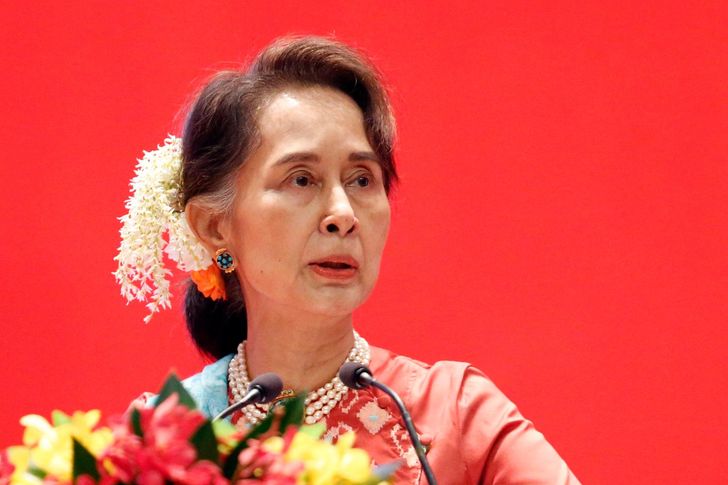
Photo: EPA
Myanmar’s military-led government has reduced the prison sentence of former leader Aung San Suu Kyi and released former president Win Myint as part of a large-scale prisoner amnesty, signaling a significant, though limited shift in its handling of high-profile political detainees.
The move was ordered by Min Aung Hlaing, who recently assumed the presidency after a controversial election. The amnesty covers more than 4,000 prisoners and coincides with traditional New Year clemency measures, which are commonly observed in the country.
Suu Kyi, 80, had been serving a 27-year prison sentence on multiple charges, including corruption and election-related offences that her supporters have consistently described as politically motivated. Under the new decree, her sentence has been reduced by one-sixth, although she remains in detention and it is unclear whether she will be moved to house arrest.
In contrast, Win Myint, who was detained alongside Suu Kyi during the 2021 military coup has been granted a pardon and released under certain conditions. His release marks one of the most notable outcomes of the amnesty and is being closely watched as a potential signal of the junta’s broader political intentions.
The developments come five years after the military overthrew Myanmar’s elected government, plunging the country into a prolonged political and humanitarian crisis. Since the coup, tens of thousands of people have been detained, and the country has faced ongoing conflict between the military and pro-democracy resistance groups.
Despite the partial sentence reduction, Suu Kyi remains out of public view, and her exact location has not been disclosed. Her continued detention underscores the limited scope of the amnesty and suggests that the military leadership is not yet prepared to fully reintegrate her into public life.
The amnesty is the third such mass release in recent months and follows a pattern of symbolic gestures by the junta, often timed around national holidays. While officials have framed the move as part of efforts to promote national reconciliation, critics argue that it does little to address the underlying political crisis or restore democratic governance.
Myanmar continues to grapple with instability, economic decline, and widespread displacement, with analysts warning that isolated concessions, such as sentence reductions or selective releases are unlikely to resolve the deeper conflict between the military and pro-democracy forces.
As the situation evolves, attention remains focused on whether further releases or reforms will follow, and whether the junta’s actions represent a genuine step toward reconciliation or a strategic effort to ease international pressure.