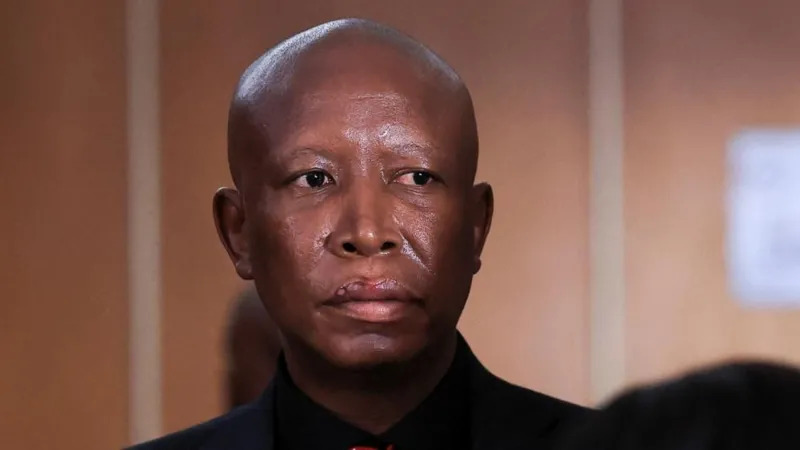
South African opposition leader Julius Malema has been sentenced to five years in prison after being found guilty of firing a rifle during a political rally, in a ruling that could have major implications for the country’s political landscape.
The court handed down the sentence over an incident in 2018, when Malema discharged a firearm in front of supporters at an event marking the anniversary of his party, the Economic Freedom Fighters. He was convicted on multiple charges, including unlawful possession of a firearm and discharging a weapon in a public space.
Despite the sentence, Malema has been released pending an appeal, meaning he will not serve time in prison unless a higher court upholds the ruling. His legal team has indicated it will challenge the verdict, potentially taking the case to the highest courts in the country, a process that could take years.
The case has drawn widespread attention due to Malema’s prominence in South African politics. As leader of the EFF, the country’s fourth-largest party, he has built a strong following, particularly among young people, by campaigning on issues such as land redistribution and economic inequality.
However, the conviction raises serious questions about his political future. Under South African law, a prison sentence of more than 12 months, if upheld after appeals, could disqualify him from serving in parliament. This would deal a significant blow to both his career and his party, which relies heavily on his leadership.
Prosecutors argued that the sentence was necessary to set an example, stressing that public figures should be held to a higher standard of accountability. They warned that failing to impose a strong penalty could send the wrong message about firearm use and public safety.
Malema, who pleaded not guilty, has maintained that the act was symbolic and not intended to cause harm. He has also criticised the ruling, describing the case as politically motivated and vowing to continue fighting it in court.
The incident and its aftermath have intensified political tensions in South Africa, where Malema remains a polarising figure, praised by supporters as a champion of economic justice, and criticised by opponents for his controversial rhetoric and actions.
As the appeals process begins, the case is expected to remain in the spotlight, with its outcome likely to shape not only Malema’s future but also the trajectory of opposition politics in South Africa.


 play_arrow
  play_arrow
  play_arrow