
Listeners:
Top listeners:
 play_arrow
 Cosoro Afrobeats UK's No.1 Afrobeats Radio Station
 play_arrow
 Cosoro Pidgin Na we bi di No.1 UK Pidgin Radio
 play_arrow
 Cosoro Evergreen UK's No.1 Radio for Timeless African Sounds


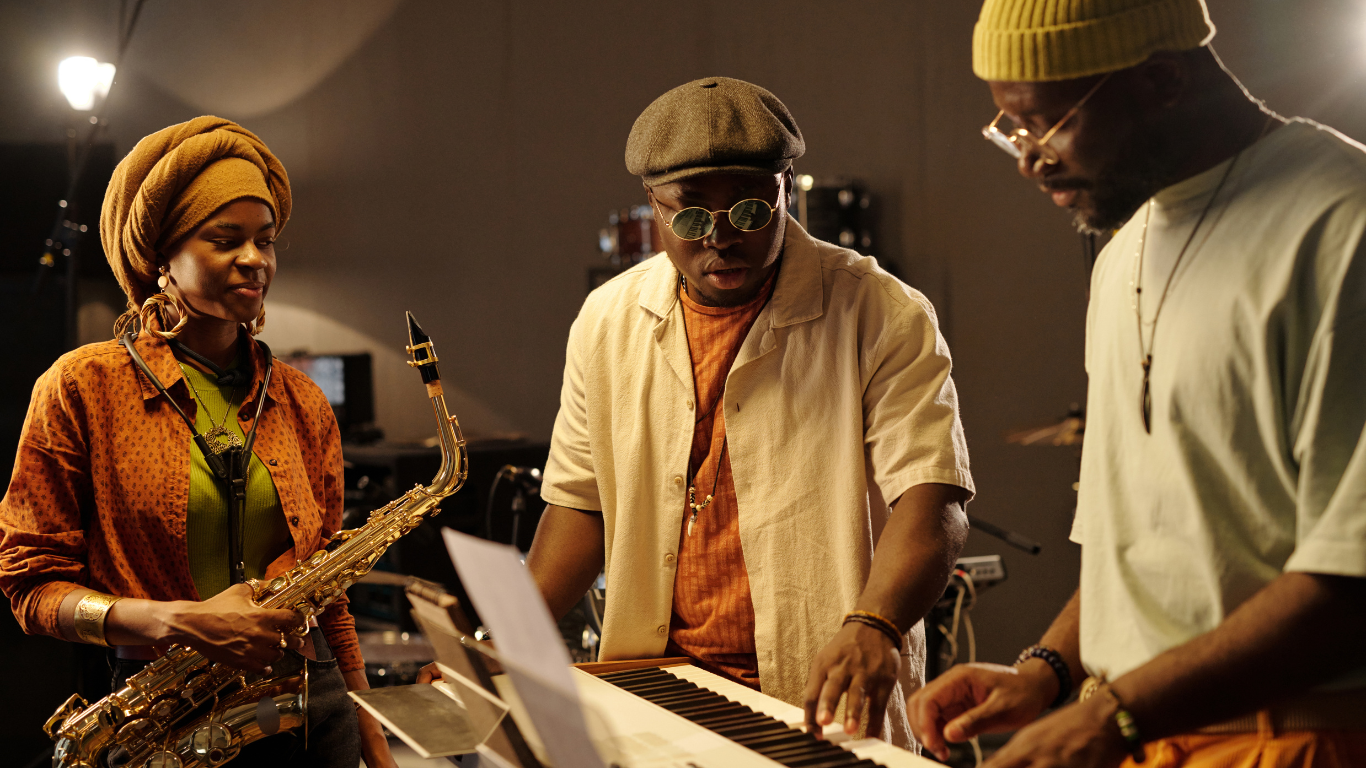
Music has always evolved by building on what came before it. From traditional folk melodies, passed down through generations, to modern digital production techniques, artists have consistently found ways to reinterpret existing sounds into something new. One of the most influential methods behind this creative process is music sampling, a technique that has shaped entire genres and continues to define modern music production.
At its core, music sampling refers to the practice of taking a portion of an existing sound recording and reusing it in a new piece of music. This could be a drum pattern, a bassline, a vocal phrase, or even a small instrumental moment taken from another song. Producers can loop, manipulate, chop, or layer these snippets to create entirely new compositions. While the technique might sound simple, sampling often requires careful musical craftsmanship. A producer might take just a few seconds from an old record and transform it through pitch changes, tempo adjustments, or creative sequencing until it becomes the foundation of a completely different track.
Sampling gained widespread popularity in the late 1970s and 1980s as hip-hop culture emerged in the United States. Early DJs and producers experimented with turntables and drum breaks from funk, soul, and disco records, looping them to create new rhythms for rappers. As technology advanced, drum machines and samplers made it easier to capture and manipulate these sounds digitally, giving rise to a new era of creative production.
Over time, sampling evolved from a niche technique into a powerful creative tool used across many genres. Legendary producers like Kanye West became known for flipping classic soul samples into modern hip-hop records, while electronic music producers built entire soundscapes using fragments of older recordings. Today, sampling appears not only in hip-hop but also in pop, Afrobeats, electronic music, and even film scores.
Beyond creativity, sampling plays an important cultural role in music. It often acts as a bridge between generations, introducing younger listeners to older songs they might never have discovered otherwise. When a modern artist samples a track from decades ago, it can revive interest in the original recording and celebrate the legacy of earlier musicians. In many cases, sampling becomes a form of musical storytelling, acknowledging the influence of past artists while creating something fresh for contemporary audiences.
However, the practice also comes with important legal considerations. Because sampled material comes from existing recordings, it is usually protected by copyright law. This means artists cannot freely use another person’s work without proper permission. In most cases, producers must obtain clearance for both the original recording (known as the master recording) and the underlying composition, which belongs to the songwriters or publishers. Without these permissions, releasing a sampled track could lead to legal disputes, financial penalties, or even the removal of the song from distribution platforms.
The legal side of sampling became particularly significant in the early 1990s, when several high-profile copyright cases forced the music industry to take a stricter approach. Since then, record labels and artists have become far more cautious about how samples are used. Clearing a sample often involves negotiations between artists, record labels, and publishers, and in some cases the original creators receive royalties or songwriting credits for their contribution to the new track.
Despite these complexities, sampling remains a vital part of modern music production. When done properly, it allows artists to pay tribute to the past while pushing creative boundaries forward. Many producers see it not as copying, but as transformation, taking a familiar sound and giving it a new life in a different context.
Ultimately, music sampling reflects the collaborative nature of music itself. Every generation of artists draws inspiration from the sounds that came before them. The difference today is that technology makes it possible to literally incorporate those sounds into new creations. As long as artists respect both the creative and legal responsibilities that come with it, sampling will continue to serve as one of the most powerful tools for innovation in the music industry.