

Listeners:
Top listeners:
 play_arrow
 Cosoro Afrobeats UK's No.1 Afrobeats Radio Station
 play_arrow
 Cosoro Pidgin Na we bi di No.1 UK Pidgin Radio
 play_arrow
 Cosoro Evergreen UK's No.1 Radio for Timeless African Sounds


AFP via Getty Images
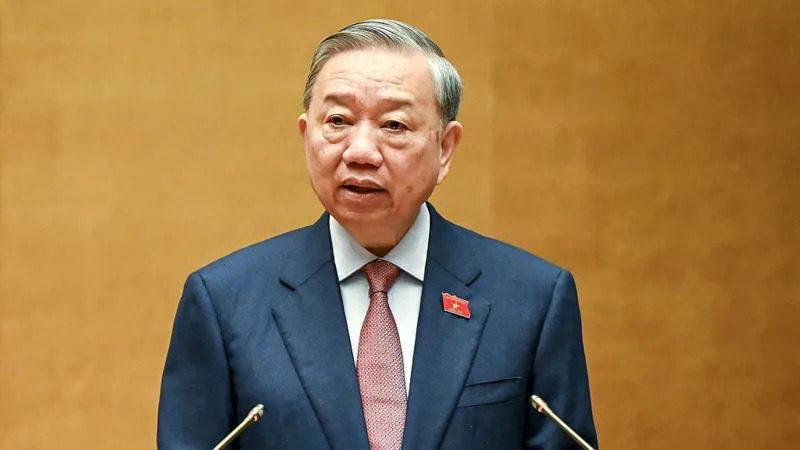
Vietnam has seen an unusual concentration of political authority as To Lam, the ruling Communist Party leader, was unanimously elected president and head of state by the country’s 500-member National Assembly. The vote, which started sitting on Monday, held after the Communist Party Congress in January, positions To Lam as the most powerful leader in Vietnam in decades.
To Lam’s rise has been closely tied to his decade-long tenure as Minister for Public Security, during which he oversaw a nationwide anti-corruption campaign that sidelined and discredited many potential rivals. His ascent continued in 2024 when he temporarily assumed both the roles of general secretary of the Communist Party and president, following the resignation of then-president Vo Van Thuong and the death of party chief Nguyen Phu Trong.
Traditionally, Vietnam’s leadership operates under a collective model, with power shared among the country’s top four, now five, positions—referred to as the “five pillars.” To Lam’s election marks a departure from this norm, granting him control over both the party and the state for the next five years.
Analysts have noted parallels with China, where President Xi Jinping has similarly centralized power, signaling a potential shift in Vietnam’s political structure toward a more dominant single-leader model. To Lam’s dual role gives him unprecedented authority over Vietnam’s domestic and foreign policy, economic strategy, and internal security apparatus, shaping the country’s trajectory for the foreseeable future.
This consolidation highlights both To Lam’s political acumen and the Communist Party’s trust in his leadership, suggesting a new era of centralized authority in Vietnam.