
Listeners:
Top listeners:
 play_arrow
 Cosoro Afrobeats UK's No.1 Afrobeats Radio Station
 play_arrow
 Cosoro Pidgin Na we bi di No.1 UK Pidgin Radio
 play_arrow
 Cosoro Evergreen UK's No.1 Radio for Timeless African Sounds


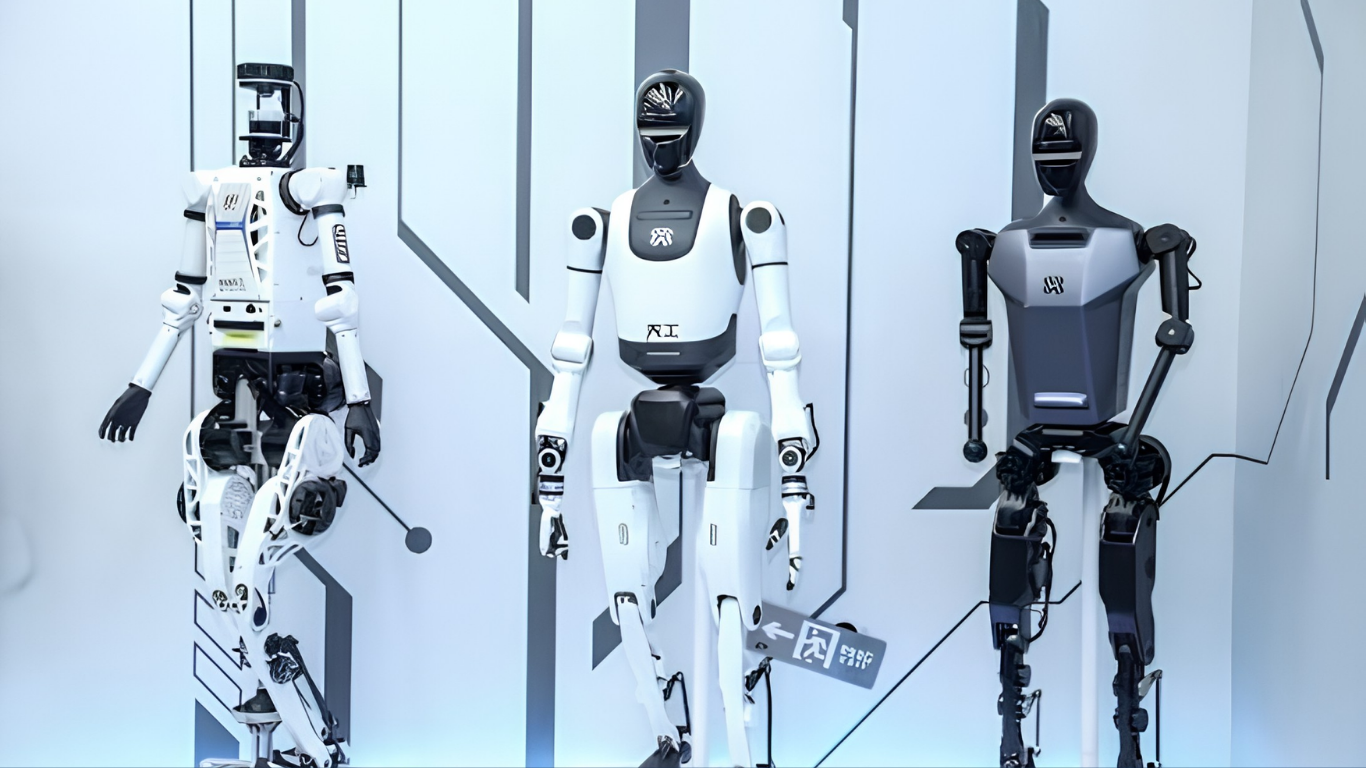
The United States has announced sweeping new restrictions on the import of advanced foreign-made humanoid robots and other sophisticated robotic systems, citing growing concerns that the technology could be exploited for espionage, cyberattacks and threats to critical infrastructure.
The decision, unveiled by the US Federal Communications Commission (FCC), adds advanced robotic devices and certain power inverters to the agency’s “Covered List” of products considered to pose risks to America’s national security. The restrictions apply to new imports and future approvals but do not affect devices that have already been authorised for use in the country.
FCC Chairman Brendan Carr said the move forms part of a broader effort to protect America’s critical supply chains and prevent potentially sensitive technologies from being used to compromise national security. According to the regulator, highly advanced robots connected to networks or cloud-based systems could, if compromised, be used to collect sensitive information, enable remote surveillance or even be manipulated by hostile foreign actors.
The new measures also target foreign-made power inverters—equipment widely used in renewable energy systems, solar installations and data centres. US officials argue that vulnerabilities in such devices could allow cybercriminals or foreign governments to disrupt electricity networks, steal data or interfere with critical infrastructure.
Although the restrictions do not specifically name any country, they are widely viewed as being directed primarily at Chinese manufacturers, many of whom have become global leaders in humanoid robotics. China has rapidly expanded its robotics industry in recent years, with companies such as Unitree, UBTech and AgiBot developing increasingly advanced robots for industrial production, logistics, healthcare, research and even household assistance.
The Chinese Embassy in Washington strongly criticised the decision, accusing the United States of politicising trade and using national security as a pretext to suppress Chinese technology companies. Chinese officials insisted that the country’s advances in robotics and artificial intelligence are the result of years of domestic innovation and international collaboration, rather than unfair practices. Beijing also warned that it would take appropriate measures to protect its commercial interests if necessary.
The latest restrictions are the newest chapter in an increasingly intense technology rivalry between the world’s two largest economies. Over the past several years, Washington has introduced multiple measures aimed at limiting China’s access to advanced technologies, including restrictions on high-end semiconductor exports, tighter investment controls and higher tariffs on several categories of Chinese products.
US officials have argued that these policies are necessary to safeguard national security and maintain America’s technological advantage in emerging sectors such as artificial intelligence, robotics and advanced computing. China, meanwhile, has repeatedly rejected those claims, arguing that the measures are designed to slow its technological progress and unfairly limit competition.
The restrictions also reflect growing concern in Washington about the role humanoid robots could play in the future. While these machines are increasingly being designed to assist in factories, warehouses, hospitals and homes, experts have warned that their expanding capabilities—including autonomous movement, advanced sensors and AI-powered decision-making—could create new cybersecurity challenges if adequate safeguards are not in place.