

Listeners:
Top listeners:
 play_arrow
Cosoro Afrobeats UK's #1 Afrobeats Radio Station
 play_arrow
Cosoro Pidgin Na we bi di #1 UK Pidgin Radio
 play_arrow
Cosoro Evergreen UK's #1 Radio for Timeless African Sounds


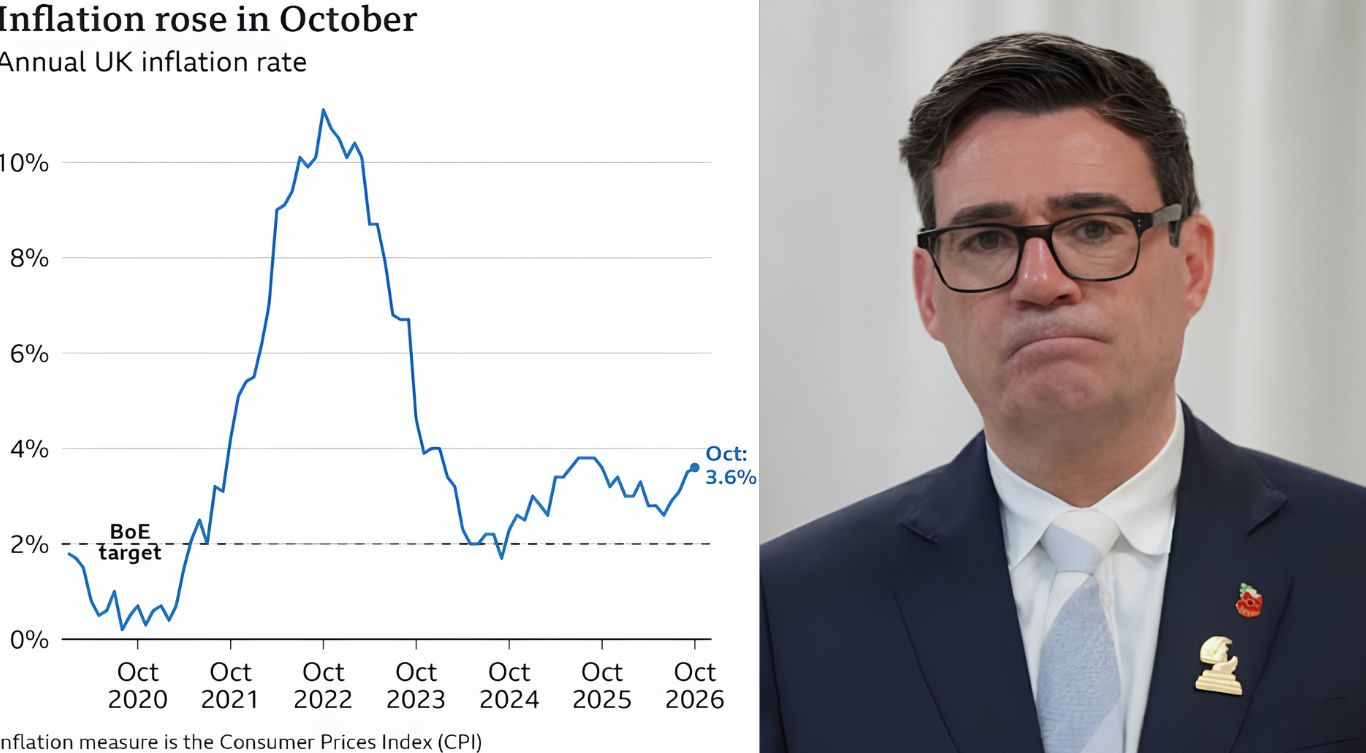
Households across the United Kingdom are facing renewed financial pressure after inflation climbed to its highest level in a year, while a fresh forecast suggests that annual energy bills could increase by £443 from January 2027.
Figures released by the Office for National Statistics (ONS) on Wednesday, November 18, show that the Consumer Prices Index (CPI) rose to 3.6% in the 12 months to October, up from 3.5% in September. The increase was largely driven by higher transport and fuel costs, alongside rising household energy expenses.
The latest inflation figure means prices are increasing faster than basic wage growth, which stood at 3.5%. This could further weaken household purchasing power, particularly as families prepare for the Christmas period and the additional expenses associated with winter.
Transport costs were a major contributor to the increase. The ONS reported that petrol prices rose by an average of 5.2p per litre between September and October, reaching 174.7p. Diesel prices averaged 199.5p per litre, their highest level since records began in January 1996.
The pressure on household finances could become more severe in the new year. Energy consultancy Cornwall Insight has forecast that the average annual bill for a typical household using both gas and electricity could rise from £1,723 to £2,166 in January. This represents an increase of £443, or approximately 26%.
The forecast follows a period of increased wholesale gas prices, with the continuing conflict in the Middle East contributing to supply concerns and higher energy costs. Cornwall Insight said the projected increase would take typical annual bills above £2,000 for the first time since 2023.
However, the forecast is not the final price cap announcement. Energy regulator Ofgem is expected to publish the official figure next week. The amount individual households pay will also depend on how much energy they use.
The government has introduced several support measures to help households manage the expected increase. These include a one-off £100 Household Energy Payment for eligible households in council tax bands A to D in England from January 2027, alongside the removal of VAT from electricity bills. Eligible low-income households may also receive the £150 Warm Home Discount, while some pensioners could qualify for Winter Fuel Payments.
The latest inflation figures have also raised questions about the Bank of England’s next interest rate decision. Financial markets are considering the possibility of another increase before Christmas as policymakers attempt to control rising prices. However, falling oil prices could ease some inflationary pressure if the trend continues.
The developments highlight the continuing impact of global energy market disruptions on the cost of living in Britain. With inflation rising and energy bills expected to increase again, households could face another difficult winter unless prices ease or further support is introduced.