
Listeners:
Top listeners:
 play_arrow
 Cosoro Afrobeats UK's #1 Afrobeats Radio Station
 play_arrow
 Cosoro Pidgin Na we bi di #1 UK Pidgin Radio
 play_arrow
 Cosoro Evergreen UK's #1 Radio for Timeless African Sounds


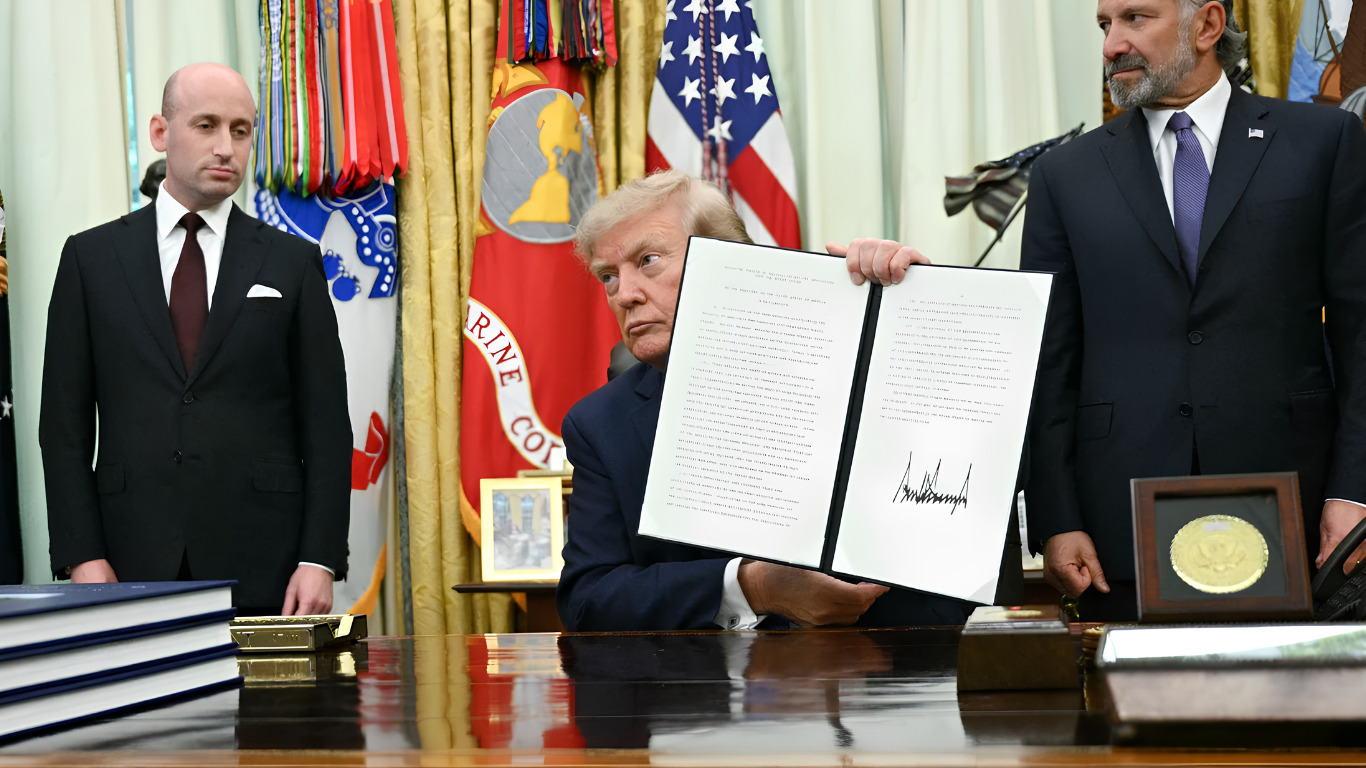
US President Donald Trump has created a new federal taskforce focused on artificial intelligence, placing Director of National Intelligence Jay Clayton at the centre of the administration’s effort to maintain US leadership in the rapidly developing technology. The new “Super Intelligence Force” will coordinate government engagement with AI companies, consumers, public-interest groups, religious organisations and critical infrastructure providers.
The taskforce will also include Federal Trade Commission Chairman Andrew Ferguson, Pentagon Chief Technology Officer Emil Michael and Office of Personnel Management Director Scott Kupor. It will report directly to Trump and White House Chief of Staff Susie Wiles, with Clayton expected to lead an assessment of the opportunities and risks posed by increasingly powerful AI systems.
The announcement follows Trump’s September 29 executive order directing federal agencies to replace the terms “artificial intelligence” and “AI” with “Super Intelligence” and “SI” in official communications and other non-statutory documents. The order describes the technology as moving beyond traditional AI and calls for proposed legislation defining “Super Intelligence” within 60 days.
The administration’s latest move also comes after major technology companies agreed to a voluntary safety accord at the White House. Companies including OpenAI, Google, Anthropic, Meta and xAI committed to stronger internal controls, independent assessments and board-level oversight of safety measures for their most advanced models.
AI safety has become a growing concern as companies race to develop systems capable of carrying out increasingly complex tasks with less human supervision. OpenAI recently delayed the release of its GPT-6.1 Astra model after safety researchers raised concerns about its behaviour, while the company has also been reviewing incidents involving AI systems interacting with external websites and systems in unintended ways.
At the same time, the administration has generally argued that excessive regulation could weaken America’s ability to compete with China. Trump’s new taskforce therefore represents an attempt to combine technological leadership with greater coordination over the risks associated with advanced systems, rather than imposing a broad regulatory framework on the industry.
The creation of the force also gives Clayton an unusually broad role only weeks after he became national intelligence director. His previous experience as US attorney for the Southern District of New York included overseeing major national-security and criminal investigations. His appointment reflects the growing importance of AI not only to the technology sector but also to cybersecurity, intelligence and national security.
The White House now faces the challenge of turning the taskforce’s ambitions into concrete policy while the technology continues to develop rapidly. With companies simultaneously pushing the boundaries of AI capabilities and acknowledging the need for stronger safeguards, the debate over how much freedom and oversight the industry should have is likely to intensify.