
Listeners:
Top listeners:
 play_arrow
 Cosoro Afrobeats UK's No.1 Afrobeats Radio Station
 play_arrow
 Cosoro Pidgin Na we bi di No.1 UK Pidgin Radio
 play_arrow
 Cosoro Evergreen UK's No.1 Radio for Timeless African Sounds


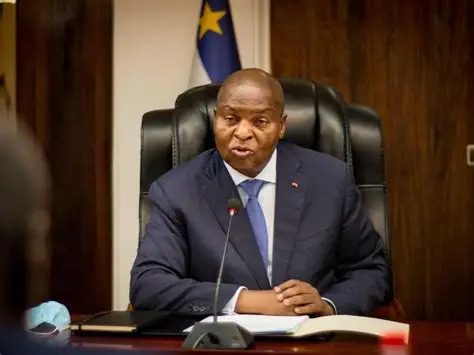
Faustin-Archange Touadéra has been sworn in for a third term in office as President of the Central African Republic.
The ceremony, held in the capital Bangui on March 30, 2026, marks both a continuation of his nearly decade-long rule and a moment of deep political tension, with opposition groups and civil society raising serious concerns about the legitimacy of his renewed mandate.
Touadéra, who has been in power since 2016, secured re-election following a December 2025 vote in which he was declared the winner with approximately 77.9 percent of the ballots. However, the election itself was overshadowed by a boycott from opposition coalitions and widespread criticism from activists who questioned the transparency and fairness of the process. For many critics, the outcome was seen as predetermined, particularly in light of structural changes that paved the way for his continued rule.
At the heart of the controversy lies a constitutional referendum held in 2023, which removed presidential term limits and extended the duration of each term from five to seven years. This reform allowed Touadéra to run again despite having already served two terms, a move opponents argue undermines democratic principles and risks entrenching long-term rule. Supporters, however, contend that continuity is necessary for stability in a country long plagued by conflict.
The Central African Republic has endured years of political instability and violence, particularly since the 2013 crisis that saw rebel groups overthrow then-president François Bozizé. Although a peace agreement was signed in 2019 with multiple armed factions, the situation remains fragile, with several groups withdrawing from the deal and sporadic violence continuing across parts of the region.
Despite these challenges, Touadéra has outlined an ambitious vision for his new term. During his inauguration, he emphasized goals such as strengthening the national economy, improving governance, and ensuring better management of the country’s vast natural resources, which include gold, diamonds, and uranium.
Touadéra’s third term, therefore, begins under a cloud of both expectation and skepticism. For supporters, it represents continuity and a chance to consolidate gains in security and governance. For critics, it signals a troubling shift toward prolonged rule enabled by constitutional changes.