

Listeners:
Top listeners:
 play_arrow
 Cosoro Afrobeats UK's #1 Afrobeats Radio Station
 play_arrow
 Cosoro Pidgin Na we bi di #1 UK Pidgin Radio
 play_arrow
 Cosoro Evergreen UK's #1 Radio for Timeless African Sounds


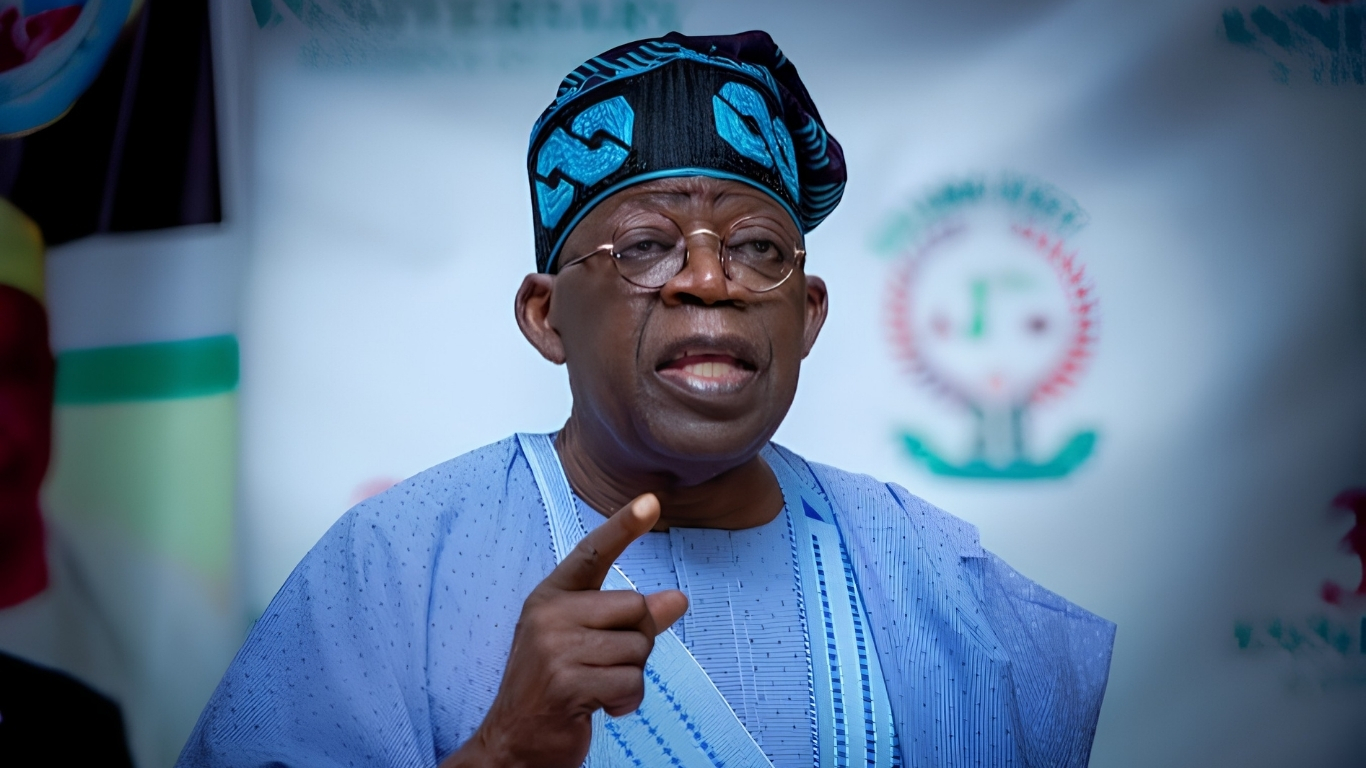
Nigerian President Bola Ahmed Tinubu has asked a federal court in the United States to prevent the release of records relating to a historic US investigation involving allegations of narcotics trafficking, arguing that publishing unredacted documents would violate his privacy rights.Tinubu’s legal team filed a 16 page submission before the US District Court for the District of Columbia on 28 August, opposing a request by American transparency activist Aaron Greenspan for the release of investigative records held by US federal agencies.The documents being sought include records from the Federal Bureau of Investigation (FBI), Drug Enforcement Administration (DEA), Department of Justice and other US agencies. Among them are the FBI’s master file on Tinubu and interview records known as Form 302, relating to interviews conducted in 1992 and 1993.
The case also concerns records connected to a 1993 civil forfeiture proceeding in the United States involving about $460,000 associated with Tinubu. The historical case has attracted renewed attention in recent years as Greenspan has pursued access to government records under the US Freedom of Information Act (FOIA). Tinubu’s lawyers Christopher W. Carmichael, Victor P. Henderson and Oluwole O. Afolabi argue that the existence of information previously disclosed during the civil forfeiture proceedings does not automatically remove the president’s right to privacy over confidential lawenforcement files. Their argument is that investigative records held by US agencies may contain sensitive personal information that should not be made public simply because an individual’s name appears in them.
The legal team also challenged the basis of Greenspan’s FOIA request, arguing that his primary objective appears to be obtaining government documents containing Tinubu’s name rather than establishing a broader public interest that would justify overriding privacy protections. The lawyers have therefore asked the court to reject Greenspan’s request and allow the FBI and DEA to maintain the redactions or withholdings they have already applied to the records. The latest filing is the newest development in a legal dispute that began in 2023, when Greenspan launched a FOIA lawsuit against several US government agencies after seeking records connected to historical investigations involving Tinubu.
The dispute initially involved agencies including the FBI, DEA, Internal Revenue Service, Executive Office for US Attorneys and Department of State. Greenspan has sought a wide range of documents, including investigative records and interview notes from the early 1990s. The case intensified this year after a US federal court ordered government agencies to respond to the requests and set deadlines for the release of records. The FBI and DEA subsequently sought to keep some of the material confidential, while Tinubu separately joined the legal proceedings and opposed disclosure. In August, his lawyers also sought additional time to respond to the court proceedings, although the judge declined to grant the full extension requested.
The Nigerian president has consistently denied wrongdoing in connection with the historical allegations. It is important to note that the existence of an investigation or the inclusion of a person’s name in law enforcement records does not by itself establish criminal wrongdoing. The current court dispute is primarily about whether the records should be released under US transparency laws and what privacy protections apply to them. For Tinubu, however, the case carries obvious political significance. Any release of previously confidential records could reignite public debate in Nigeria over questions surrounding his activities in the United States in the 1990s. The issue has already attracted attention from political opponents and transparency campaigners, who argue that public access to historical government records is important when they concern a sitting head of state.
The immediate question before the US court is whether Greenspan’s demand for the records meets the requirements of the Freedom of Information Act and whether the privacy and law enforcement exemptions relied upon by the FBI and DEA are sufficient to justify keeping the documents secret. Tinubu’s legal intervention adds another significant voice to the case, as the Nigerian president is now directly asking the court to prevent the release of material he says could improperly expose private information. The court’s eventual decision could determine how much of the long-running investigation becomes publicly accessible.For Nigeria, the case is likely to remain politically sensitive. For the United States, it also presents a familiar tension between government transparency and an individual’s right to privacy, particularly when the person involved is a foreign head of state.