
Listeners:
Top listeners:
 play_arrow
 Cosoro Afrobeats UK's No.1 Afrobeats Radio Station
 play_arrow
 Cosoro Pidgin Na we bi di No.1 UK Pidgin Radio
 play_arrow
 Cosoro Evergreen UK's No.1 Radio for Timeless African Sounds


Getty Images
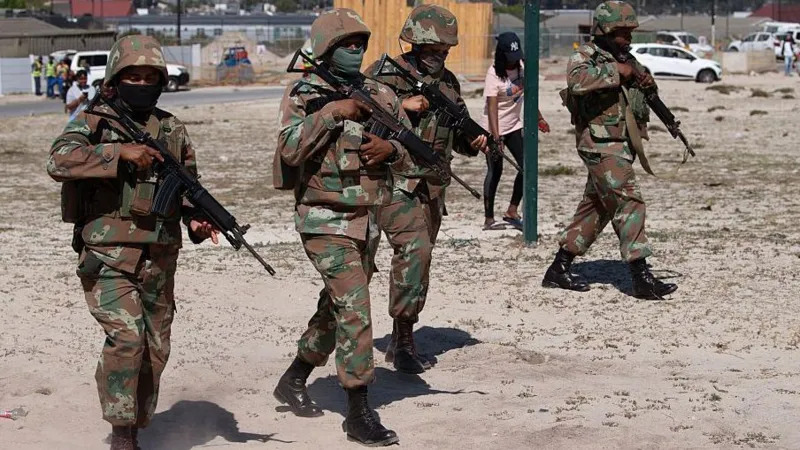
South Africa has deployed 2,200 soldiers to gang-ridden communities in Cape Town’s Cape Flats, in efforts to curb rising violence in the area.
The deployment, carried out by the South African National Defence Force, saw troops moving into townships on Wednesday, arriving in armoured vehicles and heavily armed as part of a coordinated operation with police. The move comes amid a fresh wave of deadly shootings that underscore the severity of the situation on the ground.
Recent incidents highlight the urgency of the intervention. In one case, two men aged 25 and 33 were shot dead in Hanover Park in the early hours of the morning, while a separate shooting in Mitchells Plain left another man wounded. These areas form part of the Cape Flats, a region long associated with gang activity and violent turf wars.
The deployment follows an order by President Cyril Ramaphosa, who authorized the use of military forces to support police in tackling gang violence and other serious crimes. The broader operation spans multiple provinces and is expected to run until March 2027, with troops assisting in maintaining law and order and targeting criminal networks.
Authorities say the soldiers will work alongside the South African Police Service to stabilize affected communities, allowing law enforcement to carry out more effective operations. Officials have emphasized that the military’s role is supportive rather than permanent, aimed at addressing immediate security concerns.
The Cape Flats, located on the outskirts of Cape Town, has long struggled with high levels of crime, driven by poverty, unemployment, and entrenched gang networks. The area has become a hotspot for violent clashes between rival groups, often leaving residents caught in the crossfire.
This latest development reflects the government’s ongoing response to escalating gang violence, with soldiers now visibly present in some of the country’s most affected communities.