
Listeners:
Top listeners:
 play_arrow
Cosoro Afrobeats UK's #1 Afrobeats Radio Station
 play_arrow
Cosoro Pidgin Na we bi di #1 UK Pidgin Radio
 play_arrow
Cosoro Evergreen UK's #1 Radio for Timeless African Sounds


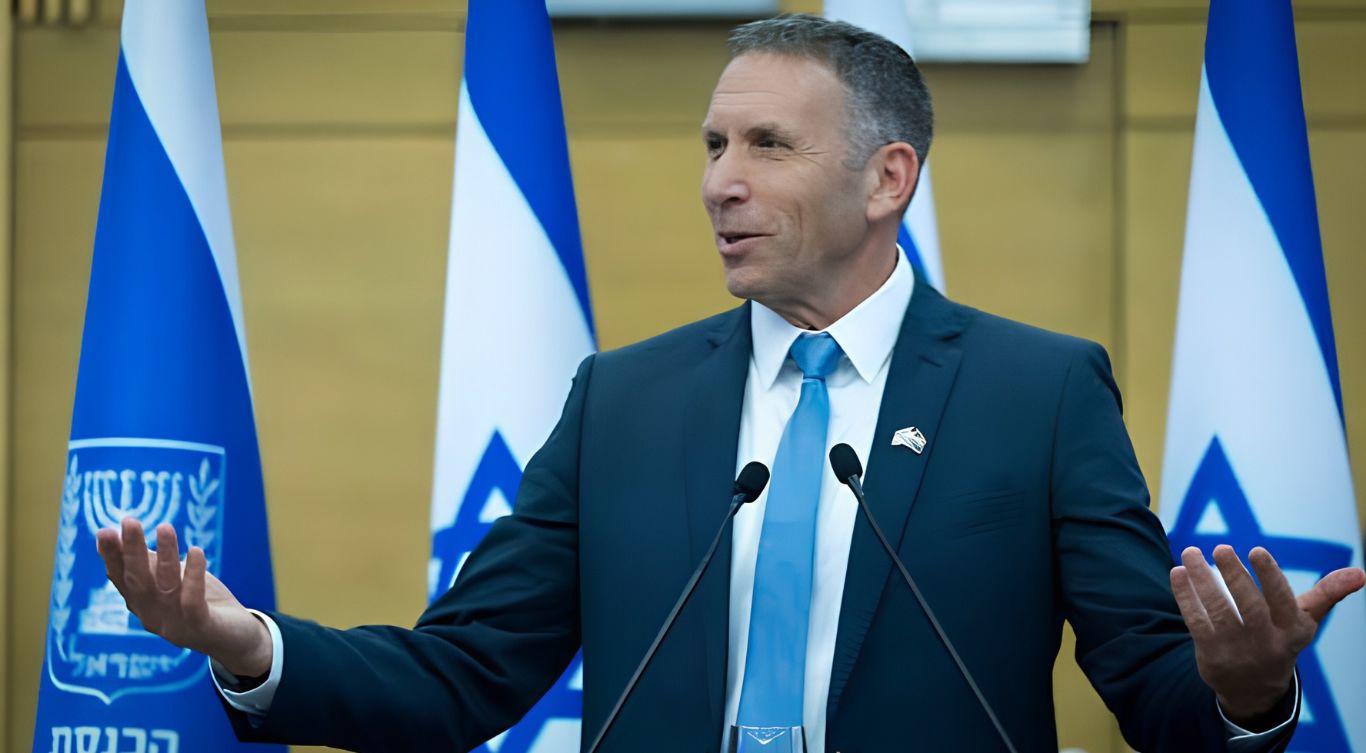
Israel’s parliament has elected Matan Kahana, an ally of opposition leader Gadi Eisenkot, as its new speaker, marking a significant political development that could pave the way for reversing some of the policies introduced by outgoing Prime Minister Benjamin Netanyahu’s government.
Kahana was elected on Tuesday, November 17, 2026, securing 66 votes in the 120-member Knesset, while Ofir Katz, the candidate backed by Netanyahu’s political bloc, received 52 votes. The election followed a heated parliamentary debate that lasted more than seven hours.
The new speaker replaces Amir Ohana, a close ally of Netanyahu who had held the position since 2022. Kahana’s appointment is particularly significant because the speaker plays an influential role in determining parliamentary proceedings, including the scheduling and progress of proposed legislation.
Kahana is a member of the Yashar party led by Eisenkot, a former Israeli military chief who is currently attempting to form a coalition government to replace Netanyahu. His election was supported by opposition parties as well as Arab-led political groups, whose backing helped secure the required majority.
However, the outcome attracted criticism from members of Netanyahu’s Likud party and other right-wing politicians, who objected to the support Kahana received from Arab lawmakers. Some critics accused the opposition bloc of cooperating with groups they consider hostile to Israel.
Defending the decision, Eisenkot maintained that all Israeli citizens deserve equal representation in parliament, arguing that political disagreements should not be used to exclude sections of the population from democratic participation.
The parliamentary leadership change comes weeks after Israel’s October 27 elections, in which Netanyahu and his allies lost their parliamentary majority. Although Netanyahu’s bloc secured 53 seats, Eisenkot’s Yashar led alliance won 48, while Arab led parties secured 19 seats.
President Isaac Herzog subsequently gave Eisenkot the responsibility of attempting to form the next government. He has up to five more weeks to secure sufficient political support and establish a coalition. Netanyahu remains caretaker prime minister until a new government is formed.
Eisenkot’s bloc has already introduced proposals aimed at changing some of the previous government’s policies. These include imposing term limits on the prime minister, establishing a government led inquiry into the Hamas led October 7, 2023 attacks and reversing legislation that critics say weakened judicial independence.
Kahana’s position as speaker could help the opposition advance these proposals by influencing the parliamentary timetable. However, passing the bills will still require several legislative stages, and the limited time available could make the process difficult.
The election therefore represents an important shift in Israel’s parliamentary leadership, although it does not automatically mean Netanyahu has been removed as prime minister. The next major political challenge will be whether Eisenkot can successfully form a coalition government and turn the opposition’s parliamentary advantage into lasting policy changes.