
Listeners:
Top listeners:
 play_arrow
 Cosoro Afrobeats UK's #1 Afrobeats Radio Station
 play_arrow
 Cosoro Pidgin Na we bi di #1 UK Pidgin Radio
 play_arrow
 Cosoro Evergreen UK's #1 Radio for Timeless African Sounds


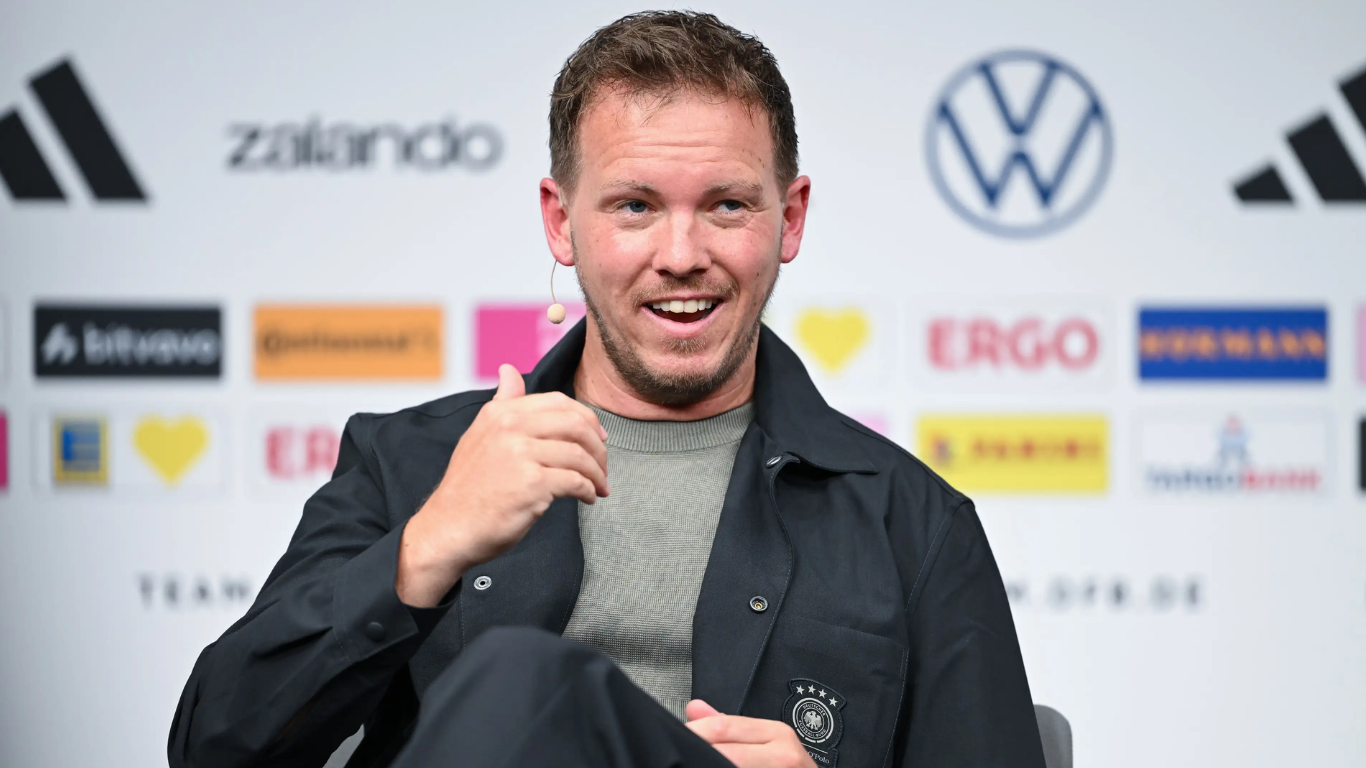
Germany’s disappointing 2026 FIFA World Cup campaign has claimed its first major casualty, with Julian Nagelsmann stepping down as head coach just days after the four-time world champions suffered a stunning Round-of-32 elimination to Paraguay. The German Football Association (DFB) confirmed the decision on July 3, bringing an end to Nagelsmann’s nearly three-year spell in charge despite his contract running until the 2028 UEFA European Championship.
The announcement came only four days after Germany’s heartbreaking exit from the World Cup in North America. On June 29, Germany were knocked out by Paraguay after a dramatic penalty shootout following a 1-1 draw in Foxborough, Massachusetts. The defeat marked Germany’s earliest World Cup exit since the tournament expanded to 48 teams and extended a worrying run of underachievement for one of international football’s most successful nations.
Interestingly, Nagelsmann had initially insisted he had no intention of resigning. Speaking after the defeat, the 38-year-old said he was prepared to continue leading the national team and would only leave if the DFB believed a change was necessary. However, following discussions with senior officials, both parties agreed that a fresh start would be in the best interests of German football. In a statement, Nagelsmann thanked the players, staff and supporters, while the DFB praised his professionalism and commitment during a difficult period for the national team.
Nagelsmann arrived as Germany coach in September 2023, replacing Hansi Flick after Germany’s disappointing performances at the 2022 FIFA World Cup and a string of poor results. Widely regarded as one of Europe’s brightest young managers, he had previously enjoyed successful spells with Hoffenheim, RB Leipzig and Bayern Munich, where he won the Bundesliga title in the 2021-22 season. His appointment was seen as the beginning of a new era for German football, with hopes that his modern tactical approach would restore the country’s status among the world’s elite.
His tenure, however, produced mixed results. Germany reached the quarter-finals of UEFA Euro 2024 on home soil, a performance that restored some optimism after years of decline. At the 2026 World Cup, the team began impressively, thrashing Curaçao 7-1 before defeating Ivory Coast 2-1 to secure qualification for the knockout rounds. Although Germany lost 2-1 to Ecuador in their final group-stage match, they had already finished top of their group. Their campaign ultimately ended in disappointment when they didn’t meet expectations after playing with Paraguay in the Round of 32, a result that intensified criticism of both the team and its manager.
The national team has won the FIFA World Cup four times—in 1954, 1974, 1990 and 2014—but has struggled to replicate that success in recent years. Since lifting the trophy in Brazil 12 years ago, Germany have endured consecutive disappointing World Cup campaigns, raising fresh questions about the direction of one of football’s traditional powerhouses.
Attention has now shifted to who will replace Nagelsmann. Former Liverpool manager Jürgen Klopp has quickly emerged as the leading candidate after the DFB confirmed it had opened discussions with him. Reuters reported that Klopp is “fundamentally willing” to consider taking charge of the national team, although no agreement has yet been reached. If appointed, the former Borussia Dortmund and Liverpool boss would inherit the task of rebuilding Germany ahead of UEFA Euro 2028 and restoring confidence in one of international football’s most decorated nations.