
Listeners:
Top listeners:
 play_arrow
Cosoro Afrobeats UK's #1 Afrobeats Radio Station
 play_arrow
Cosoro Pidgin Na we bi di #1 UK Pidgin Radio
 play_arrow
Cosoro Evergreen UK's #1 Radio for Timeless African Sounds


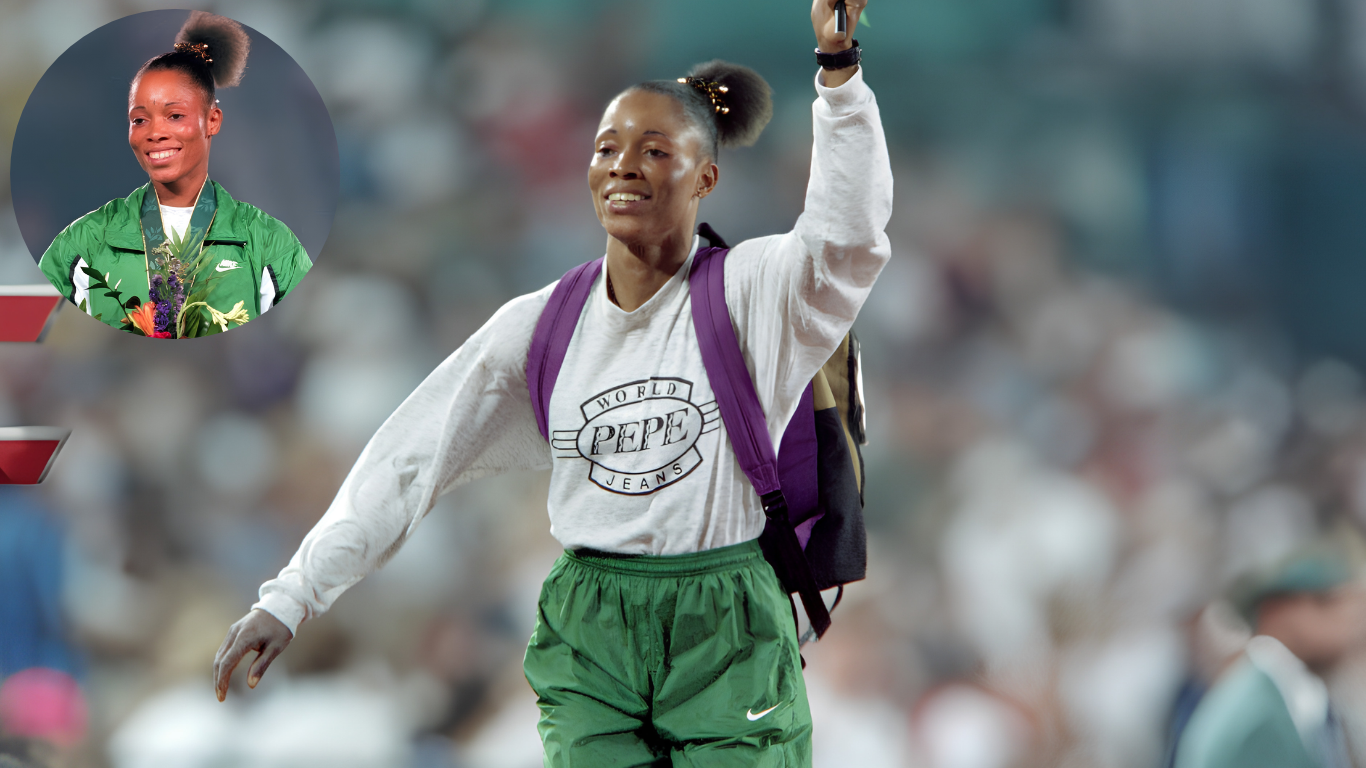
More than two decades after a doping violation brought her athletics career to an abrupt end, Nigerian Olympic champion Chioma Ajunwa has been cleared to return to the sport following the removal of her lifetime ban by the Athletics Integrity Unit (AIU).
The decision, dated November 18, 2026, reduces the lifetime suspension imposed on the Atlanta 1996 Olympic gold medallist to the period she has already served, restoring her eligibility to participate in athletics with immediate effect.
Ajunwa’s lifetime ban followed an adverse finding for nandrolone, an anabolic steroid, in a sample collected during the Athens Grand Prix Tsiklitiria meeting in June 2002. The punishment was imposed because the violation was treated as her second anti-doping offence. She had previously served a four-year suspension following a positive test for methandienone in 1992.
In August 2026, Ajunwa applied to the AIU for a review of her case, arguing that anti-doping regulations had changed since her original sanction. The integrity body considered the application under the World Athletics Anti-Doping Rules that came into force on January 1, 2026.
Applying the legal principle of lex mitior, which allows a person to benefit from a more lenient rule introduced after an offence, the AIU determined that the equivalent sanction under the updated regulations would have been eight years rather than a lifetime ban. Having already spent more than 23 years under the suspension, Ajunwa had served beyond that period.
The decision does not erase the original anti-doping violation from her record, but it removes the remaining restrictions associated with the lifetime ban. Relevant anti-doping authorities, including the World Anti-Doping Agency, retain the right to appeal under the applicable rules.
Reacting to the development, Ajunwa expressed relief, saying the decision had removed what she described as a stain on her athletics career. She also criticised the handling of her original case, alleging that officials of the Athletics Federation of Nigeria failed to pursue the appropriate appeal procedures.
Ajunwa made history at the 1996 Atlanta Olympics when she won the women’s long jump with a leap of 7.12 metres, becoming Nigeria’s first individual Olympic gold medallist and the country’s first Olympic champion in athletics. She also represented Nigeria in football at the inaugural FIFA Women’s World Cup in 1991.
The AIU’s decision marks a significant development in the former champion’s long-running case and brings renewed attention to the importance of fair anti-doping procedures and proper representation of athletes.