
Listeners:
Top listeners:
 play_arrow
 Cosoro Afrobeats UK's No.1 Afrobeats Radio Station
 play_arrow
 Cosoro Pidgin Na we bi di No.1 UK Pidgin Radio
 play_arrow
 Cosoro Evergreen UK's No.1 Radio for Timeless African Sounds


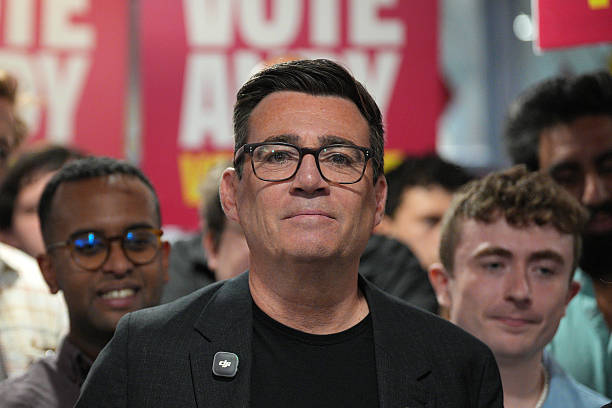
(Photo by Christopher Furlong/Getty Images)
Prime Minister Andy Burnham has pledged to address what he described as the “long running injustice” faced by prisoners serving Imprisonment for Public Protection (IPP) sentences, as the government looks for new ways to ease overcrowding in England’s prisons.
Burnham said he was increasingly confident that a package of measures being considered by the government could reduce the number of prisoners who need to be released early under the controversial prison overcrowding scheme. One option under consideration is allowing lower risk prisoners serving IPP sentences to be released, potentially freeing up thousands of prison spaces.
IPP sentences were introduced in 2005 for offenders considered dangerous but whose crimes did not justify a life sentence. Although the system was abolished for new cases in 2012, the change was not retrospective, meaning thousands of prisoners remained subject to the sentences. Some have spent years in prison beyond the minimum period originally set by the courts.
Under the existing system, prisoners can remain behind bars beyond their original tariff until the Parole Board determines that they are safe to release. Those released can also be recalled to prison for breaches of their licence conditions, leaving some caught in a cycle of imprisonment and recall.
Burnham said he had asked Justice Secretary Alex Norris to fast-track proposals designed to create additional capacity within the prison estate. The plans include increasing the removal of foreign national offenders to their countries of origin, resolving outstanding IPP cases and making greater use of the entire prison estate, including potentially using parts of the female prison estate for male offenders.
The prime minister said the approach could ultimately allow the government to reduce the number of prisoners released early under its wider sentencing reforms. He also suggested it could prevent the early release of the most serious offenders, including those convicted over the killing of PC Andrew Harper.
The issue has become increasingly controversial as Burnham’s government prepares to introduce changes to automatic release rules. From 1 October 2026, most adults serving standard prison sentences will become eligible for release after serving a smaller proportion of their sentence, with the reforms intended to ease pressure on overcrowded prisons.
The government has already amended the scheme following an urgent review, excluding prisoners convicted of rape, serious child sexual offences and grooming offences from the changes. However, concerns remain over other serious offenders who could still qualify for earlier release.
Burnham’s latest proposals come as the government also faces legal pressure over the continued detention of some IPP prisoners. The UN Working Group on Arbitrary Detention recently found that Britain was unlawfully detaining several prisoners beyond their original tariffs and called for urgent action. Lawyers are preparing a legal challenge at the High Court seeking to force the government to justify the continued detention of affected prisoners.
Campaigners have long argued that IPP sentences have caused serious psychological harm because prisoners can spend years in custody without knowing when they will be released. The Independent has campaigned for a review of the system, arguing that some prisoners have remained behind bars long after completing the minimum punishment imposed for their original offences.
The government now faces the difficult task of balancing public protection with the need to reduce prison overcrowding and address the legacy of a sentencing system that was abolished more than a decade ago.
Burnham’s pledge could mark a significant change in the government’s approach to IPP prisoners. If ministers succeed in identifying a way to release lower risk inmates safely, the reforms could both ease pressure on prisons and provide a long-awaited resolution for prisoners who have spent years living under indefinite sentences.