
Listeners:
Top listeners:
 play_arrow
 Cosoro Afrobeats UK's #1 Afrobeats Radio Station
 play_arrow
 Cosoro Pidgin Na we bi di #1 UK Pidgin Radio
 play_arrow
 Cosoro Evergreen UK's #1 Radio for Timeless African Sounds



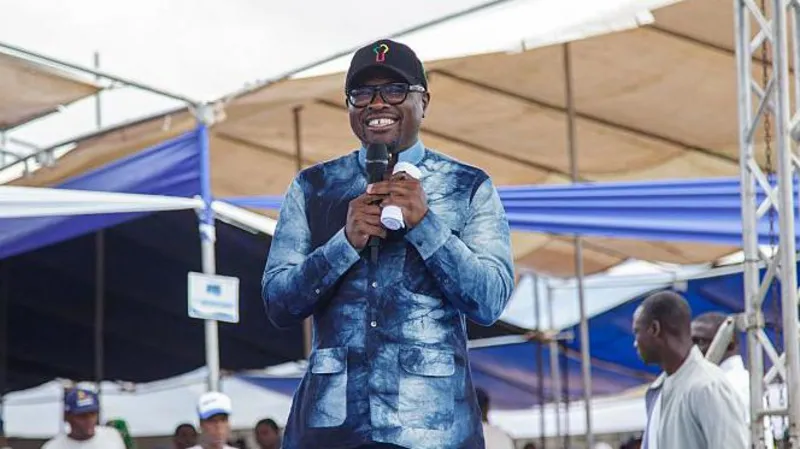
Image Credit: AFP via Getty Images
Former Finance Minister Romuald Wadagni was officially sworn in as Benin’s new president on Sunday, marking the beginning of a new political chapter for the West African nation after nearly a decade under outgoing leader Patrice Talon.
The 49-year-old economist took the oath of office during a ceremony held at the Palais des Congrès in Cotonou, attended by regional leaders, diplomats, and senior government officials. Wadagni succeeds Talon, who stepped down after serving the constitutional limit of two terms in office.
In his inaugural address, Wadagni pledged to govern with “integrity, courage and commitment,” while promising to improve living standards, strengthen security, and preserve economic progress achieved over the past decade. He emphasized that political power “is never a personal privilege,” signaling a message of accountability and national unity as he begins a seven-year presidential term.
Wadagni entered office as the overwhelming favorite following his landslide victory in the April 12 presidential election, where he secured more than 94 percent of the vote against opposition candidate Paul Hounkpè. The result cemented his status as the chosen successor to Talon and reflected the dominance of the ruling coalition in Beninese politics.
However, the election was not without controversy. Benin’s main opposition party, The Democrats, was unable to participate in the presidential race after failing to secure the endorsements required under the country’s electoral laws. Critics argued that the restrictions weakened political competition and narrowed the democratic space, while government officials defended the process as constitutional and transparent.
Before assuming the presidency, Wadagni spent nearly ten years as Benin’s finance minister, earning a reputation as a technocrat closely associated with Talon’s economic reforms. During his tenure, Benin recorded steady economic growth, improved investor confidence, and reduced fiscal deficits despite regional instability and rising security threats from jihadist groups operating near the country’s northern border.
Supporters credit Wadagni with helping modernize Benin’s economy and strengthening public finances, while international financial institutions frequently praised the country’s reform agenda under his stewardship. His administration is expected to continue many of Talon’s policies, particularly infrastructure development, fiscal discipline, and efforts to attract foreign investment.
Security is likely to be one of the most pressing challenges facing the new president. In recent years, Benin has experienced a growing number of attacks linked to jihadist groups spilling over from the Sahel region into northern parts of the country. During his inauguration speech, Wadagni stressed the need for stronger regional cooperation to combat insecurity and maintain stability across West Africa.
His inauguration also drew attention because of the presence of Nigerien Prime Minister Ali Mahamane Lamine Zeine, whose attendance was viewed as a possible sign of improving relations between Benin and Niger after months of diplomatic tensions involving the junta-led Alliance of Sahel States. Analysts say the symbolic visit could open the door to renewed dialogue and regional collaboration at a time of growing political divisions in West Africa.
Wadagni’s rise to the presidency reflects a broader political transition in Benin, one of West Africa’s traditionally stable democracies. While supporters see him as a capable reformer prepared to continue the country’s economic transformation, critics argue that the concentration of power around the ruling coalition has weakened political pluralism.
As he begins his presidency, Wadagni faces the difficult task of balancing economic reforms with rising public expectations over jobs, security, and social welfare. With regional instability intensifying and economic pressures affecting households across West Africa, his leadership will likely shape not only Benin’s future but also its role within a rapidly changing region.