
Listeners:
Top listeners:
 play_arrow
 Cosoro Afrobeats UK's No.1 Afrobeats Radio Station
 play_arrow
 Cosoro Pidgin Na we bi di No.1 UK Pidgin Radio
 play_arrow
 Cosoro Evergreen UK's No.1 Radio for Timeless African Sounds


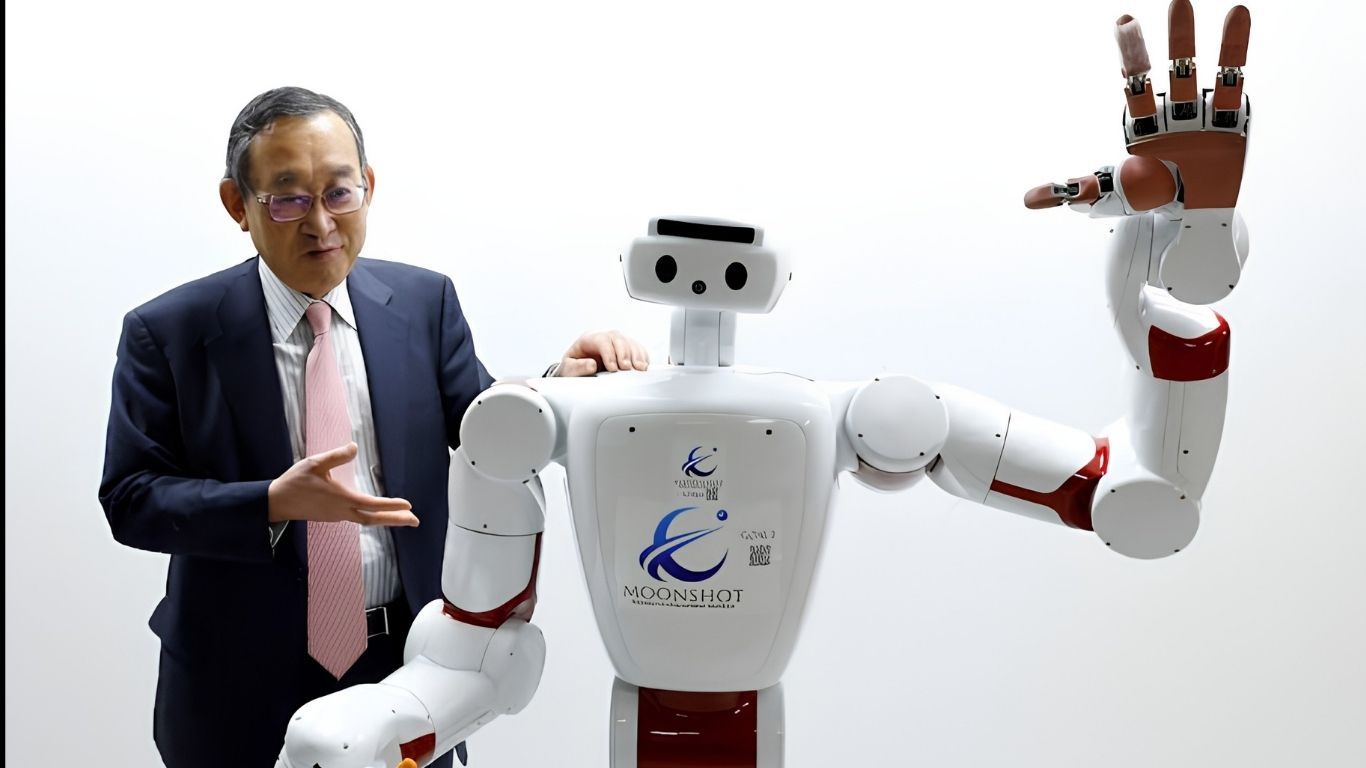
Photo credit: Reuters
Japan is taking another major step towards a future where robots do more than talk or process information, with new AI powered machines being trained to hammer nails, drill materials and carry out other physical tasks alongside humans. Technology companies gathered in Tokyo on September 16 to showcase robots designed to understand their surroundings and perform practical jobs in the real world.
The demonstrations are part of a growing push into “physical AI” technology that combines artificial intelligence with robotic bodies, allowing machines to interpret their environment, make decisions and physically interact with objects rather than simply generating digital responses. The latest developments are moving robotics beyond carefully controlled factory environments towards more flexible tasks that traditionally require human judgement and dexterity.
Japan has a particular reason for accelerating this technology. The country is facing a shrinking and ageing workforce, leaving companies struggling to fill jobs across manufacturing, logistics, transport and other sectors. A Reuters survey earlier this year found that around one in three Japanese companies were already using or considering AI powered robots, with manufacturers and transportation equipment companies among the leading adopters.
That pressure is encouraging Japanese companies to look beyond robots that simply repeat the same programmed movement. The goal is to develop machines capable of adapting to changing surroundings and carrying out a wider range of tasks, potentially allowing them to work in environments where traditional industrial robots would struggle.
Japan already has deep expertise in robotics hardware, including sensors, actuators and precision motion control systems. The challenge now is combining that engineering experience with advanced AI models so robots can understand instructions, recognise objects and respond appropriately when conditions change.
Government backed efforts are also gathering momentum. Japanese technology company Noetra is developing a foundational model for physical AI and robotics, while the government has been directing investment towards AI capabilities and greater integration between artificial intelligence and robotics.
The technology is already being tested beyond traditional factories. Japan Airlines, for example, has been trialling humanoid robots for baggage handling work at Tokyo’s Haneda Airport, showing how robotic systems could eventually move into airports, warehouses and other service environments.
The development also places Japan in a rapidly intensifying international race. China has been investing heavily in humanoid robots, while US companies are pushing advances in AI models and autonomous systems. The competition is increasingly about more than creating robots that can walk or perform impressive demonstrations; the bigger challenge is making machines reliable, safe and economically useful in everyday working environments.
For Japan, physical AI could offer a way to address some of the pressures created by its ageing population while strengthening its position in a technology sector it has dominated for decades. But turning impressive demonstrations into dependable workers will require further advances in AI, hardware, safety and cost.
The message from Tokyo is clear the next stage of the AI race may not happen on a computer screen. It could take place on factory floors, construction sites, airports and workplaces, where intelligent machines have to prove they can physically get the job done.