
Listeners:
Top listeners:
 play_arrow
 Cosoro Afrobeats UK's No.1 Afrobeats Radio Station
 play_arrow
 Cosoro Pidgin Na we bi di No.1 UK Pidgin Radio
 play_arrow
 Cosoro Evergreen UK's No.1 Radio for Timeless African Sounds


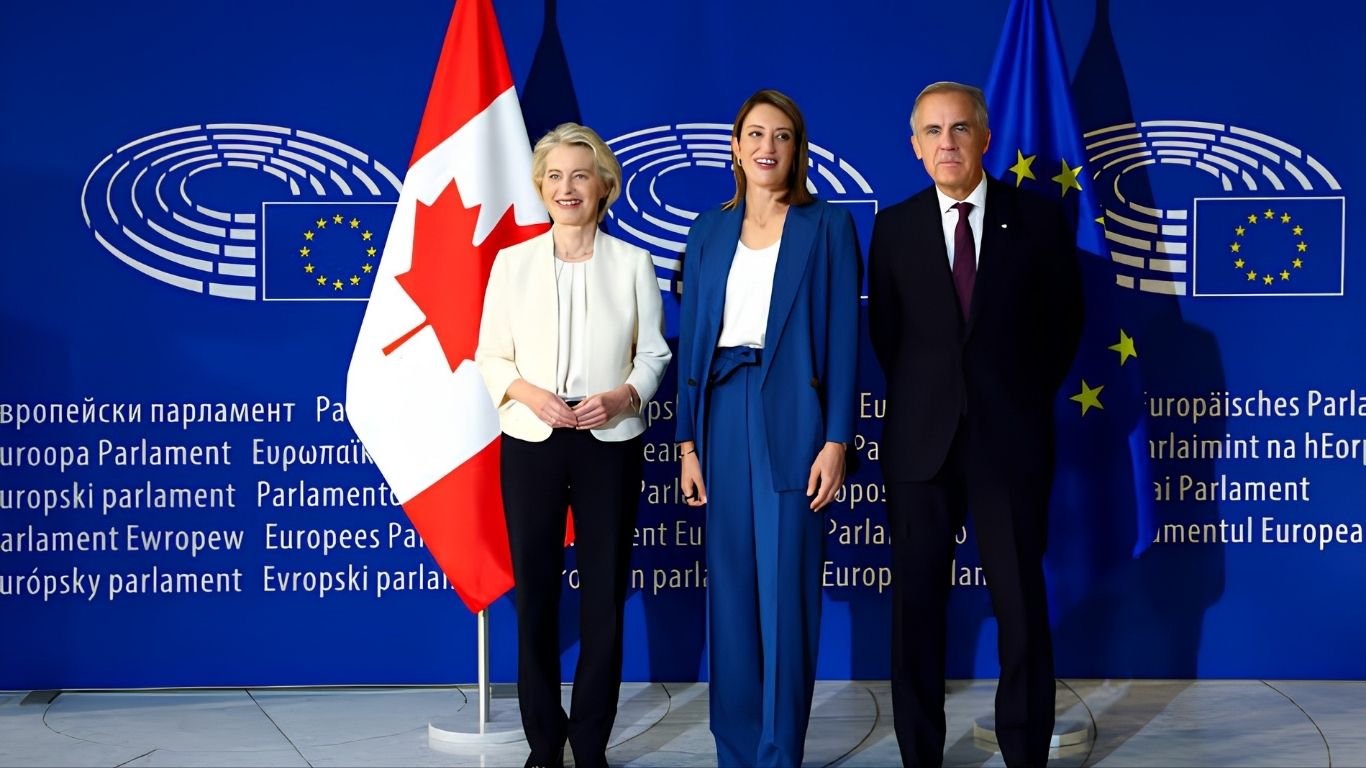
Photo Credit: Reuters
The European Union has opened the door to an unprecedented new relationship with Canada, with European Commission President Ursula von der Leyen saying she wants the country to become the bloc’s first “associate member” as trade tensions with Donald Trump’s United States intensify. The proposal could mark a major shift in how the EU builds partnerships with countries outside Europe.
Von der Leyen made the proposal during her State of the Union address in Strasbourg, highlighting what she described as close democratic values and shared strategic interests between Europe and Canada. She said the EU wanted to work with Prime Minister Mark Carney to develop an arrangement covering areas including artificial intelligence, defence, energy, technology, critical raw materials and cybersecurity.
The idea comes as Canada’s relationship with the United States has deteriorated over trade and tariffs. Washington has imposed tariffs affecting billions of dollars of Canadian goods, while negotiations between the two countries have become increasingly difficult. Canada has been looking for ways to diversify its economy and reduce its heavy reliance on the US market.
Carney has previously described his ambition as a “unique alliance” with Europe rather than full EU membership. Reports that Canada could become an associate member therefore represent a possible new model of cooperation rather than Canada actually joining the European Union. The precise legal status, rights and obligations of such a relationship have not yet been established.
The potential partnership could build on agreements that already connect Canada and Europe. Canada has a free trade agreement with the EU and has also deepened cooperation on defence and research. It became the first non European country to participate in the EU’s €150 billion SAFE defence procurement programme, further strengthening its strategic links with the bloc.
Trade and investment would be another major part of the relationship. Canada and the EU are exploring closer cooperation in strategic supply chains, particularly energy, critical minerals and advanced technology. There have also been discussions around data centres, digital infrastructure, satellite networks and improving opportunities for Canadians to live and work in Europe.
For Europe, Canada offers access to natural resources and a major democratic partner at a time when the EU is trying to strengthen its economic and security resilience. For Ottawa, closer European ties could provide additional markets and strategic partnerships as the government seeks to reduce its dependence on its powerful southern neighbour. Bilateral Canada-EU trade reached around $147 billion in 2025.
However, turning the proposal into a formal arrangement would not be straightforward. The EU has traditionally operated within strict membership rules, and the bloc has never previously created an “associate member” category of the kind now being discussed. Even Canada’s existing trade agreement with the EU has faced lengthy ratification delays in several member states.
For now, the proposal remains a developing political and economic initiative rather than a completed agreement. But with Carney preparing to address the European Parliament and Brussels signalling a willingness to explore a deeper partnership, Canada-EU relations are entering potentially significant new territory.