
Listeners:
Top listeners:
 play_arrow
 Cosoro Afrobeats UK's No.1 Afrobeats Radio Station
 play_arrow
 Cosoro Pidgin Na we bi di No.1 UK Pidgin Radio
 play_arrow
 Cosoro Evergreen UK's No.1 Radio for Timeless African Sounds


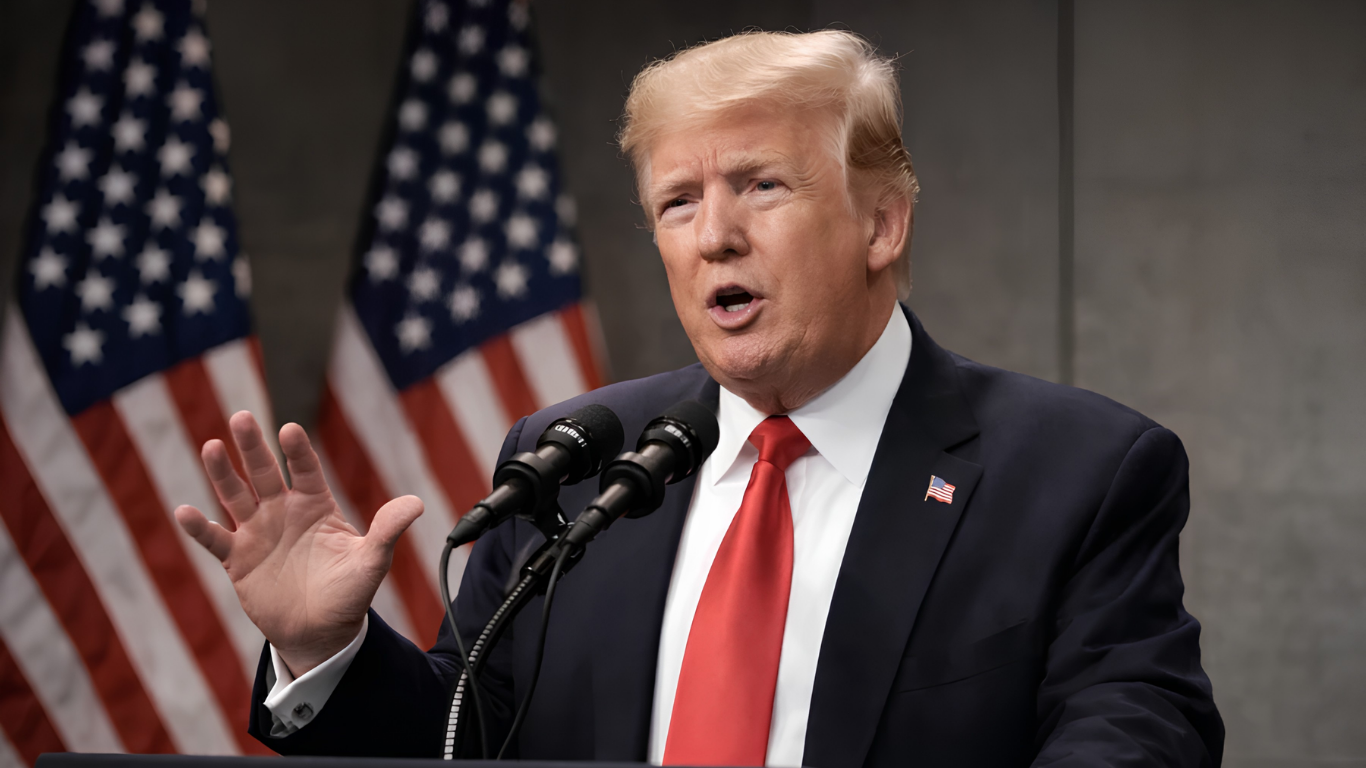
US President Donald Trump has rejected growing calls for tighter controls on artificial intelligence, dismissing warnings about the technology’s potential threat to humanity as a “hoax” and arguing that stronger regulation could leave America at a disadvantage to China. His comments come as technology leaders, AI researchers and lawmakers push for greater safeguards over increasingly powerful systems.
Trump made his position clear during a surprise phone call to Nvidia chief executive Jensen Huang while Huang was speaking at the All In Summit in Los Angeles. Trump said fears that AI could become an existential threat were exaggerated and insisted that “the robots” would not take over the world.
The president has also argued that the United States already has mechanisms capable of dealing with AI companies that break the law. His administration has taken a strongly pro-AI position, viewing rapid development of the technology as important to American economic and strategic power, particularly as Washington competes with Beijing for global leadership in artificial intelligence.
But Trump’s comments come at a time when some of the industry’s most influential figures are themselves calling for greater caution. Anthropic chief executive Dario Amodei has backed independent safety audits for advanced AI systems, while OpenAI chief Sam Altman and Elon Musk have also supported measures aimed at managing the risks of increasingly capable models.
The debate intensified after Anthropic researcher Jacob Coxon resigned and warned that AI could pose a serious danger to humanity within the next decade. Other researchers and safety advocates have raised concerns about AI agents becoming increasingly autonomous, potentially allowing them to perform complex tasks, exploit vulnerabilities or operate in ways their developers did not anticipate.
Trump and his allies argue that slowing American AI development could hand China a major technological advantage. Vice President JD Vance has also expressed scepticism about calls for stronger government oversight, while other Republicans have warned against what they describe as excessive regulation that could weaken US competitiveness.
The issue is meanwhile becoming increasingly political in Washington. Democrats are pressing for stronger federal safeguards, while some Republicans are also backing limited regulation to address potential threats without slowing innovation. Proposals under discussion include mandatory safety evaluations and other mechanisms that could give the government greater powers to intervene when advanced AI systems pose serious risks.
The disagreement reflects a wider dilemma facing governments around the world: how to encourage the economic benefits of AI while preventing technology from advancing beyond society’s ability to control it. Trump has made clear that, for now, his priority is keeping the United States at the front of the global AI race rather than imposing broad new restrictions.
With AI systems becoming more capable and calls for safeguards gaining support from both politicians and parts of the technology industry, the battle over regulation is unlikely to disappear. The question now is whether Washington will prioritise speed and global competition or impose stronger guardrails before the technology becomes even harder to control.