

Listeners:
Top listeners:
 play_arrow
 Cosoro Afrobeats UK's No.1 Afrobeats Radio Station
 play_arrow
 Cosoro Pidgin Na we bi di No.1 UK Pidgin Radio
 play_arrow
 Cosoro Evergreen UK's No.1 Radio for Timeless African Sounds


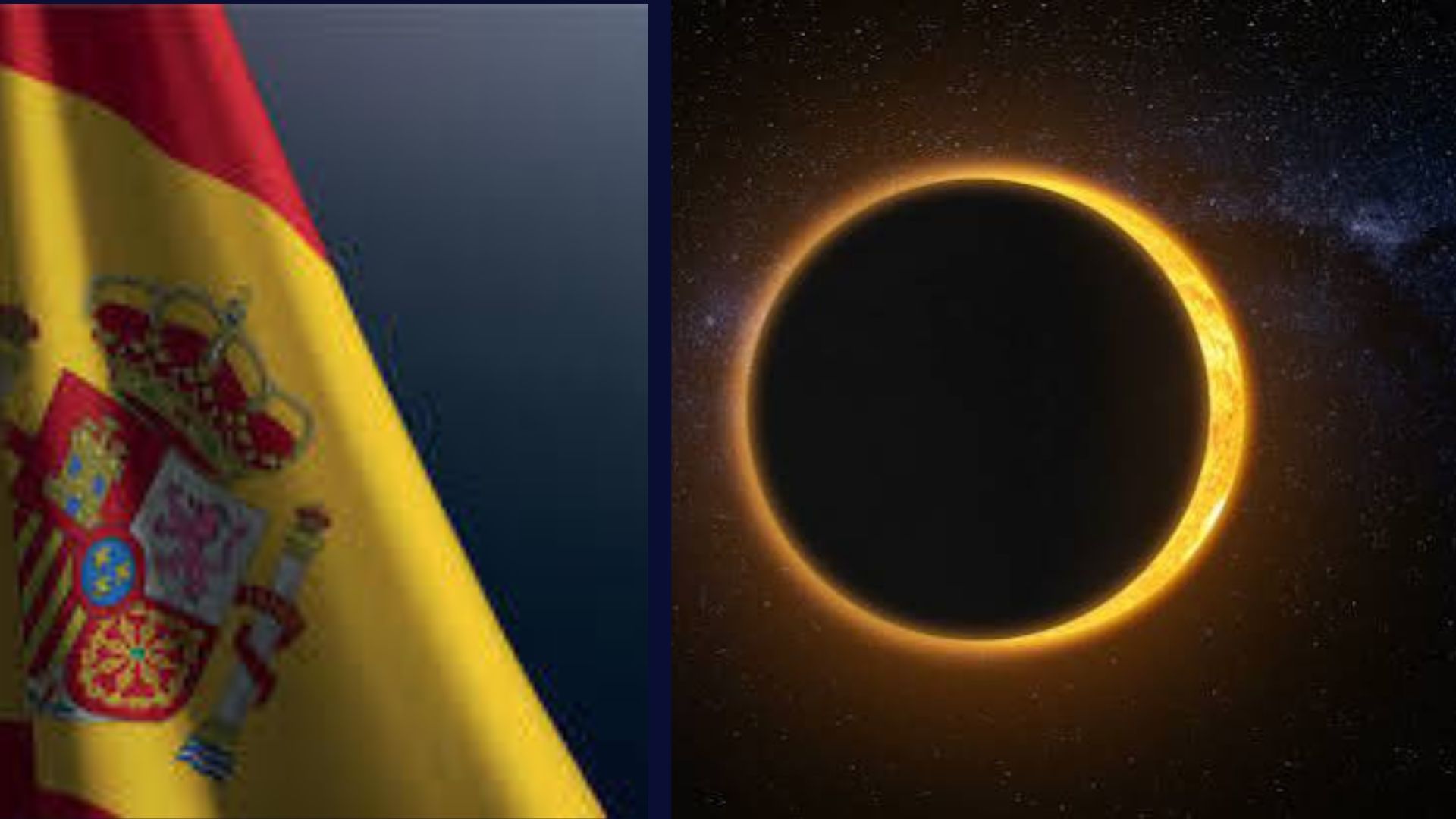
Spain is preparing for a spectacular total solar eclipse on Wednesday, 12 August, with hundreds of thousands of visitors expected to travel across the country to witness one of the year’s most anticipated astronomical events. The Moon will pass directly between the Earth and the Sun, briefly blocking out the Sun and plunging areas along the path of totality into darkness. The eclipse will be visible in parts of northern and north-eastern Spain, as well as other locations including Iceland, Greenland and parts of Portugal.
The event is expected to generate a major tourism boost, particularly in parts of Spain that are not normally among the country’s busiest tourist destinations. Hotels and other accommodation in locations along the eclipse’s path have experienced a sharp increase in demand, with some areas reporting extremely limited availability. Spanish authorities are preparing for a significant increase in traffic and visitors. Around 460,000 international tourists are expected to arrive for the eclipse, while authorities anticipate as many as 1.5 million additional car journeys. Officials have introduced traffic controls and other measures to prevent congestion from hampering emergency services.
However, the huge crowds are also creating additional concerns because Spain is experiencing extreme heat and drought. July was reportedly the hottest and driest month on record for mainland Spain, leaving vegetation exceptionally dry and increasing the danger of wildfires. Authorities have therefore introduced restrictions in some high risk areas, including bans on barbecues, fireworks and parking close to dry vegetation. Some natural parks and footpaths are also being closed temporarily. Local communities along the eclipse’s path have been preparing for months. Some small villages expect their populations to increase dramatically as astronomy enthusiasts and tourists arrive seeking locations with unobstructed views of the sky. In some areas, authorities have restricted vehicle access to popular viewing points to manage crowds and protect the environment.
The eclipse is particularly significant for Spain because it marks the beginning of a rare sequence of major solar eclipses. Another total solar eclipse will cross southern Spain in August 2027, followed by an annular eclipse in January 2028, giving the country three major solar eclipse events in consecutive years. Scientists and astronomers are also preparing to use the event for research. A total eclipse provides an unusual opportunity to study the Sun’s outer atmosphere, known as the corona, which is normally difficult to observe because the Sun’s brightness overwhelms it. Spain’s astronomical facilities and observatories are expected to play a role in monitoring the phenomenon.
Safety is another major focus ahead of the event. Experts are urging spectators to use properly certified eclipse glasses when looking towards the Sun. Ordinary sunglasses are not sufficient protection, and looking directly at the uneclipsed Sun can cause permanent eye damage. Hospitals are also preparing for a possible increase in eye injuries associated with unsafe viewing.
The eclipse is expected to last only a few minutes in its total phase, making timing and location crucial for spectators. For many visitors, the brief period when the Moon completely covers the Sun will be the highlight of a journey planned months in advance. As Spain prepares for the arrival of large crowds, authorities face the challenge of balancing the excitement surrounding the rare astronomical aevent with concerns over traffic, public safety, extreme heat and wildfire risks. Despite those challenges, anticipation is building for what promises to be one of the most remarkable celestial spectacles visible from Spain in decades.