

Listeners:
Top listeners:
 play_arrow
 Cosoro Afrobeats UK's No.1 Afrobeats Radio Station
 play_arrow
 Cosoro Pidgin Na we bi di No.1 UK Pidgin Radio
 play_arrow
 Cosoro Evergreen UK's No.1 Radio for Timeless African Sounds


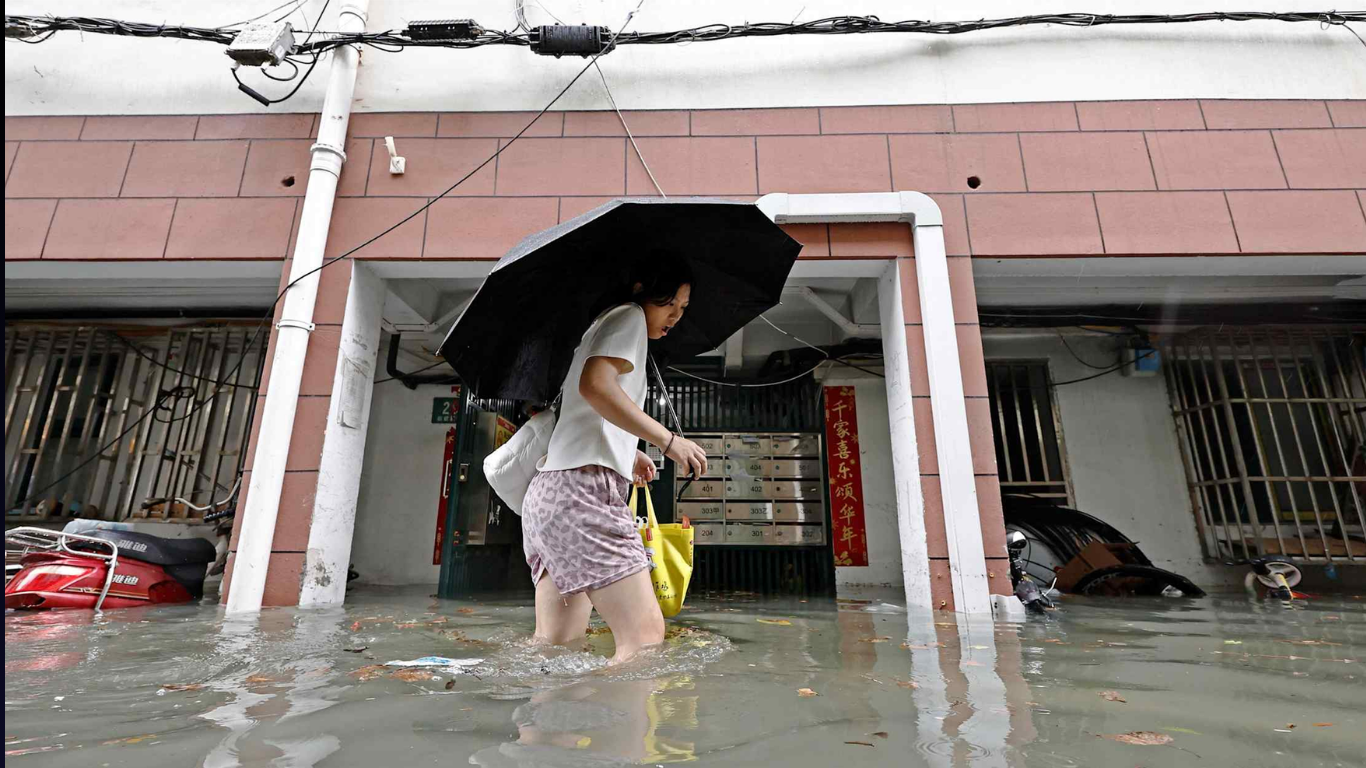
More than 1.5 million people have been evacuated across eastern China as Typhoon Dolphin, the strongest tropical cyclone to hit the country so far this year, brought powerful winds, torrential rain and widespread disruption to coastal communities.
Dolphin made landfall in Zhejiang province on Sunday with sustained winds of about 151km/h, before moving inland and weakening. Despite losing strength, the storm continued to pose a serious threat as heavy rainfall spread across Zhejiang, Shanghai and neighbouring provinces, with forecasters warning of flooding and landslides.
The storm has had a particularly significant impact on Shanghai, one of China’s largest and most densely populated cities. More than 1,500 flights were cancelled at Shanghai’s airports, while other transport services were disrupted as authorities prepared for severe weather. Tourist attractions were also closed or restricted, with residents urged to remain indoors and avoid unnecessary travel.
Zhejiang has faced some of the most extensive emergency measures. In Wenzhou, more than 900,000 residents were relocated to safer areas and over 1,000 emergency shelters were opened. Other coastal communities also carried out large-scale evacuations as authorities sought to reduce the risk posed by flooding, storm winds and unstable ground.
The rainfall could remain the biggest concern even after Dolphin’s winds weaken. Some parts of Zhejiang were forecast to receive as much as 500mm of rain, raising fears that rivers could overflow and that saturated slopes could give way. Authorities have therefore maintained emergency responses and continued monitoring vulnerable areas.
Dolphin also disrupted maritime activity. Ferry services were suspended in parts of Fujian province, while offshore construction operations were halted as a precaution. The storm’s wide circulation and long journey across the western Pacific contributed to its unusually prolonged influence before reaching mainland China.
The typhoon had already affected other parts of the region before reaching China. Heavy rain associated with the system contributed to deadly flooding in the Philippines, while Okinawa in Japan also experienced strong winds and injuries.
The scale of the response reflects China’s experience with increasingly dangerous tropical storms. Authorities regularly evacuate large numbers of residents before major typhoons, particularly in densely populated coastal provinces where flooding and landslides can quickly become life-threatening.
For now, the focus remains on the storm’s aftermath. Although Dolphin has weakened, officials continue to warn that dangerous rainfall can persist after a typhoon loses its strongest winds. Emergency teams are monitoring flood-prone areas, while residents in affected communities remain under instructions to follow local evacuation and weather warnings.