

Listeners:
Top listeners:
 play_arrow
 Cosoro Afrobeats UK's No.1 Afrobeats Radio Station
 play_arrow
 Cosoro Pidgin Na we bi di No.1 UK Pidgin Radio
 play_arrow
 Cosoro Evergreen UK's No.1 Radio for Timeless African Sounds


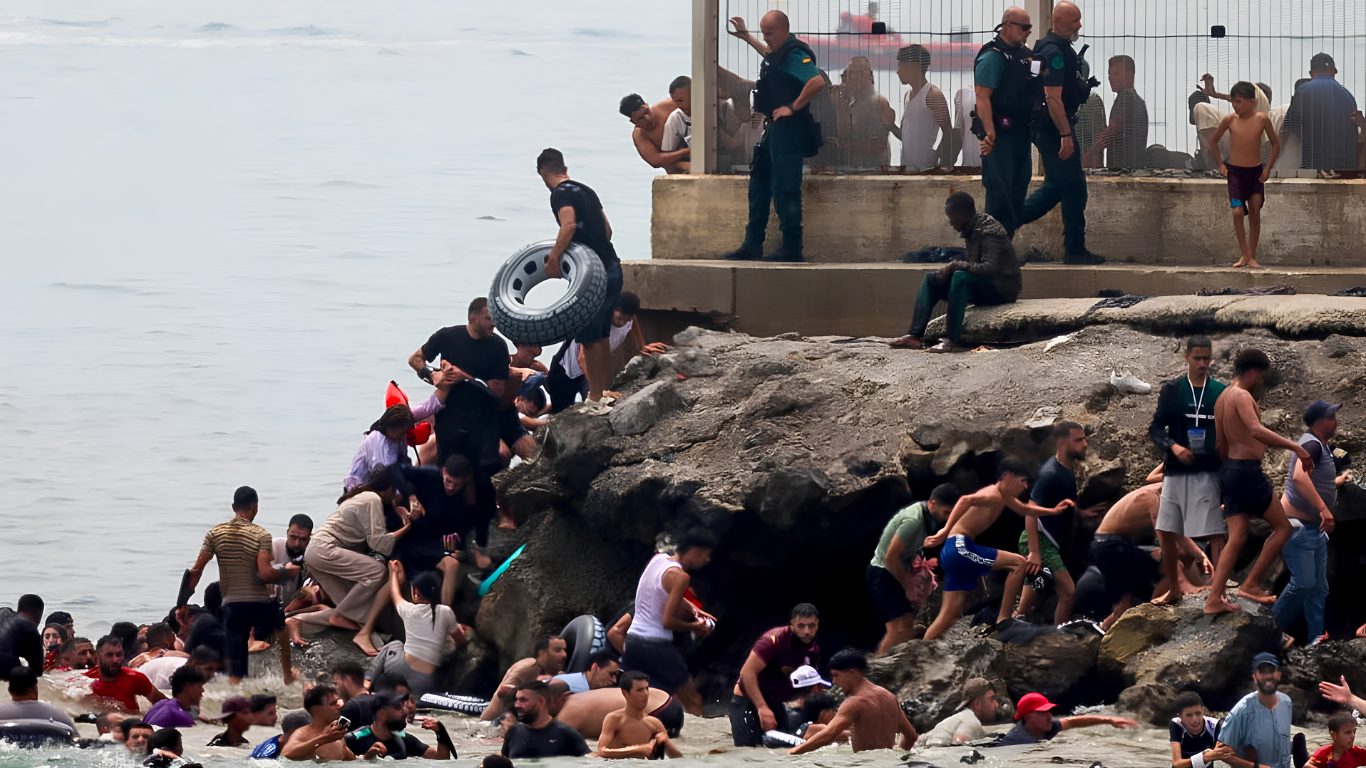
Spain is grappling with one of the largest migration surges in its recent history after authorities estimated that around 49,000 migrants crossed into the North African enclave of Ceuta from neighbouring Morocco within just 24 hours. The extraordinary influx has overwhelmed local authorities, prompted emergency security measures and intensified political debate over Spain’s border and immigration policies.
According to Spain’s Interior Ministry, thousands of migrants entered Ceuta by both land and sea, with many swimming around border barriers or making dangerous crossings in overcrowded boats. Spanish officials said the scale of the arrivals is unprecedented, amounting to well over half of Ceuta’s population of approximately 84,000 residents.
The humanitarian cost has also been severe. Spanish authorities confirmed that at least 19 people died during the crossing, while rescue teams and emergency workers have continued searching coastal waters and assisting survivors. Officials also reported that roughly 7,000 of those who entered the enclave are believed to be minors, placing enormous pressure on already overcrowded reception centres.
The latest crisis follows weeks of rising migration pressure on Ceuta. Local officials had repeatedly warned that reception facilities were reaching breaking point after a steady increase in arrivals, particularly by sea. Earlier in July, Ceuta’s regional government appealed to Madrid for additional resources, warning that accommodation centres for unaccompanied minors had become severely overstretched.
One factor widely linked to the recent surge is a landmark ruling by Spain’s Supreme Court earlier this month. The court ruled that migrants intercepted at sea while attempting to swim into Ceuta or Melilla cannot be subjected to immediate “pushback” returns to Morocco. Instead, authorities must follow Spain’s ordinary immigration procedures, giving migrants greater legal protections before any return can take place. The ruling applies specifically to people arriving by sea rather than those attempting to cross the heavily fortified land border fences.
Although Spanish officials have not said the ruling directly caused the mass crossings, local authorities and some security officials believe people-smuggling networks may have used the decision to encourage more migrants to attempt the dangerous journey. Moroccan authorities have also been working with Spain to restore order along the border following the unprecedented influx.
In response to the crisis, the Spanish government deployed additional police officers and military personnel to Ceuta and neighbouring Melilla to reinforce border security. Prime Minister Pedro Sánchez travelled to Ceuta to assess the situation, while the Interior Ministry said it was coordinating closely with Morocco to facilitate the return of migrants who entered illegally, in accordance with Spanish and international law.
The events have also sparked political tensions beyond Spain’s borders. Several European leaders have called for stronger protection of the European Union’s external frontiers, while the scale of the crossings has reignited discussions over migration policy, border security and cooperation between Spain, Morocco and the wider EU.
Ceuta and Melilla remain the European Union’s only land territories on the African continent and have long served as key migration routes for people hoping to reach Europe. Both enclaves have experienced periodic migration surges over the years, most notably in 2021, but the latest influx is believed to be the largest ever recorded in such a short period.