

Listeners:
Top listeners:
 play_arrow
 Cosoro Afrobeats UK's #1 Afrobeats Radio Station
 play_arrow
 Cosoro Pidgin Na we bi di #1 UK Pidgin Radio
 play_arrow
 Cosoro Evergreen UK's #1 Radio for Timeless African Sounds


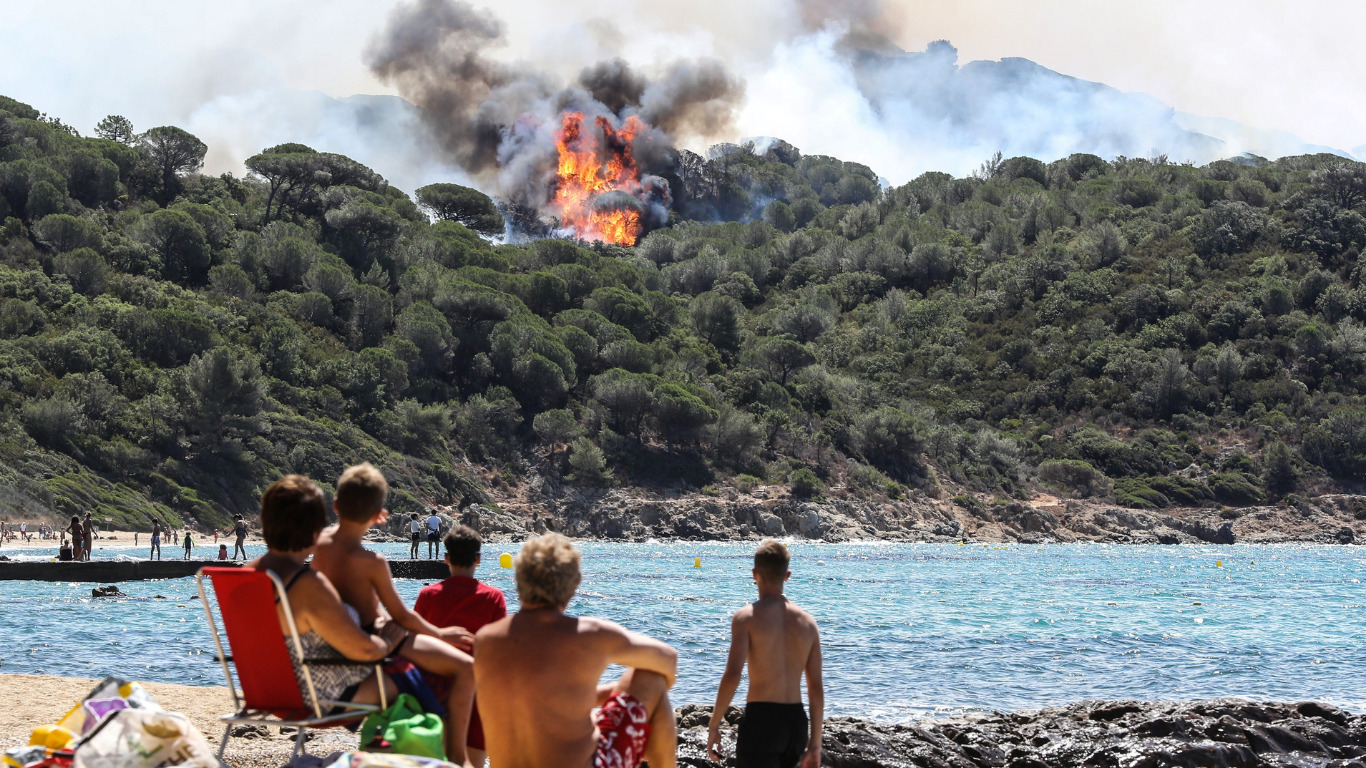
Southern Europe is battling one of its most severe wildfire emergencies in recent years, with France ordering the complete evacuation of the popular Cap Ferret peninsula and Spain declaring a national emergency as fast-moving fires continue to spread across both countries. Fueled by extreme heat, strong winds and prolonged drought, the blazes have forced tens of thousands of people from their homes and holiday resorts while overwhelming firefighting efforts.
In southwestern France, authorities ordered the evacuation of the entire Cap Ferret peninsula, a popular Atlantic holiday destination near Bordeaux known for its beaches, campsites and luxury homes. Around 40,000 residents and tourists were either evacuated or were in the process of leaving the area, with many escaping by boat across Arcachon Bay after the peninsula’s only road came under threat from advancing flames. Officials described the operation as one of the largest emergency evacuations ever carried out in the region.
The wildfire, which began earlier in the week near the commune of Saumos in the Gironde department, spread rapidly under hot, dry and windy conditions. By Friday, it had consumed roughly 8,700 hectares of forest and vegetation, destroying dozens of homes and forcing authorities to close roads and tourist facilities. Interior Minister Laurent Nuñez said about 80 houses had been damaged, with around 50 completely destroyed. Hundreds of firefighters, supported by water-bombing aircraft, continued working to stop the flames from reaching more populated communities.
The crisis has not been confined to Cap Ferret. Farther south in France’s Landes department, another major wildfire near Biscarrosse forced the evacuation of more than 23,000 people from residential areas, campsites, a nursing home and a summer camp. Combined, the two major fires displaced well over 60,000 people across southwestern France within days.
The human cost has also been significant. Earlier in the week, two French firefighters lost their lives while battling a separate blaze near Bordeaux after their vehicle became trapped by flames. Their deaths underscored the increasingly dangerous conditions confronting emergency responders as France experiences one of its most destructive wildfire seasons in recent memory.
President Emmanuel Macron described the situation as “very tense” and activated the European Union Civil Protection Mechanism to reinforce France’s firefighting capacity. Additional aircraft and emergency support from Croatia, Portugal, the Czech Republic and Slovakia have been mobilised to help contain the rapidly spreading fires. Authorities have also urged residents and tourists to avoid affected regions while emergency operations continue.
Across the border, Spain is facing an equally serious crisis. For the first time, the Spanish government declared a national emergency because of wildfires after multiple blazes erupted west of Madrid and in neighbouring Ávila province. More than 10,000 people have been evacuated from communities threatened by fires around Villa del Prado, San Martín de Valdeiglesias and Burgohondo, with military emergency units joining regional firefighters to combat the flames.
Prime Minister Pedro Sánchez described the situation as “dramatic,” warning that wildfires were ravaging thousands of hectares of land and threatening numerous communities. Although firefighters managed to slow the advance of some blazes overnight, officials warned that several remained out of control due to persistent heat, low humidity and shifting winds.
Scientists have repeatedly warned that Europe is becoming increasingly vulnerable to devastating wildfires as climate change drives hotter temperatures, longer droughts and more frequent heatwaves. According to European fire monitoring data, significantly more land has already burned across the continent this year than the long-term average, making 2026 one of the region’s most destructive fire seasons in recent decades.