Listeners:
Top listeners:
 play_arrow
 Cosoro Afrobeats UK's #1 Afrobeats Radio Station
 play_arrow
 Cosoro Pidgin Na we bi di #1 UK Pidgin Radio
 play_arrow
 Cosoro Evergreen UK's #1 Radio for Timeless African Sounds


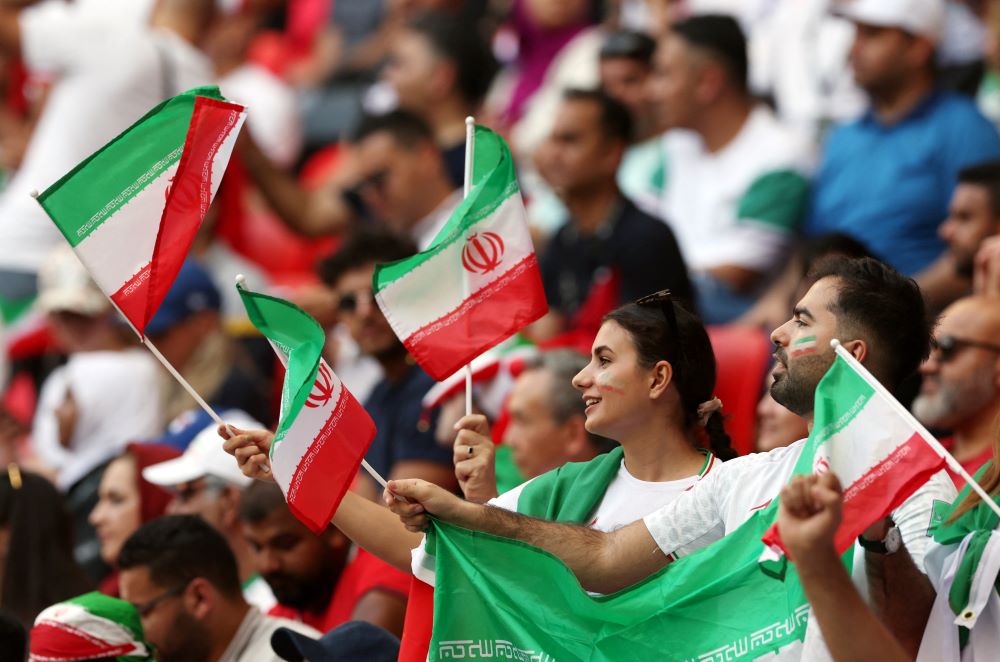
Image Credit: REUTERS
A fresh diplomatic dispute has emerged at the 2026 FIFA World Cup after United States officials alleged that Iran attempted to include individuals with ties to the Islamic Revolutionary Guard Corps (IRGC) in its tournament delegation.
According to US Homeland Security Secretary Markwayne Mullin, Iranian officials submitted a delegation list that included several individuals whom American authorities claimed had direct links to the IRGC. US authorities approved entry for dozens of members of Iran’s football delegation but denied visas to others over security concerns. Iran has strongly rejected the allegations, describing them as baseless and discriminatory.
The controversy comes amid already strained relations between Washington and Tehran. Earlier this month, US Secretary of State Marco Rubio said American authorities would closely scrutinize Iran’s World Cup delegation and would not permit individuals with alleged IRGC ties to enter the country under the guise of participating in the tournament.
The dispute has complicated Iran’s preparations for the World Cup. Several Iranian officials were reportedly denied visas, forcing the team to operate with a reduced support staff. Iran has also been required to base itself in Tijuana, Mexico, rather than in the United States, travelling across the border for matches before returning shortly afterwards. Iranian players and coaches have publicly complained that the arrangement has disrupted training, recovery and match preparation.
At the centre of the controversy is the Islamic Revolutionary Guard Corps, better known as the IRGC. Established in 1979 following Iran’s Islamic Revolution, the IRGC was created to protect the country’s political system and has since grown into one of the most powerful institutions in Iran. In addition to its military responsibilities, the organisation has significant influence over Iran’s economy, politics and regional security operations. The IRGC oversees the elite Quds Force, which conducts operations and supports allied groups across the Middle East.
The United States has long viewed the IRGC as a security threat. In 2019, Washington designated the organisation as a Foreign Terrorist Organization, accusing it of supporting militant groups and carrying out activities that threaten US interests and allies in the region. Iranian officials reject those accusations and maintain that the IRGC is a legitimate branch of the country’s armed forces responsible for national defence.
The latest disagreement is part of a broader backdrop of tensions between the two countries. Relations have been particularly strained in 2026 following regional conflicts and diplomatic disputes that raised questions about Iran’s participation in a World Cup co-hosted by the United States, Canada and Mexico. Despite those concerns, FIFA confirmed that Iran would take part in the tournament after qualifying through the Asian Football Confederation.
Iran’s football federation has denied attempting to use the World Cup delegation for any purpose other than sporting participation. Team officials argue that the visa restrictions have unfairly affected their preparations and have called for equal treatment during the competition. US authorities, meanwhile, insist that the measures are based solely on national security considerations and not on the Iranian football team itself.