
Listeners:
Top listeners:
 play_arrow
 Cosoro Afrobeats UK's No.1 Afrobeats Radio Station
 play_arrow
 Cosoro Pidgin Na we bi di No.1 UK Pidgin Radio
 play_arrow
 Cosoro Evergreen UK's No.1 Radio for Timeless African Sounds


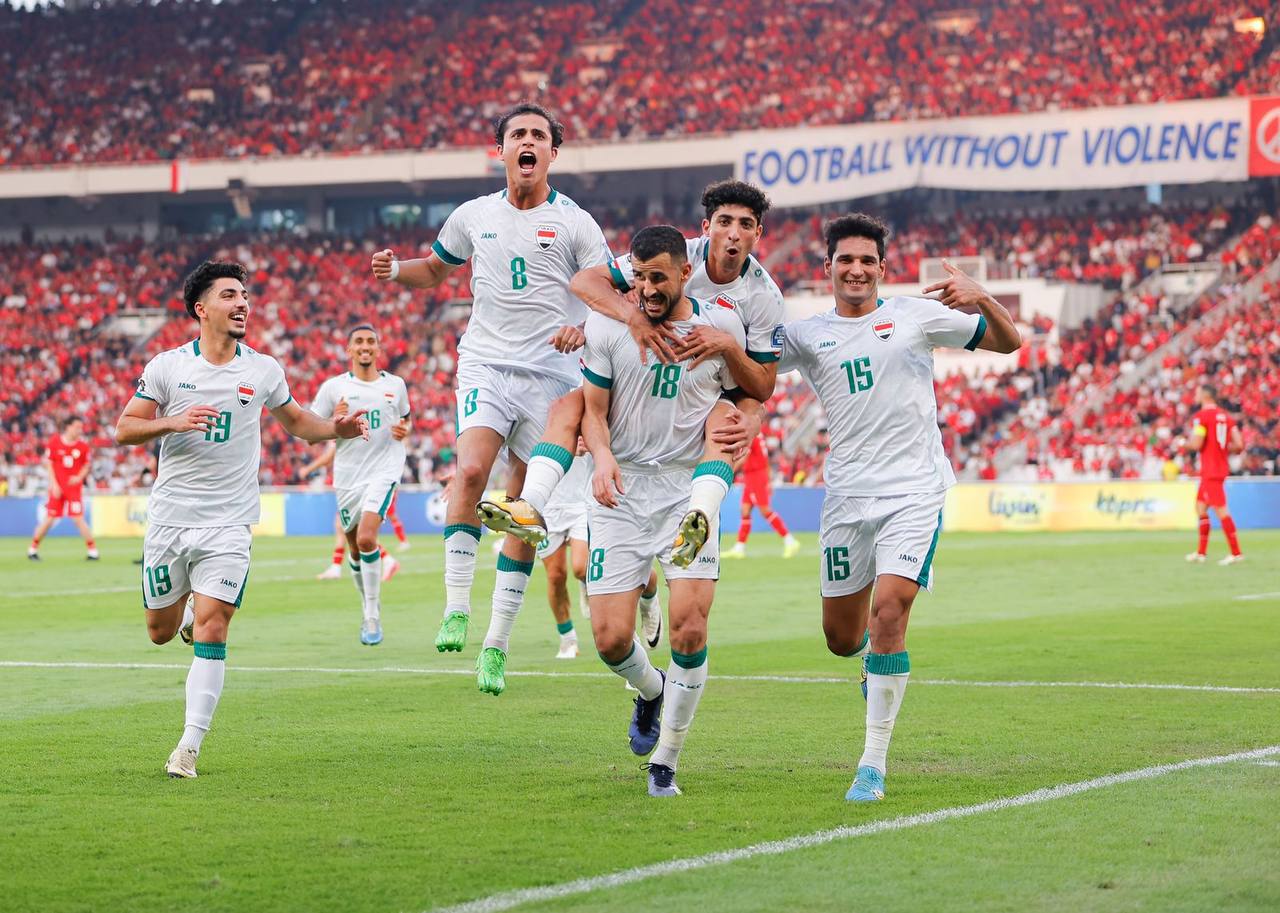
Image Credit: Iraq Football Association
For the first time in four decades, Iraq will take their place among football’s elite at the FIFA World Cup. While many observers view them as underdogs heading into the 2026 tournament, the mood within the Iraqi camp is one of belief rather than fear. After a long and difficult journey back to football’s biggest stage, the Lions of Mesopotamia are determined to prove they belong among the world’s best.
Iraq’s qualification story is one of resilience. The nation secured its place at the 2026 World Cup after defeating Bolivia 2-1 in the intercontinental playoffs, ending a 40-year absence from the tournament. Goals from Ali Al-Hamadi and Aymen Hussein sealed a historic victory and sparked celebrations across the country, with fans embracing a moment many had waited decades to witness.
The achievement is particularly significant when viewed against Iraq’s football history. Their only previous World Cup appearance came in 1986 in Mexico. Although they failed to progress beyond the group stage, that team remains an important part of Iraqi sporting folklore. Now, a new generation has the opportunity to create its own legacy on the global stage.
Much of Iraq’s recent success has been guided by Australian coach Graham Arnold. Appointed in 2025, Arnold inherited a team facing a difficult qualification path and helped navigate a demanding 21-match campaign that stretched across more than two years. His experience, including leading Australia at the 2022 World Cup, has brought stability and confidence to a squad eager to compete at the highest level.
The squad itself blends experienced leaders with emerging talents. Veteran striker Aymen Hussein remains the focal point of the attack after playing a crucial role in qualification, while Ipswich Town forward Ali Al-Hamadi provides additional firepower. Midfielder Zidane Iqbal, who emerged from Manchester United’s academy system, adds creativity and technical quality, while several Europe-based players bring valuable international experience to the team.
Despite their inspiring qualification campaign, Iraq face a daunting challenge in North America. Drawn alongside France, Senegal, and Norway, they enter one of the tournament’s toughest groups. France arrive as perennial contenders, Norway boast stars such as Erling Haaland, while Senegal remain one of Africa’s strongest footballing nations. Yet rather than viewing the draw as a disadvantage, Iraq’s players and coaching staff have embraced the opportunity to test themselves against elite opposition. Coach Arnold has repeatedly stressed that his team should play without fear and seek to surprise the football world.
Recent performances suggest Iraq may be capable of causing problems for more established teams. In a World Cup warm-up match, they earned a respectable 1-1 draw against Spain, demonstrating defensive discipline and resilience against one of Europe’s leading sides. Results like that have strengthened confidence that Iraq can compete rather than merely participate.
Beyond football, Iraq’s qualification carries broader significance. For many supporters, the team’s return to the World Cup represents a powerful symbol of perseverance and national pride. Football has long served as a unifying force in the country, and this generation has already achieved something historic simply by ending the 40-year wait for qualification.