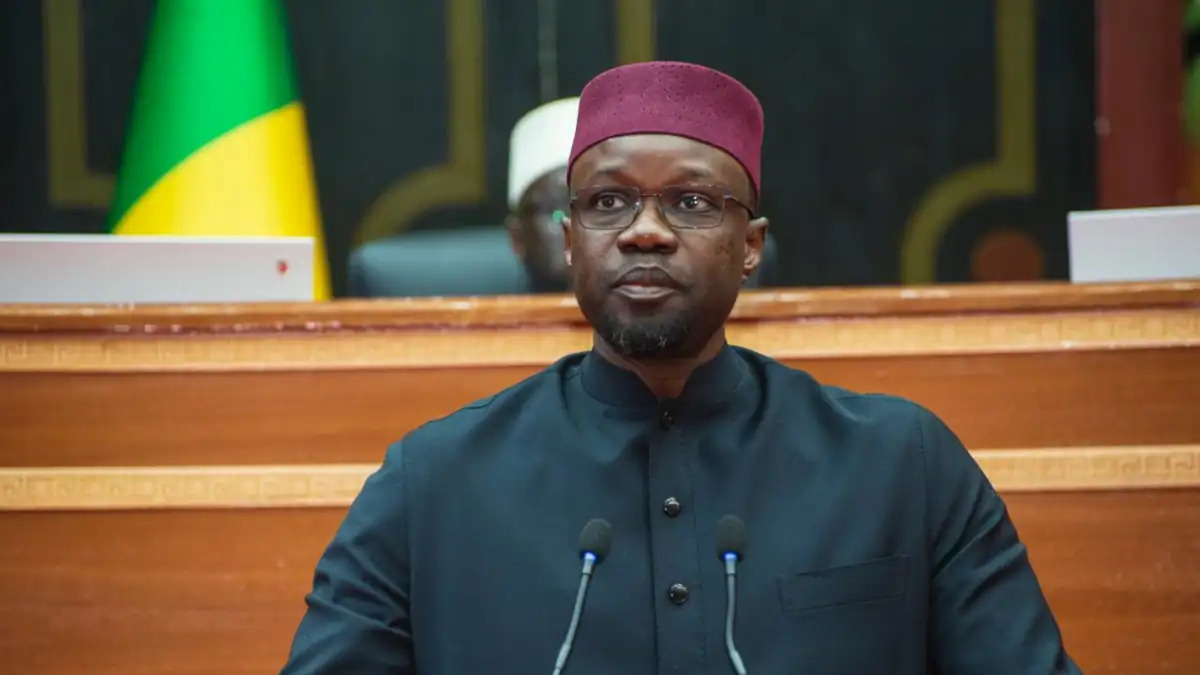
Senegal’s political landscape has taken another dramatic turn as Ousmane Sonko, the country’s former prime minister and a dominant figure in the ruling political movement, has been elected president of the National Assembly. The vote marks a significant repositioning for Sonko, who has rapidly moved from the executive branch to a powerful legislative leadership role amid ongoing political turbulence in the country.
According to reports, Sonko secured the position with 132 votes in parliament, reflecting the strong numerical dominance of his party and allied lawmakers in the legislature. His election comes shortly after a period of intense political instability, including his dismissal from the post of prime minister by President Bassirou Diomaye Faye and the subsequent dissolution of the government.
Sonko’s rise to the speakership underscores both his continued influence and the shifting balance of power within Senegal’s governing structures. Although removed from the prime minister’s office following growing tensions with President Faye, he remains a central figure within the ruling coalition and continues to command strong support within the National Assembly, where his party, PASTEF, holds a majority.
The latest development follows weeks of political strain between Sonko and President Faye, once close allies in the opposition movement that brought them to power in 2024. Their relationship has deteriorated over policy disagreements, governance style, and tensions surrounding economic reforms and Senegal’s management of its mounting debt crisis.
Sonko’s dismissal as prime minister earlier this month had already triggered concerns about internal instability within the government, especially given his popularity among supporters and his influence within parliament. His swift return to a top institutional role is expected to complicate President Faye’s efforts to push through economic reforms and negotiate with international financial institutions.
Observers say the move could deepen a growing power struggle between the presidency and the legislature, even though both are dominated by the same political camp. While Sonko now leads the National Assembly, President Faye retains executive authority, setting the stage for a complex period of cohabitation between two powerful figures with diverging political approaches.
The development also highlights the rapid evolution of Senegal’s political order since the 2024 elections, which brought a new generation of leaders to power on promises of reform and sovereignty. However, the emerging rifts between former allies now raise questions about governance stability and the future direction of the ruling movement.
As Senegal navigates economic pressures and institutional reshuffling, Sonko’s new role ensures he remains at the center of national decision-making, even after his exit from the prime minister’s office.


 play_arrow
  play_arrow
  play_arrow