

Listeners:
Top listeners:
 play_arrow
 Cosoro Afrobeats UK's No.1 Afrobeats Radio Station
 play_arrow
 Cosoro Pidgin Na we bi di No.1 UK Pidgin Radio
 play_arrow
 Cosoro Evergreen UK's No.1 Radio for Timeless African Sounds


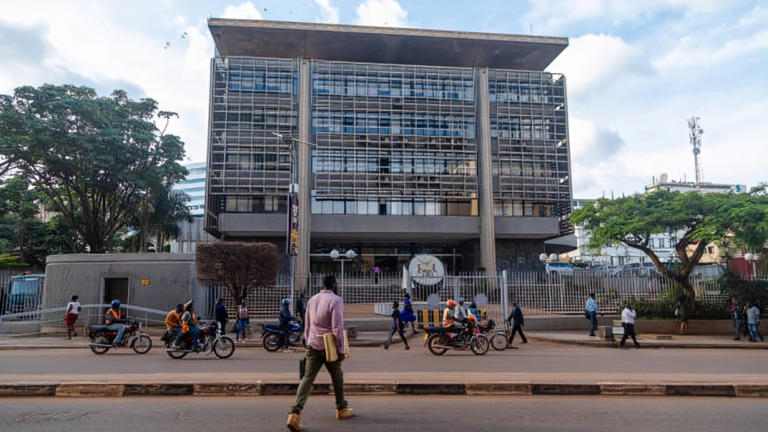
Photo: Katumba Badru Sultan/Bloomberg via Getty Images
Uganda’s central bank has launched a domestic gold purchase programme aimed at strengthening the country’s foreign exchange reserves and reducing exposure to global financial volatility.
The Bank of Uganda confirmed on Tuesday that the initiative, which had its first buy last Friday, will see the central bank buy gold directly from local miners and refiners. The move marks a shift in reserve management strategy, as the country seeks to diversify away from traditional foreign currency holdings such as the U.S. dollar.
Under the initial phase of the programme, the central bank plans to acquire at least 100 kilograms of gold between March and June. Officials say the longer-term goal is to build up annual purchases to between seven and ten tonnes, depending on market conditions and domestic supply.
Governor Michael Atingi-Ego said the programme is designed not only to strengthen reserves but also to support Uganda’s gold sector by providing a reliable domestic market. By purchasing gold locally, the central bank is expected to inject liquidity into the mining industry while encouraging more formal trading practices.
Uganda’s gold industry has grown rapidly in recent years, with exports reaching billions of dollars annually. Although a significant portion of the gold processed in the country is imported from neighboring states, authorities are increasingly focused on developing domestic production capacity and value addition.
As part of the programme, gold acquired by the central bank must meet international purity standards. This requirement is expected to boost local refining capacity and ensure that the gold can be safely incorporated into Uganda’s official reserves.
The initiative comes amid rising global demand for gold as a safe-haven asset. Central banks worldwide have been increasing their gold holdings in response to geopolitical tensions, inflation concerns, and currency fluctuations. Uganda’s move aligns with this broader trend while also addressing local economic priorities.
Analysts say the programme could help stabilize Uganda’s currency and improve its resilience to external shocks. However, they caution that effective implementation will depend on strong oversight, particularly in areas such as quality assurance, pricing transparency, and the prevention of illicit trade.
Despite these challenges, the central bank’s decision is being viewed as a significant step toward strengthening Uganda’s financial position and supporting the development of its natural resource sector.