
Listeners:
Top listeners:
 play_arrow
 Cosoro Afrobeats UK's #1 Afrobeats Radio Station
 play_arrow
 Cosoro Pidgin Na we bi di #1 UK Pidgin Radio
 play_arrow
 Cosoro Evergreen UK's #1 Radio for Timeless African Sounds


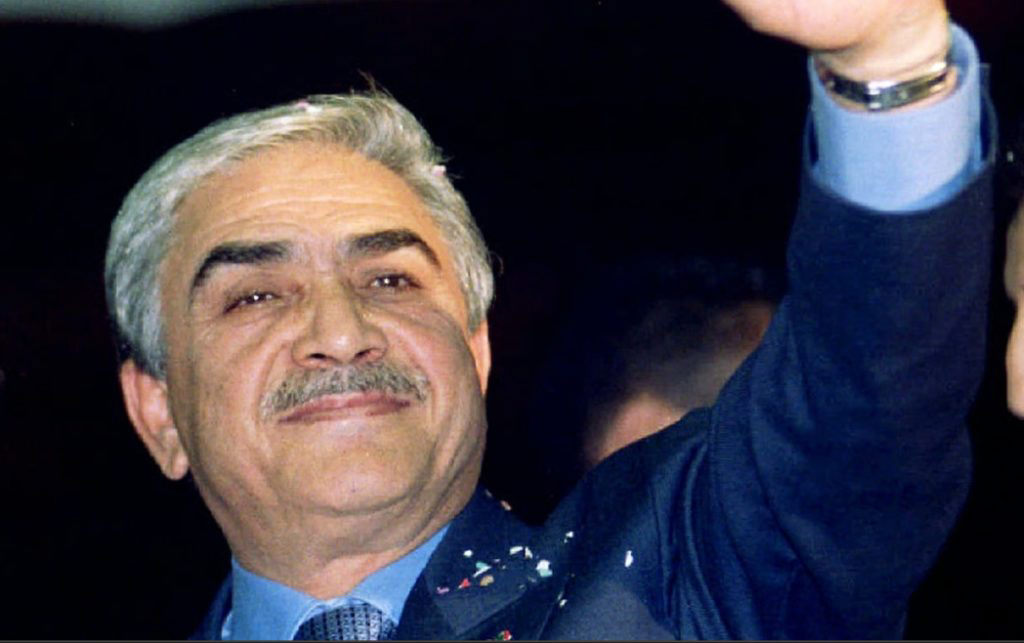
The death of Liamine Zeroual marks the end of a defining chapter in Algeria’s modern political history. A former soldier who rose to the presidency during one of the country’s most turbulent periods, Zeroual passed away on March 28, 2026, at the age of 84, prompting nationwide mourning and tributes from across Africa and beyond.
Born on July 3, 1941, in the eastern Algerian city of Batna, Zeroual’s life was deeply intertwined with the story of Algeria itself. As a teenager, he joined the National Liberation Army and fought in the struggle against French colonial rule, an experience that would shape his worldview and leadership style. His military career continued long after independence, eventually elevating him to senior command positions and establishing his reputation as a disciplined and pragmatic leader.
Zeroual assumed power in 1994 at a time when Algeria was engulfed in a brutal civil conflict. The country faced widespread violence, political instability, and a fractured national identity. Tasked with steering the nation through this crisis, he led a transitional government and sought to restore legitimacy to state institutions. One of his most notable achievements was organizing Algeria’s first multi-party presidential election in 1995, which he won decisively.
His presidency was marked by a careful balancing act between security measures and attempts at political reconciliation. While he initially supported dialogue with opposition groups, including Islamist factions, escalating violence and failed negotiations forced a shift toward a tougher stance. Despite these challenges, Zeroual was widely regarded as a leader who prioritized national unity over personal power.
In a move that surprised many, Zeroual voluntarily cut short his presidential term in 1998, paving the way for new elections and ultimately handing over power to Abdelaziz Bouteflika in 1999. His decision to step down—rare in regional politics—cemented his image as a reluctant leader more committed to stability than to political longevity.
After leaving office, Zeroual largely withdrew from public life, though he remained a respected figure in Algerian society. Over the years, he declined multiple calls to return to politics, reinforcing his reputation as a man of principle who avoided the trappings of power.
Following his death, Algerian authorities declared three days of national mourning, with flags flown at half-mast across the country. The African Union also paid tribute, describing him as a statesman whose leadership embodied “sacrifice, dignity, and an unwavering commitment” to Algeria’s sovereignty and unity.
Zeroual’s legacy is inseparable from the difficult era he helped navigate. Though his presidency unfolded amid conflict and uncertainty, his efforts to restore order, initiate political reform, and ultimately relinquish power peacefully continue to resonate. In a region often marked by prolonged rule, his tenure stands out as a reminder that leadership can be defined not only by authority, but by restraint.
As Algeria reflects on his life, Liamine Zeroual is remembered not just as a former president, but as a steady hand during one of the nation’s most critical moments—a leader shaped by war, tested by crisis, and ultimately defined by his choice to step aside.