

Listeners:
Top listeners:
 play_arrow
Cosoro Afrobeats UK's #1 Afrobeats Radio Station
 play_arrow
Cosoro Pidgin Na we bi di #1 UK Pidgin Radio
 play_arrow
Cosoro Evergreen UK's #1 Radio for Timeless African Sounds


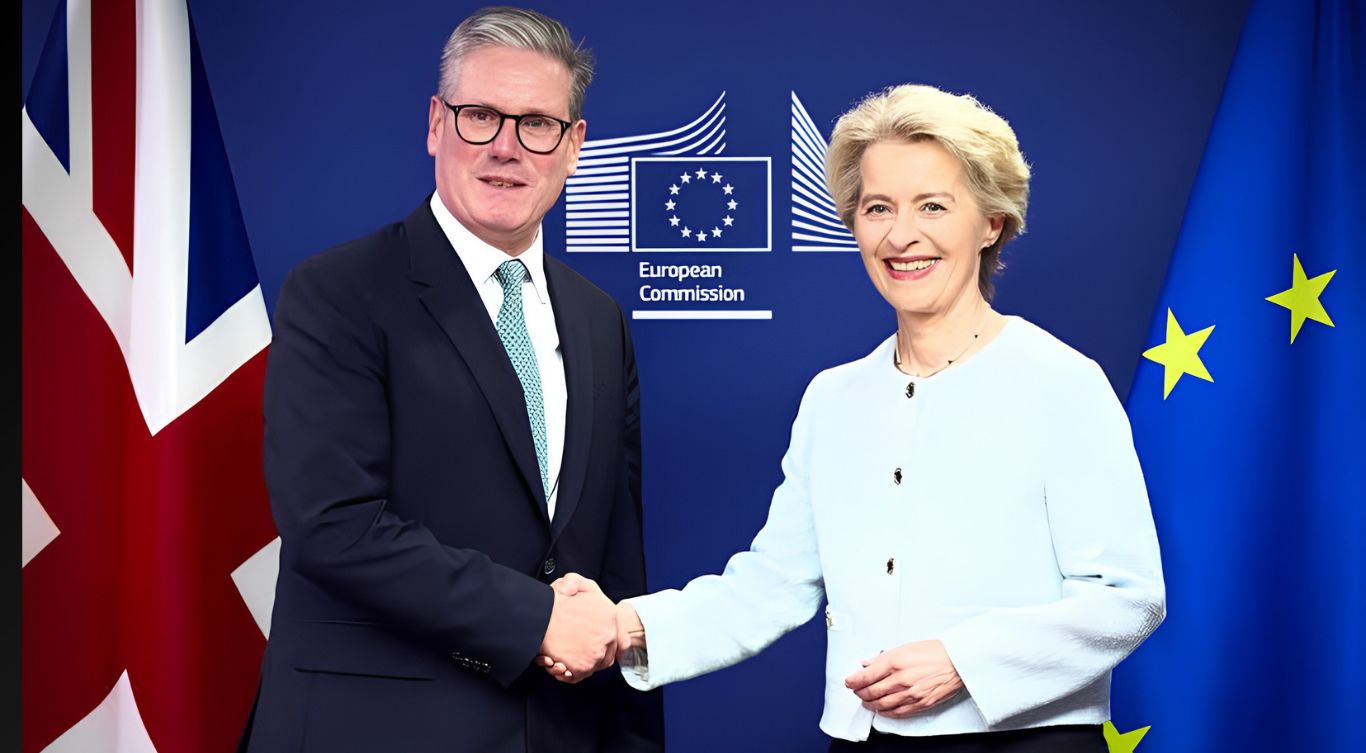
The United Kingdom’s latest agreements with the European Union include a 10 year termination clause that could leave either side responsible for the cost of rebuilding border check infrastructure if the deal is ended within the specified period.
The details emerged on Thursday, November 26, 2026, as the UK Government and the EU prepared to publish the legal texts of two agreements reached last week as part of Prime Minister Andy Burnham’s post Brexit reset programme.
According to the BBC, the provision is contained in the agreement covering food and agricultural trade between Britain and the EU. It means that if either side terminates the arrangement within the first 10 years, it could be required to reimburse the other for the costs of restoring border checks and the infrastructure needed to carry them out.
The agreement is designed to significantly reduce paperwork, inspections and other barriers affecting the movement of food, animals and agricultural products between the UK and EU. By reducing these requirements, the deal is expected to make cross border trade easier, cheaper and more predictable for businesses.
However, removing existing border facilities and checks means that reversing the arrangement could involve considerable expense. The termination clause is therefore intended to provide both sides with greater certainty and prevent either party from being left with the financial burden of rebuilding infrastructure if the agreement ends prematurely.
The latest development has already generated political debate in Britain. Conservative Party leader Kemi Badenoch has criticised the wider agreement and indicated that a future Conservative government would scrap it. Reform UK leader Nigel Farage has also suggested that his party would refuse to pay any termination related costs.
The two agreements scheduled for publication cover food and agricultural trade and the linking of the UK’s emissions trading system with the EU’s equivalent scheme. The Government is also expected to publish legislation designed to implement the arrangements.
Under the food trade agreement, British exporters are expected to benefit from reduced paperwork and fewer border checks when sending products to European markets. An internal government assessment reportedly forecasts a 16 per cent increase in agricultural exports as a result of the changes.
The emissions trading agreement is intended to connect the two sides’ carbon markets, reducing additional costs for British businesses exporting to the EU. The arrangement will also affect sectors including aviation and maritime transport.
Another important aspect of the agreements concerns the UK’s relationship with European regulations. Britain is expected to align with relevant EU rules in areas covered by the agreements, with provisions allowing it to participate in discussions and influence certain developments without having voting rights in EU institutions.
The arrangements have nevertheless raised questions about parliamentary oversight and Britain’s ability to make independent regulatory decisions. Proposed legislation is expected to include powers allowing ministers to update domestic laws to reflect relevant changes in EU rules.
Prime Minister Andy Burnham has defended the agreements as practical measures designed to improve Britain’s relationship with its largest trading partner without reversing Brexit. He has also insisted that the new arrangements should not be interpreted as a step towards rejoining the European Union.
The Government believes the agreements could reduce business costs, protect British exports and improve trade relations after years of additional paperwork and border controls following Brexit.
However, critics argue that the financial consequences of terminating the agreements could restrict the freedom of future governments to change Britain’s trading arrangements.
With the legal texts now due to be published, attention is expected to turn to the precise conditions attached to the 10 year clause, the potential financial liabilities and how much flexibility the UK will retain under the new arrangements.
The agreements represent another significant development in Britain’s post Brexit relationship with Europe, with their long term economic and political consequences likely to remain a subject of debate.