
Listeners:
Top listeners:
 play_arrow
 Cosoro Afrobeats UK's No.1 Afrobeats Radio Station
 play_arrow
 Cosoro Pidgin Na we bi di No.1 UK Pidgin Radio
 play_arrow
 Cosoro Evergreen UK's No.1 Radio for Timeless African Sounds


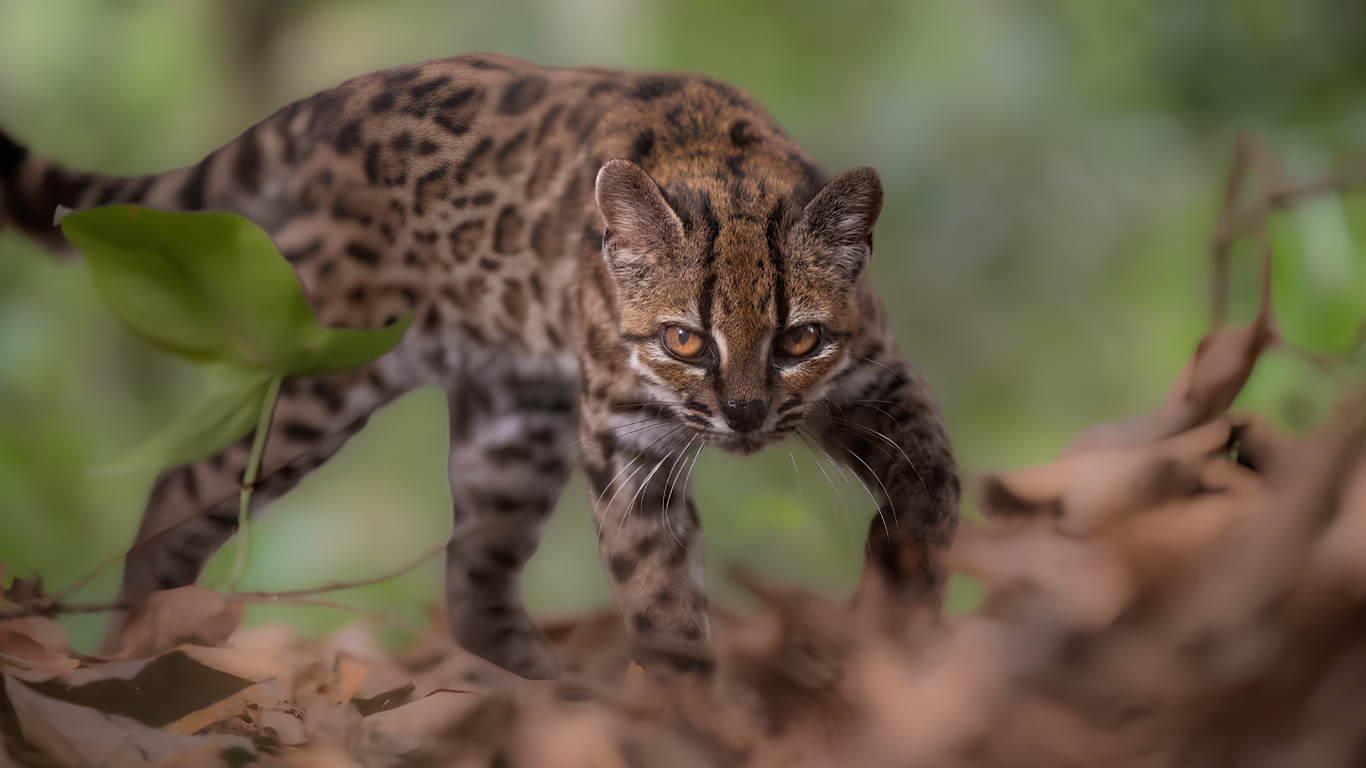
Image Credit: REUTERS
Scientists have identified a previously unknown species of wild cat in Bolivia’s cloud forests, marking the first time in more than a century that a completely new living feline species has been formally described.
Named Leopardus tilcayo, the small spotted cat is found in Bolivia’s Yungas forest, a mountainous and highly biodiverse region on the eastern slopes of the Andes. Known locally as the tilcayo, the animal is around 46cm long and weighs about 1.4kg, making it smaller than an average domestic cat.
The discovery has its roots in an unusual encounter. In 2016, a local man found what he believed was a kitten near a forest and took it home. After keeping the animal for about a year, he realised it was a wild cat and eventually brought it to the Senda Verde wildlife sanctuary. Biologist and National Geographic Explorer Paola Nogales-Ascarrunz encountered the animal there and initially believed it belonged to an already known tiger-cat species.
The mystery was eventually resolved through genetic research. Scientists compared complete genomes from 38 members of the Leopardus genus, including living animals and museum specimens, and found that the Bolivian cat represented a distinct evolutionary lineage. Researchers estimate that Leopardus tilcayo diverged from related tiger cats around 1.4 million years ago, confirming that it is a separate species rather than a previously known subspecies.
The study, published in the journal Current Biology, also changes scientists’ understanding of the tiger-cat group. What was previously treated largely as a single species has been shown through genetic and other evidence to contain several distinct lineages. Another tiger cat, Leopardus pardinoides, was formally recognised as a separate species in 2024, although the Bolivian discovery is considered different because L. tilcayo represents a species previously unknown to science.
Very little is currently known about the new cat in the wild. Camera-trap evidence suggests it may be primarily nocturnal, while analysis of scat indicates that small rodents could form part of its diet. Researchers also warn that its Yungas habitat faces pressures including deforestation, agricultural expansion, fires and mining, making further research important for determining how widely the species occurs and how it should be protected.
The discovery highlights how much remains unknown about wildlife in some of the world’s most remote ecosystems. Scientists say identifying Leopardus tilcayo could ultimately influence conservation assessments because populations previously grouped together may need to be evaluated separately. For now, researchers are working to establish how many of these elusive cats remain in Bolivia’s forests and how their habitat can be protected.